
What’s Fueling Food Truck Momentum?
3 Min Read By MRM Staff
Food trucks, from birria tacos to lobster rolls, have been reshaping local dining, but with rising competition, aspiring operators should prioritize markets with favorable foot traffic, demand, and economics, according to research from the Food Liability Insurance Program (FLIP).
Despite the increasing competition, the food truck market in the United States is expected to grow over the next five years, according to IBISWorld, which estimated it will reach $2.8 billion in 2026.
FLIP analyzed data from the top 200 U.S. metropolitan areas to identify which markets are most favorable for starting and operating a food truck in 2026.
The top five are:
1. New York City: This tops the list thanks to high walkability and strong market interest, though permits are limited and competitive.
2. Austin: Deep-rooted food truck culture and supportive local policy changes help despite lower walkability.
3. Los Angeles: Large and established food truck scene with strong resources, but also heavy competition.
4. Miami: Year-round warm weather and thriving event culture support steady foot traffic.
5. Houston: High consumer interest by search volume, though regulatory safety standards are evolving.
Other top performers include Washington, D.C., Honolulu, Boston, Philadelphia, and Denver, each standing out for combinations of walkability, regulatory structure, economic growth, or lower market saturation.
“What separates the top cities is not a single factor, but a combination of several factors aligning at the same time,” said Kyle Jude, Program Manager for FLIP. “In these top cities, people tend to walk more, actively seek out food trucks, and earn enough to spend on meals that aren’t solely convenience-driven.”
He noted that many of these cities have specific rules for food trucks or built systems that operators already understand, reducing friction.
“A truck can arrive and make money without spending all day navigating red tape.”
Boston stood out more than expected because the market is not saturated, Jude noted. This allows new operators the space to start and grow, which is rare in cities usually perceived as expensive and competitive.
San Francisco ranked lower than many might expect because growth and search behavior have slowed, even as walkability remains high, he said.
“Data does not always match reputation, and that gap tells a story.”
Jude added that a number of up-and-coming cities outside of the top tier might provide opportunities for entrepreneurs because they tend to offer room to grow without the crowding issues bigger cities face.
“Cities like Raleigh and Columbus show strong search interest and improving wage data, but fewer trucks are competing for the same spots. For someone starting out, fewer food trucks means more chances to build a following before the market gets oversaturated.”
At the core of FLIP’s methodology is a definition of what makes a city “good” for food trucks. Walkability matters because pedestrian density influences visibility and impulse purchases. Search interest signals built-in demand, showing where consumers are looking for food trucks. Adjusted wages help balance earning potential against labor and cost-of-living pressures, while employment location quotient highlights how crowded a local market may be. Recreation GDP growth points to cities where food and leisure spending is expanding rather than stagnating.
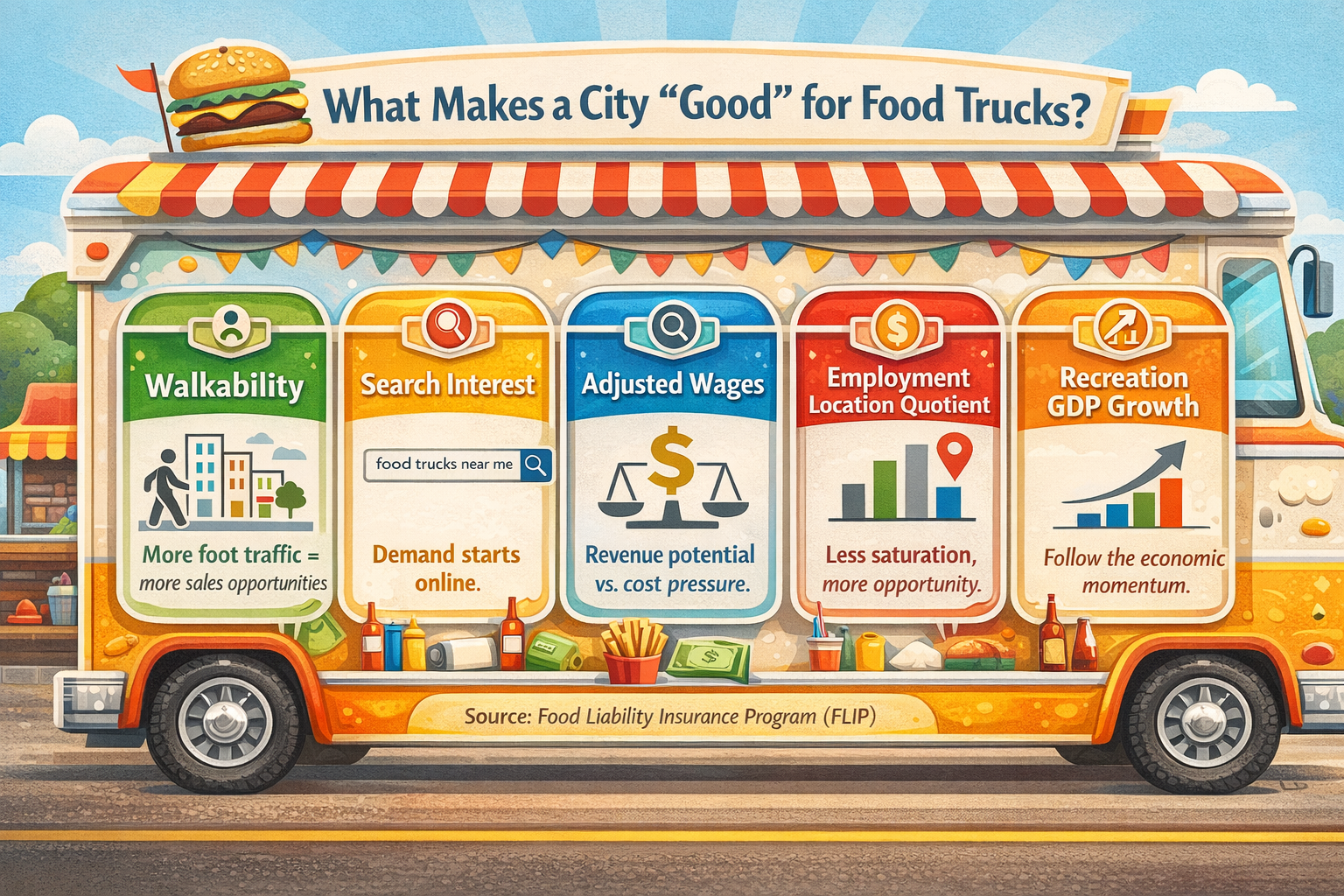
"Each factor ties back to how a food truck actually survives," Jude explained. "Walkability and search interest show whether customers can find the truck. Wages adjusted for the cost of living demonstrate spending power, the employment location quotient gauges industry saturation, and recreation GDP growth points to the degree to which people spend money on experiences."
What advice would he offer to omeone interested in starting a food truck business?
-
Treat the first year as a test run for the business, not just the food.
-
Learn what you enjoy, and what you don’t.
-
Engage with the communities you do business in
-
Learn where money comes from, and where it disappears.
-
Build a schedule that mixes street service with private events, so one slow day doesn’t sink the week.
-
Examine local rules before buying the truck, because there’s nothing worse than doing all the legwork on a business idea only to have it shut down due to a law or missed permit.
Challenges for food truck operators are different from what they were ten years ago, Jude noted.
“Acceptance is no longer the main issue; consistency has taken its place. Booking reliable locations, maintaining permits across city lines, and managing weather or event turnout affect revenue more than awareness does.”
Operators rely on tighter planning than ever as rising costs are hitting harder now, with things like insurance and commissary fees adding pressure even when sales stay steady, he added.