What Will Shape Hospitality in 2026: Four Trends Operators Can’t Ignore
3 Min Read By Adoniram Sides
As operators close out another unpredictable year, the industry’s strongest indicators for 2026 are becoming clear – from subtle menu microtrends to the rise of event-based dining and evolving expectations around kids’ meals and portion formats.
1. Microtrends Are Now Meaningful Indicators of Guest Behaviour
Microtrends, meaning small and rapidly emerging dining behaviors, are taking root faster than operators have ever seen. These are not broad cultural waves. They are highly specific and short-lived shifts in what guests want right now.
Think of the fast rise of matcha variations, the Dubai chocolate craze, sudden spikes in small-plate ordering, unexpected weekday surges tied to local happenings, or diners gravitating toward modular menu formats that let them customize without added cost.
Most of these micro-movements start online or within niche creator communities, but they spill into real dining rooms almost immediately. What once felt like noise now acts as an early-warning system that signals where value perception, demand patterns and flavour curiosity are heading next.
The operators most likely to win in 2026 will be the ones that treat microtrends as forecasting tools rather than surprises, staying observant and ready to act before the moment peaks.
2. Adults Are Increasingly Ordering from Kids Menus
It is not just service or pricing that is getting a second look. Nearly half of adults, about 44 percent, now admit to ordering from the kids’ menu for themselves. Their reasons are practical rather than playful: smaller portions appeal to 38 percent of them, simpler choices appeal to 37 percent, and more budget-friendly prices matter to 31 percent.
Whether it is a mini burger, mac and cheese or another scaled-down classic, the kids’ menu is shifting from a novelty to a smart-value option. Guests are choosing what feels appropriately sized and appropriately priced, especially during lunch or solo visits. For operators, this behaviour signals a growing appetite for right-sized dining and clearer portion flexibility across the menu.
3. Events-Based Dining Is Becoming a Traffic Engine
Watch parties are creating the kind of energy and community that standard service alone often cannot. One viral example showed a packed sports bar erupting as viewers watched a pivotal Love Island USA moment together, complete with themed cocktails and a room full of strangers reacting in unison. It highlighted something operators are seeing more often: people want shared experiences they cannot get at home.
Events like this bring structure, atmosphere and anticipation, which keep guests engaged and more willing to stay longer. For operators, they also create reliable midweek traffic and higher beverage spend. In 2026, restaurants that build consistent programming around these moments will have a clear advantage.
In 2026, the restaurants that thrive will be those that host, not just serve.
4. Hybrid Retail Is Becoming a Core Revenue Layer
What began as a pandemic-era adaptation has evolved into a durable revenue channel. Restaurants are now fully embracing hybrid retail: sauces, spices, branded drinkware, condiments, coffee beans, pantry goods, mini bundles, collabs with local makers, even limited-edition merch drops.
Retail doesn’t just create margin, it creates brand stickiness. Guests get to take a piece of the restaurant home, and operators gain a sales channel that isn’t tied to seat count, weather, or staffing.
As we head into 2026, hybrid retail is shifting from “nice to have” to a central expression of a restaurant’s brand identity. Expect curated shelves, holiday kits, digital storefronts, and drops timed with menu changes or events.
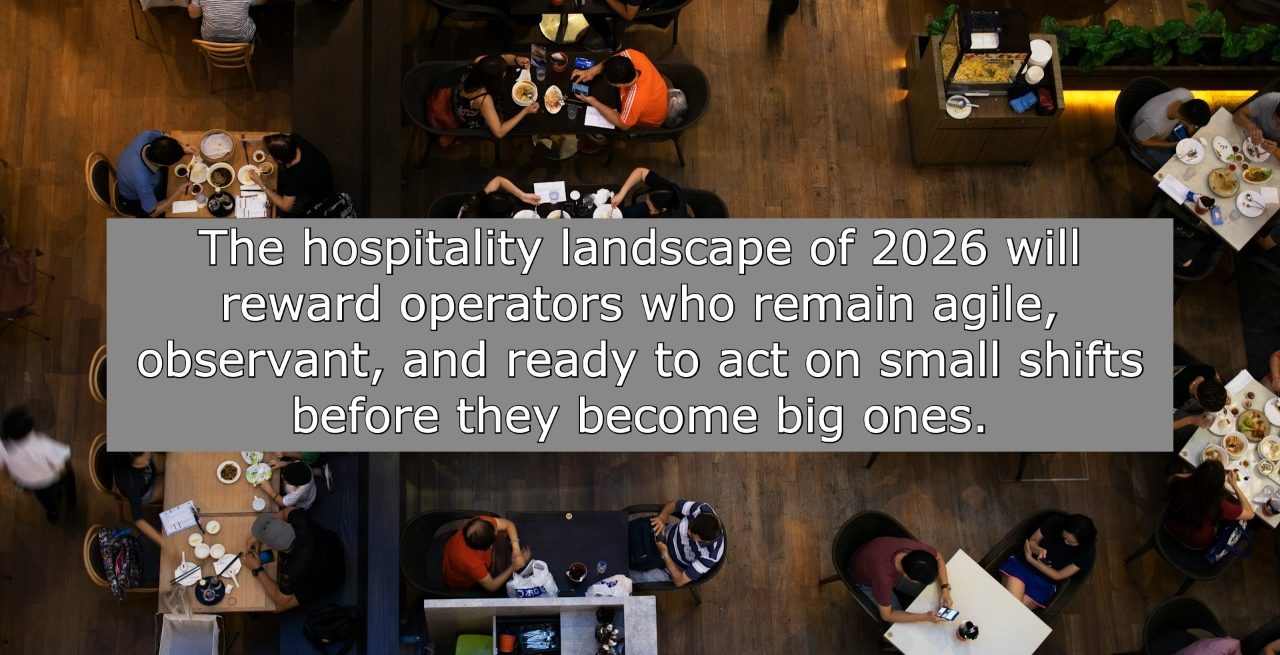
Microtrends. Mini meals. Event nights. Retail extensions. All four signals point to the same truth: the hospitality landscape of 2026 will reward operators who remain agile, observant, and ready to act on small shifts before they become big ones.