What 2025’s Biggest Restaurant Traffic Spikes Reveal About LTO Effectiveness
2 Min Read By MRM Staff
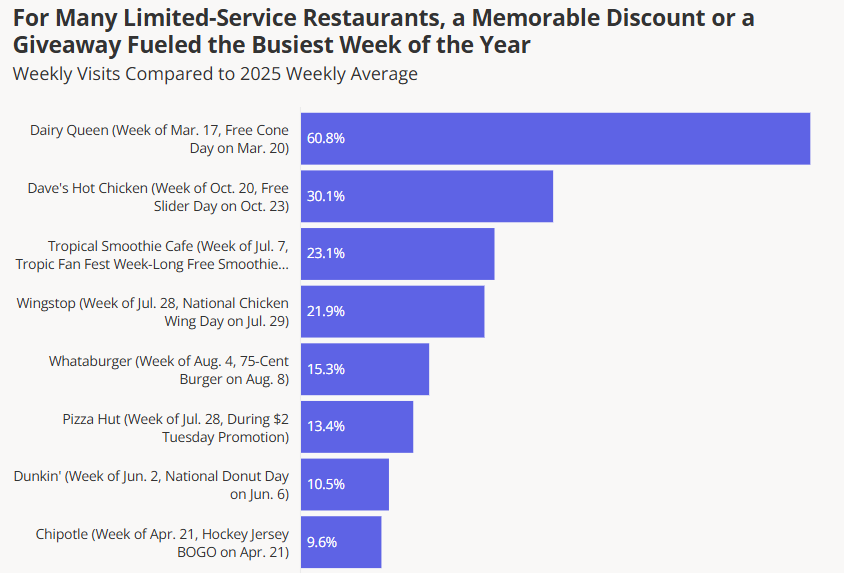
LTO success this year will hinge on brands being nimble and taking cues from last year's top-performing campaigns, according to a Placer.ai report. The data revealed that standout promotions such as freebies for value seekers, McDonald’s Grinch Meal, and Starbucks’ Bearista led to the biggest traffic spikes of the year.
“We have known for several years that pop-culture tie-ins can lead to a meaningful uptick in QSR visits, yet their consistent success year after year never ceases to amaze us,” said R.J. Hottovy, Head of Analytical Research at Placer.ai. “Interestingly, we are seeing a shift where brands integrate pop-culture influences directly into the products themselves, rather than relying solely on merchandise giveaways. We expect to see more creativity on this front in 2026, which should help drive continued visit growth.”
Among the report highlights:
-
The strongest-performing offers were easy to understand and clearly differentiated from everyday value, helping them cut through in a crowded discount environment.
-
Krispy Kreme’s Back to Hogwarts collection nearly matched the weekly impact of National Donut Day, while McDonald’s and Burger King saw their largest visit spikes tied to pop-culture activations like the Grinch Meal and SpongeBob Movie Menu.
-
At McDonald’s, the Grinch Meal extended momentum from October’s Boo Bucket drops, while at Starbucks, the Bearista launch helped set the stage for the brand’s biggest Red Cup Day ever.
-
The Bearista success showed that limited, narrative-driven collectibles can drive traffic at scale, even at premium price points, without relying on external cultural IP.
The report reveals that the busiest weeks of 2025 show that even in a tough, value-conscious environment, limited-service restaurants still have multiple, proven ways to drive traffic. So what are the best strategies for brands to create deals that differentiate them from "everyday value" and feel valuable to potential guests?
“In general, QSR brands must maintain an everyday value platform to appeal to budget-conscious consumers, while balancing it with limited-time deals and promotions,” Hottovy said. “We have observed numerous success stories across the broader retail and restaurant landscape where brands effectively combine everyday value with a consistent calendar of LTOs.”
Brands must be selective with their partnerships, ensuring they do not sacrifice authenticity for the sake of a promotion. to tap into those lighting in a bottle cultural moment traffic drivers, he added.
“The most successful campaigns occur when the QSR brand and the partner are strategically aligned. This alignment creates genuine buzz around the product, fosters a deeper connection with consumers, and ultimately drives visit frequency.”
Brands can prepare for 2026 by moving beyond standard value deals and relying on collaborations, narrative-driven merchandise, and nostalgic menu revivals that differentiate themselves from rivals, Hottovy advised.
“Success will depend on sequencing these distinct levers—rather than relying on a single tactic—to build sustained momentum and engage consumers in a crowded market.”