
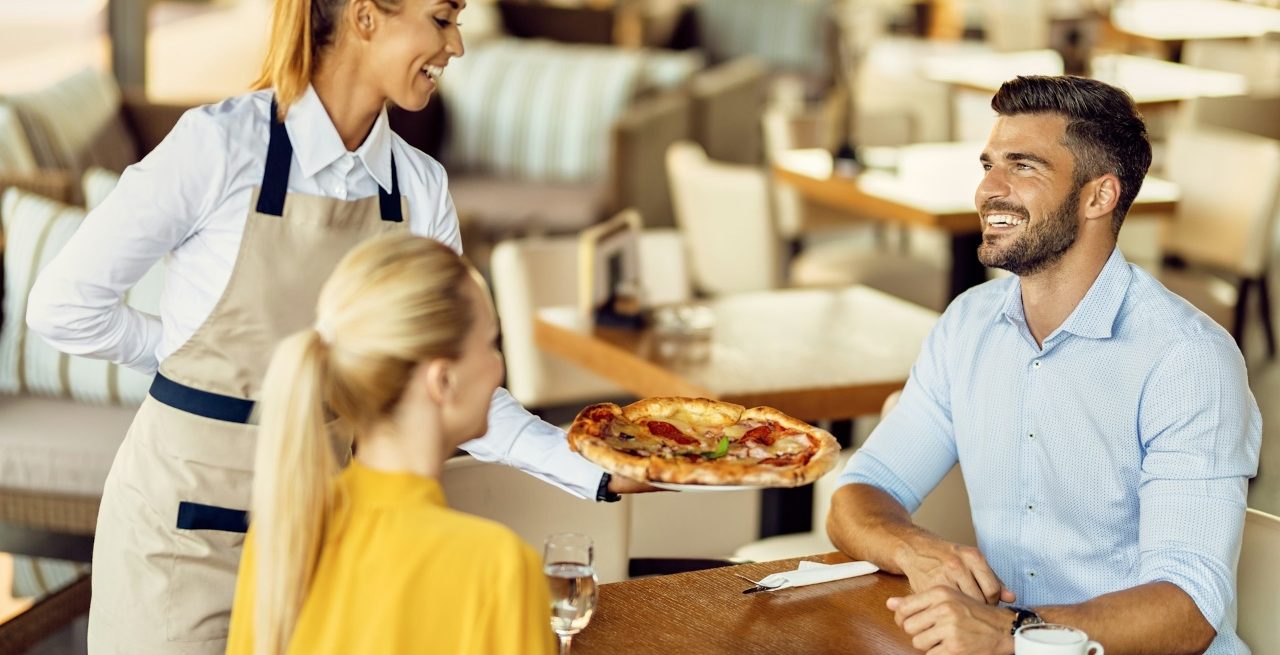
Value Is an Operating Discipline, Not Just a Pricing Decision
4 Min Read By MRM Staff
While price definitely still matters to restaurant guests, some are now asking a broader question: “Was that meal worth the money, the time, and the occasion?”
Deloitte’s recent report about what defines value for consumers when dining out highlighted three points:
- Value is about more than just pricing. Deloitte analysis found price only accounts for 67 percent of what consumers perceive as value for restaurant brands. The other 33 percent is defined by non-price factors such as quality and service.
-
Experience matters. Food and service quality are most influential to the value-seeking consumer, followed by operational and experience factors such as speed, food presentation, staff attitude, and atmosphere and cleanliness.
-
Going beyond price drives growth. Three in ten restaurant brands qualify as “more value for the price” (MVP) brands. These brands are growing revenue 7.3 percent faster than “lower value for the price” (LVP) brands.
“What we are observing is a more deliberate consumer,” said Evert Gruyaert, Restaurants & Food Service Leader, Deloitte. “They may still spend, but they may be less forgiving when the experience does not justify the check. Value could continue evolving toward confidence: confidence that the food will be fresh, the order will be right, the staff will be friendly, and the experience will feel repeatable.”
MVP brands are not simply cheaper brands. They are brands that deliver more perceived value than consumers would expect at their price point.
The research shows that:
In quick service, MVP brands separate on the basics: freshness, consistency, service quality, speed, and cleanliness. Food freshness was a standout, with MVP brands outperforming LVP brands by 15 percentage points.
In fast casual, the value equation is more multi-dimensional. Consumers are paying for a trade-up, so MVP brands should deliver on quality, portion size, food appearance, temperature, menu variety, and visible operational discipline.
In sit-down dining, value is the full experience. MVP brands win when food, service, ambiance, timing, and staff knowledge all work together. The details matter: MVP sit-down brands outperform on food cooked as desired by 13 points and optimal food temperature by 12 points.
“One takeaway is that value is an operating discipline, not just a pricing decision,” Gruyaert noted. “MVP brands win when they execute the fundamentals consistently: hot food, accurate orders, friendly staff, clean restaurants, good portion perception, and reliable speed of service.”
AI and Automation as Value Drivers
To help diagnose their value position, operators can start with the metrics customers experience directly, he suggested. Are food temperatures where they should be? Is order accuracy improving or declining? How consistent are ticket times? What do cleanliness scores, guest satisfaction scores, and employee engagement metrics look like across locations? Most importantly, are customers coming back?
This is where AI and automation can become relevant. Deloitte’s AI in Restaurants research points in the same direction as the value research: operators are prioritizing use cases that improve execution, not just novelty.
Two examples stand out, Gruyaert said. First, customer experience AI is already widely used, including recommendation engines, ordering support, and emerging voice AI in drive-thrus. That links directly to speed, convenience, and order accuracy. Second, operational AI is being used for forecasting, real-time inventory tracking, waste reduction, and better supply planning. That helps support freshness, availability, margin control, and consistency. The research also shows some operators are seeing high impact from customer experience investments and expect that impact to grow, which reinforces that AI use cases that make the restaurant run better and make the guest experience feel more reliable are often the most helpful.
“The caution is that AI should not be treated as a shiny object. Some of the biggest challenges are identifying the right scalable use cases and managing risk. Consider: does this use case improve a value driver customers actually notice, or does it just add complexity?”
One trend Deloitte has been observing is not a pure pullback from dining, but the emergence of a more selective consumer, Gruyaert explained. People appear to be willing to spend, but they often want the occasion to earn the spend.
That creates two tracks. For everyday occasions, value-seeking behaviors remain relevant: bundles, deals, convenience, and reliability matter. For more social or seasonal occasions, experience can matter more, but the bar is still higher. Consumers may trade up for a dinner out, a patio occasion, or a celebration, but they still expect the experience to feel worth it.
“So I would not frame this as value seekers versus experience seekers,” he said. “The same consumer can be both. They may want a deal on Tuesday lunch and a memorable experience on Saturday night. An opportunity for operators is to design value by occasion.”
Focus on the Fundamentals
To deal with continuing economic pressures, operators must protect the fundamentals, be surgical on pricing, focus investment where it changes customer behavior and drives repeat visits, and use technology to help reduce operational drag, Gruyaert said. The data is clear: food quality, service quality, speed, staff attitude, cleanliness, appearance, and temperature are the drivers that matter most.
Broad price increases or broad discounting can both create problems and operators should consider menu architecture, bundles, targeted offers, portion options, and premium items that reinforce value without diluting margin, he said. For the customer and technology portion, they focus on things like fixing order accuracy or food temperature. AI-enabled forecasting, labor planning, inventory management, personalization, and order accuracy tools can help operators manage cost pressure while improving the guest experience.
Discounts can be useful, but they can also be dangerous when they become the main value strategy, Gruyaert advised because they can create a loop: discount to drive traffic, margins fall, reinvestment gets harder, customers become trained to wait for deals, and then the next discount has to work even harder.
“A bigger issue is that discounts do not fix a weak experience. If the food is cold, the order is wrong, or the service is inconsistent, a lower price may get one visit, but it may not earn the next one. MVP brands build pricing power by improving the things customers notice and remember.”