Twenty Years of Hospitality Storytelling and Brand Building
6 Min Read By MRM Staff
In 2005, Andrew Freeman launched af&co. from his San Francisco living room with a vision to create an agency that would take a collaborative approach with hospitality clients and make a real impact in the community.
Flash forward twenty years, and the firm has done just that, having launched more than 500 restaurants, hotels, and lifestyle brands while shaping the hospitality identity of the Bay Area and beyond. In 2019, Freeman and longtime colleague Candace MacDonald founded Carbonate, a branding, insights and creative strategy focused firm. The af&co. + Carbonate Annual Trends Report, now in its 17th year, has grown to be one of the most influential industry resources, providing insights into emerging hospitality trends.
Freeman began a career in hospitality by working his way up in some of New York City’s most established dining spots including the Russian Tea Room and Windows on the World, followed by a decade as VP of Public Relations and Strategic Partnerships for Kimpton Hotels & Restaurants, where he launched over 40 properties and spearheaded their lauded LGBTQ+ travel program.
The City and County of San Francisco recently presented af&co. with a Certificate of Honor, celebrating its 20 years of leadership and impact and the firm has has received numerous accolades including being honored as the Public Relation Society of America’s Small Agency of the Year, named among PR Net’s Top 100 PR Agencies, featured on the Inc. 5000 list of fastest-growing private companies, and included for 10 consecutive years among the San Francisco Business Times’ Top 50 LGBTQ-Owned Businesses.
Freeman discusses major industry shifts including how evolving guest expectations, the blending of dining categories, and digital marketing have redefined hospitality. He also covers the importance of brand storytelling, common restaurant marketing mistakes and gives a glimpse into the behind-the-scenes process of the trend report.
How do you think the way the world experiences hospitality has changed?
Hospitality has changed as generations have changed. People now come to dining and travel with very different backgrounds, expectations, and priorities than they did 20 years ago. My own background is ultra–fine dining, and even that category has been completely redefined. Generations now shape how, when, and why people eat and drink.
Generations now shape how, when, and why people eat and drink.
Technology has also played a major role in how guests interact with restaurants and hotels. The pandemic accelerated a shift from high-touch to no-touch experiences, but now we’re seeing tech fatigue. QR codes and kiosk ordering are falling out of favor, and service and old-school engagement are coming back.
Dining habits themselves have evolved. Small plates changed how people share meals. Cross-cultural dining has become the norm. Even factors like GLP-1s and Ozempic are influencing how people approach food. Looking ahead, I think “splurge days” will become more important. People will dine out less frequently, but more intentionally.
What are the key ways you feel hospitality marketing has evolved over the past 20 years? And how has af&co. been able to change with the times?
When we started af&co., there was no email marketing, no social media, and nothing digital. We were using flip phones. Texting and email were just beginning. Marketing was grassroots: snail mail, in-person meetings, and deals made over meals. People called each other on the phone.
I believe the future is a blend: thoughtful digital and social strategy combined with in-person connection and meaningful touchpoints.
As the industry evolved, we had to adopt social media, digital platforms, and new communication tools. Hospitality was actually a later adopter because we’re a people-oriented business. Suddenly, there were endless ways to communicate, and it became overwhelming. From waking up to 23 voicemails, to now dealing with constant notifications and 1,000s of emails the population is struggling with information fatigue.
While digital tools have brought real benefits, they’ve also made it harder to capture attention the way a piece of mail once did.
Today, I believe the future is a blend: thoughtful digital and social strategy combined with in-person connection and meaningful touchpoints. The challenge now is managing the noise while still being effective.
What do you view as the biggest shifts in the restaurant industry over the past 20 years?
Dining categories have blended significantly. Fine dining and fast casual are no longer so distinct. The world has moved toward “have it your way,” with far more customization and accommodation than ever before.
Restaurants are more transparent and descriptive about dietary needs, and formality has shifted. Perhaps the most exciting change has been the rise of cross-cultural restaurants, reflecting how much cultures have blended globally. Dining today feels more accessible, more flexible, and more reflective of how people actually live.
What challenges do you see ahead for the industry?
Volatility is the biggest challenge. It’s difficult to plan or spend money when the world feels unpredictable. Climate change is affecting farms and supply chains. The labor pool continues to be a challenge, especially as work-life balance redefines what hard work looks like in restaurants.
Volatility is the biggest challenge.
There are also economic pressures: tariffs, imports, and rising costs, that directly impact what restaurants rely on. All of this creates uncertainty that the industry has to navigate daily.
In what ways has the pandemic changed the industry? How did it affect af&co. and its clients?
In my lifetime, I hope I never see anything like the pandemic again. It devastated the hospitality industry and af&co. We went from 20 employees to two.
Despite that, we made the decision to fight for the industry and help keep restaurants alive. Our clients got incredibly creative by hosting virtual dinners, turning restaurants into grocery stores, and unearthing new ways to serve guests. Some didn’t survive, which is heartbreaking, but many of those who did came out stronger and more resilient.
Why is storytelling so important to a restaurant’s success, and how does af&co. help clients find their brand voice?
The clearer the concept, the higher the likelihood of success. That can be hard for operators to internalize because there’s a temptation to be everything to everyone.
The clearer the concept, the higher the likelihood of success.
We help clients define their key messaging which is what the brand stands for and how that message is communicated to everyone involved. There must always be a target. You can’t veer from your concept without one.
Once the messaging is defined, we focus on how it comes to life through marketing, promotions, and guest touchpoints while still finding ways to surprise and delight within the boundaries of the brand.
What are some marketing mistakes you see restaurants make, and how can they course-correct?
The biggest mistake is losing focus on who they are. If sushi is trending and you’re an Italian restaurant, that doesn’t mean you chase it. Don’t be trendy just to be trendy, trends need to fit your business.
Don’t be trendy just to be trendy, trends need to fit your business.
When things feel volatile, there’s often pressure to react quickly, but those reactions still need to align with the brand. Another major mistake is not hiring professionals. Restaurants need to invest time and resources into experienced talent and quality support to set themselves up for long-term success.
The Trends Report has become such an industry fixture. What do you feel were some of the most memorable forecasts?
A huge amount of credit goes to our partner agency Carbonate and to our senior strategist, Leith Steele, whom I’ve worked with on 16 of the 18 reports. None of this happens without them.
We get about 70–75 percent of our top trends right every year, and nine times out of ten we call the city of the year correctly. This year, it’s Minneapolis. We’ve accurately predicted cross-cultural dining trends, called cuisines like Korean and Indian early, and even flagged moments like Dubai chocolate. Solo travel and solo dining were also major calls. There have been many “you called it” moments over the years.
How has af&co. kept a finger on the pulse of industry trends year after year?
It’s a labor of love. We start working on the next trends report as soon as the previous one is released. Everyone at af&co. and Carbonate is constantly sourcing, observing, and sharing, we even have internal trend channels where we communicate year round.
We read relentlessly, not just about food but about fashion, design, color, and culture. Then we ask hard questions: Is it a real trend or just a fad? We back everything up with data. We might start with 150 ideas and narrow it down to about 40 trends that truly matter.
Looking back at something that started out of your living room, what achievements give you the most pride?
Yes, it really did start in my living room. The fact that we’re here 20 years later feels like a blink, but it includes hard times and great ones.
Bringing people’s dreams to life is what got me into this industry.
I’m incredibly proud of the af&co. Alumni, many have gone on to do amazing things, and some are even our clients now. Bringing people’s dreams to life is what got me into this industry. I love the theatrics of hospitality and seeing chefs’ and hoteliers’ visions come to life, knowing we played a part.
What’s most fulfilling is the time I spend with my team and clients. I also take great pride in starting Carbonate seven years ago and building something new alongside af&co.
What do you hope the next 20 years brings to af&co.?
I hope af&co. continues. It may not be with me at the helm for another 20 years, but I want the legacy to live on with people who are passionate about what we do.
I’d love to see af&co. continue as one of the leading hospitality marketing agencies in the country. Looking back on 20 years has been a beautiful thing, and I hope the future is carried forward by people who truly care about the industry.
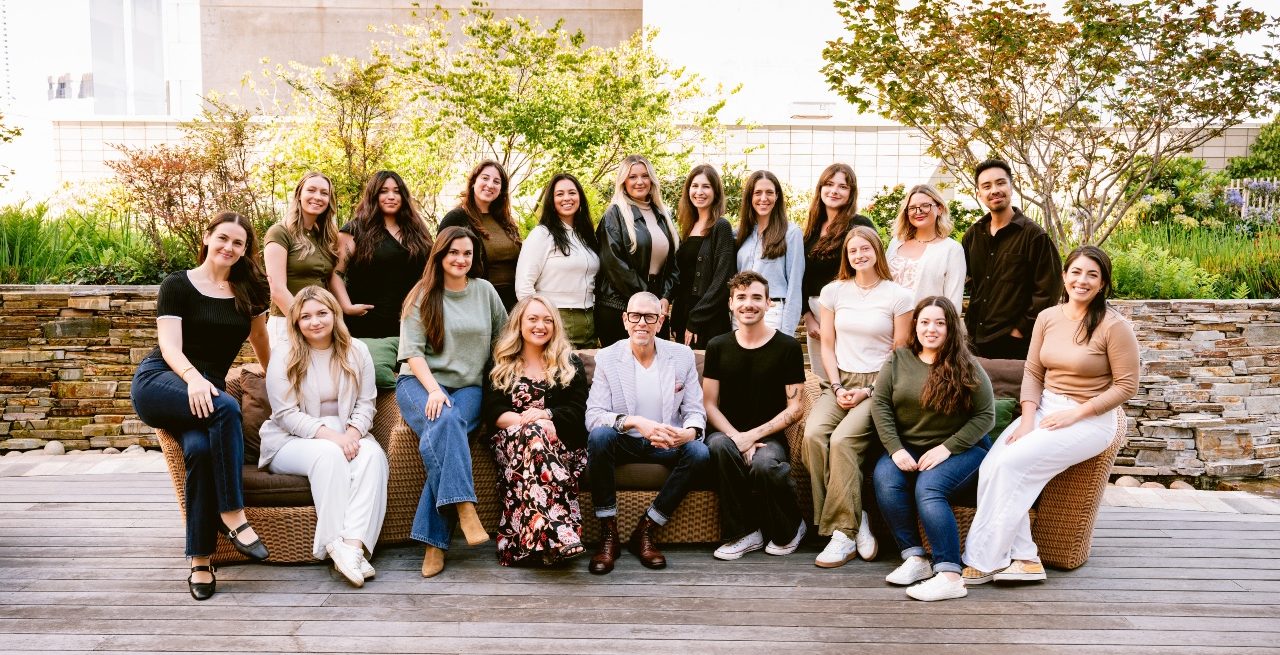
Top photo: The af&co team.