
The Five Pillars of Stand Out Hospitality
7 Min Read By MRM Staff
Most of you reading this know how tough the hospitality business is, particularly over the past few years with economic pressures, labor issues, and shifting customer expectations. Many probably wonder at times if it’s worth it, so how can operators reignite their spark and rediscover their clarity, confidence, and purpose?
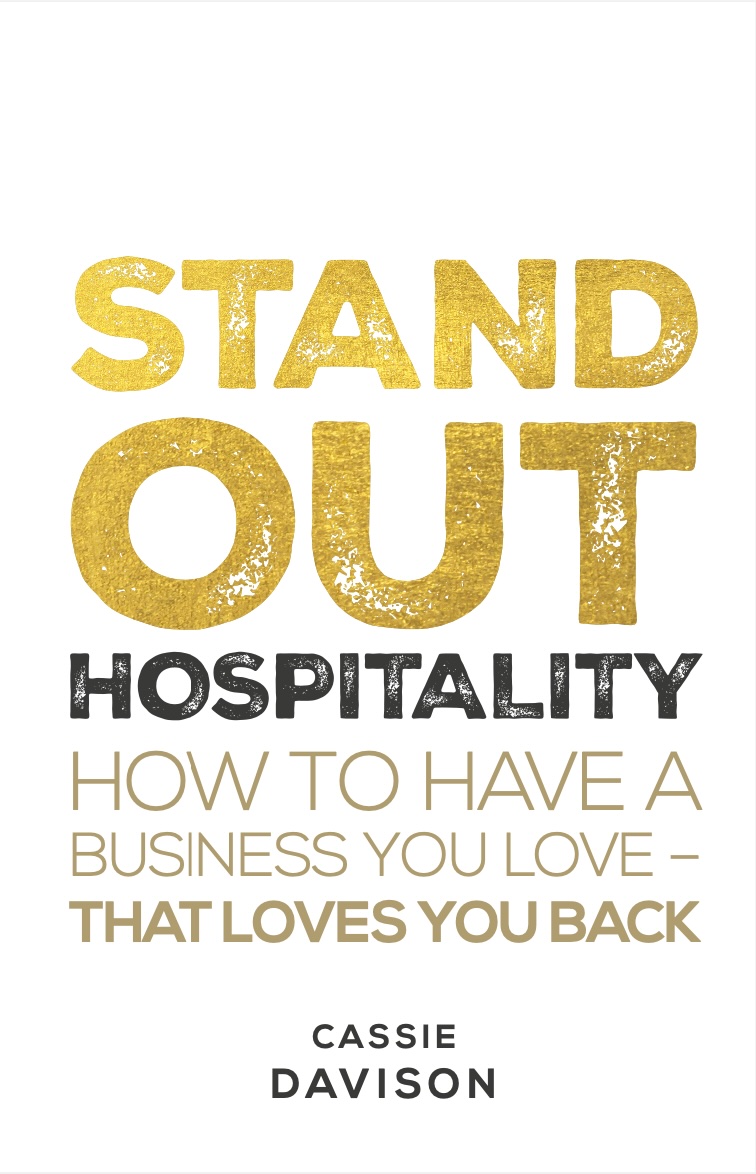
Based on her 30 years of experience building, growing, and leading pubs, cafés, fine-dining restaurants, and even festivals, Cassie Davison, founder of Kith & Kin, authored Stand Out Hospitality: How To Have a Business You Love -That Loves You Back with actionable guidance to help business owners simplify, refocus, and reconnect with what matters most. She discusses her framework: The Five Pillars of Stand Out Hospitality (Set High Standards, Stand Out, Define Your Identity, Build Belonging, and Tell a Great Story). For an excerpt, click here.
In this Q&A with Modern Restaurant Management (MRM) magazine, Davison reveals why she wrote the book, challenges independent operators are facing and lessons she has learned along the journey.
Why did you want to write a book and what was your process?
After more than 30 years in hospitality, and over 25 years of building and running my own businesses, it felt like the right moment to pause and reflect. I’ve taken derelict buildings and turned them into multi-award-winning venues that mattered to their teams, customers and communities. But it took most of those years to truly understand why they worked.
Hospitality will never be easy, but it can be simpler.
The hard knocks taught me as much as the successes. Over time, patterns emerged. I began to understand the deeper value of hospitality, why it mattered so much to customers, and why strong teams form and perform at their best. That understanding only comes from lived experience.
I wrote this book because I felt a responsibility to pass that learning on. To those still in the trenches, to the next generation coming through, and to independent operators navigating an industry that is complex and demanding. Hospitality will never be easy, but it can be simpler. This book brings together decades of experience and an insider’s perspective on what allows a business to stand out and endure, even in tough times.
What makes this book "stand out" from other hospitality books?
Most hospitality books are written from positions of scale, capital or corporate support. They assume access to resources that many independent businesses simply don’t have.
This book is different.
Stand Out Hospitality is grounded in independent hospitality. It reflects the reality of businesses built from the ground up, often purpose-led, deeply personal and embedded in their communities. These businesses don’t lack passion or intent, but they are frequently overwhelmed by noise, complexity and competing advice.
Rather than focusing on tactics, trends or systems, the book explores the deeper foundations that allow independent hospitality businesses to endure. It doesn’t tell operators what to do. It helps them understand why certain decisions matter, why some businesses stand the test of time, and why meaningful success is rooted in clarity, identity and belonging.
At its heart, the book restores confidence. It reminds independent operators that they already hold more wisdom than they realise, and that sustainable success doesn’t come from copying others, but from building something true to who they are and who they serve.
How did you develop the five pillars?
Independent hospitality is deeply personal. There is no one-size-fits-all solution, because standout businesses succeed precisely because they reflect the people behind them. What is right for one place may be entirely wrong for another.
That said, patterns do exist.
After decades of running my own venues and working closely with a wide network of independent operators, suppliers and leaders, I began to see the same foundations appearing again and again in the strongest businesses. Not as rules, but as principles.
The Five Pillars represent those foundations. They sit beneath every meaningful decision, shaping leadership, culture, brand, customer experience and long-term growth. They offer something solid to return to when the industry feels noisy, and a way to simplify complexity without losing individuality.
Developed through experience and reflection, the pillars form a framework operators can trust, adapt and return to over time. They don’t replace instinct or passion. They support it, helping businesses stay aligned, resilient and true as they grow.
Who do you hope reads this book and what do you hope they take away from it?
This book is for hospitality operators at every stage of their journey. For those just starting out with purpose and ambition, already feeling the weight of complexity. For those several years in, running good businesses but feeling stuck, overwhelmed or disconnected from why they started. And for experienced operators who want to step back, reflect and realign before burnout takes hold.
More than anything, I want readers to feel seen.
I want them to recognise themselves in the stories and decisions explored in the book, and to understand that what they’re experiencing is a shared reality in a demanding industry. The book is there to restore confidence, to remind operators that they already hold deep, instinctive knowledge, and that they don’t need to chase every new idea or compare themselves to others to succeed.
I want readers to reconnect with why they fell in love with hospitality in the first place, why it matters to them, and why that sense of purpose matters just as much to their teams and customers. My hope is that, by the final page, they feel renewed belief. That despite how hard this industry can be, it is absolutely worth it, and that many of the answers they’ve been searching for are often ones they already know.
What are key lessons in restaurant management you've learned over the years?
Setting high standards isn’t about control, systems or perfection. It’s about people.
Pride matters more than perfection. The strongest restaurants aren’t flawless, but they are reliable. Customers feel it in the details, and teams feel it when expectations are clear and consistently modelled. Pride creates confidence. Perfection creates fear.
Culture is shaped by what you tolerate. Avoiding difficult conversations doesn’t protect people, it erodes trust. Compassionate leadership means facing issues early, with honesty and care, and protecting the integrity of the wider team.
Finally, you have to protect what matters. Reviews, awards and recognition are useful, but they’re tools, not strategy. When standards are rooted in values and purpose, they last. When they’re driven by comparison, the pressure never ends.
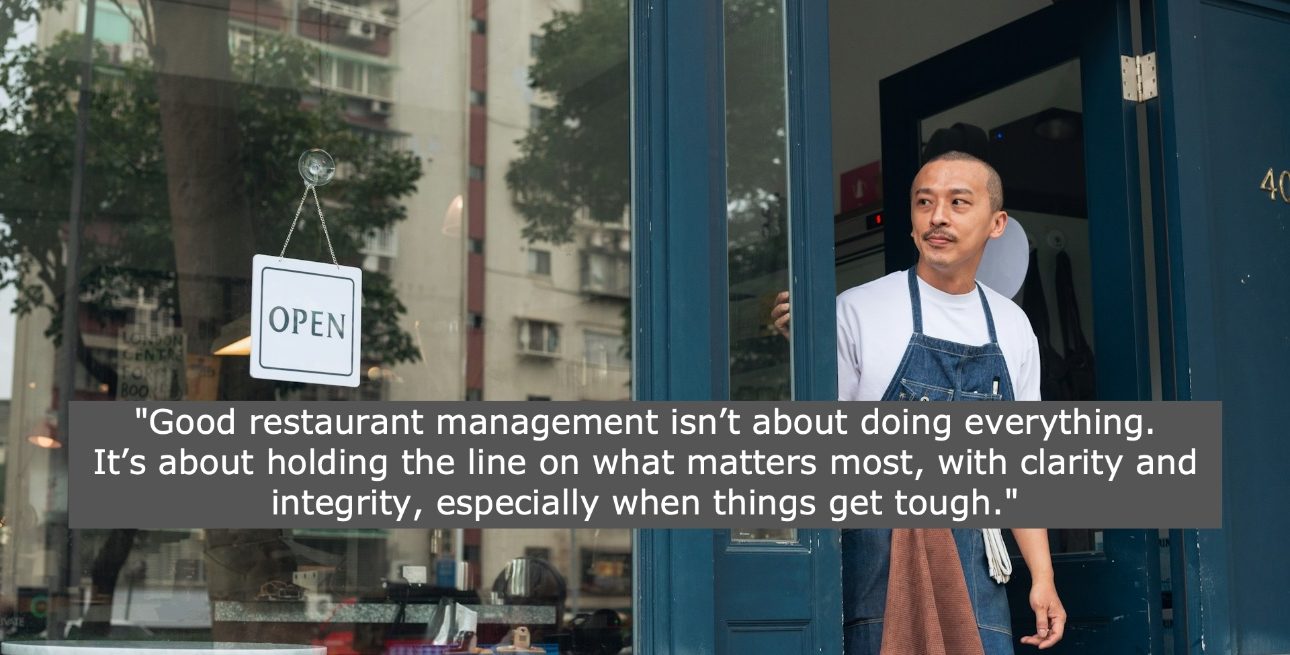
Good restaurant management isn’t about doing everything. It’s about holding the line on what matters most, with clarity and integrity, especially when things get tough.
What do you see as key challenges for independent restaurant operators and why do you feel they are so important to communities?
Independent restaurant operators are navigating relentless change. After an exceptionally tough few years, they’re now facing rapid technological and cultural shifts, changing customer behaviour, rising competition and evolving expectations from their teams. The challenge isn’t effort. It’s knowing what truly matters.
Independent restaurants build belonging. They create tribes. They are places where people are recognised, remembered and valued.
As the world becomes faster, more automated and more transactional, the real risk for independent restaurants is losing their personality in the rush to keep up.
This is where their greatest strength lies. Independent restaurants build belonging. They create tribes. They are places where people are recognised, remembered and valued. Where teams feel they matter, and customers feel known. When that happens, a restaurant becomes far more than a business. It becomes part of people’s lives.
That’s why independent restaurants matter so deeply to communities. They hold emotional space. They shape local identity, create connection, and give people somewhere they belong. In a changing world, that human role isn’t a nice extra. It’s their advantage, and it’s essential.
If a restaurant is struggling, what are some suggestions for righting the ship?
When a restaurant is struggling, the instinct is usually to do more. More marketing, more systems, more pressure. In reality, the work is often to stop and remember why any of it matters in the first place.
Righting the ship starts with reconnecting to purpose. Why this business exists, why it matters to the person running it, why it matters to the team, and why it matters to customers. When that clarity is lost, everything becomes harder. Decisions slow down, standards slip and the noise takes over.
When a restaurant realigns around purpose and pride, clarity returns, energy shifts and momentum follows.
A purpose-led business is simpler. It knows who it is for and what it stands for. That alignment makes it easier to see what’s no longer serving the business and what needs to be protected. Often, progress comes not from adding something new, but from letting go.
The answers are rarely external. When a restaurant realigns around purpose and pride, clarity returns, energy shifts and momentum follows. Struggling doesn’t mean the business is broken. It usually means it’s time to come back to what matters most.
What has kept you in the restaurant business over the years, particularly in the hard times?
It has been really hard. Not just in business, but in life. There have been moments when the pressure of running restaurants collided with personal challenges, exhaustion, loss and responsibility, and it would have been easier to walk away.
What kept me going wasn’t resilience for its own sake, or stubbornness. It was understanding why this industry matters.
Loving this industry doesn’t mean pretending it isn’t brutal at times. It means choosing to stay connected to what makes it worth it.
Hospitality has always been more than food or service to me. It’s about creating places where people feel held, where they can belong, where life happens. When things were at their hardest, remembering that purpose gave meaning to the struggle. It reminded me that what we were building mattered, not just to customers, but to teams, communities and to me.
The book reflects that truth. When you lose sight of why you do this work, everything feels heavier. When you reconnect with it, even difficult decisions feel clearer. Loving this industry doesn’t mean pretending it isn’t brutal at times. It means choosing to stay connected to what makes it worth it.
That understanding, the deep sense of purpose behind hospitality, is what has kept me here through the hardest moments.
How are hospitality and guest expectations evolving?
Guests expect more than efficiency or consistency now. Those things are assumed.
What’s changing is the emotional expectation. People want to feel recognised, understood and welcome. They want experiences that feel human, not transactional, and places that reflect care, personality and intention.
As technology and automation become more common, the value of genuine hospitality increases. Guests are less impressed by polish and more attuned to how a place makes them feel. Small details, presence, warmth and authenticity carry more weight than spectacle.
People also expect alignment. They notice whether a business treats its team well, stands for something, and feels honest rather than performative. Trust is built quietly, over time, through consistency and care.
The future of hospitality isn’t about doing more. It’s about doing what matters better. Creating spaces where people feel they belong, and experiences that stay with them long after they’ve left.