Plate Waste Is a Business Opportunity in Disguise
4 Min Read By MRM Staff
While approximately 30 percent of the food supply in the U.S. is still wasted, progress has been made and restaurant operators have an opportunity to continue that momentum by better tracking what guests leave behind and offering customizable portions, according to findings from ReFED’s Progress on the Plate: 2026 ReFED U.S. Food Waste Report.
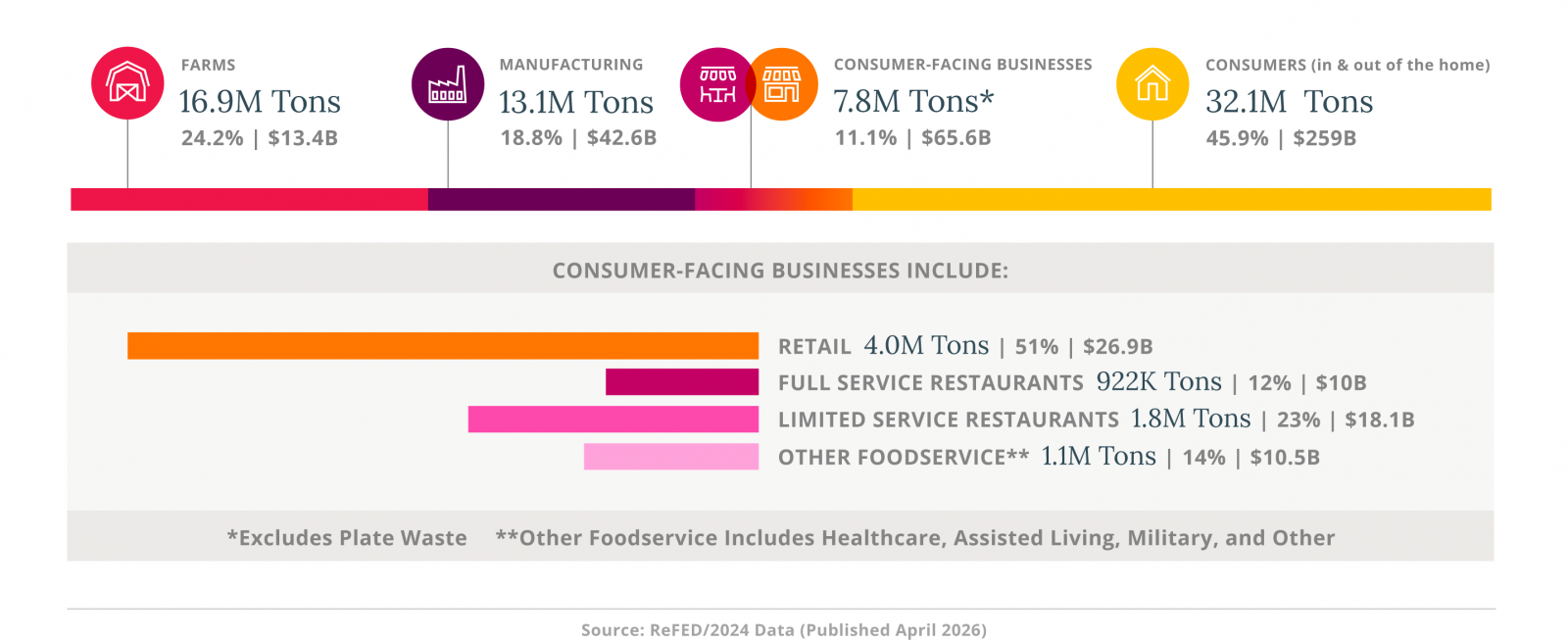
The data shows that in 2024, total surplus food decreased to 70 million tons, a 2.2 percent reduction from 2023 and slightly more than a 3.7-decrease per capita, led by a nearly 950,000 ton reduction in residential food waste. In restaurants, 70 percent of the 12.5 million tons of food that go uneaten is plate waste or what customers leave on their plates. This plate waste is a business opportunity in disguise, said Sara Burnett, executive director of ReFED.
No restaurant operator wants to spend money on food that consistently ends up in the trash.
“No restaurant operator wants to spend money on food that consistently ends up in the trash,” said Sara Burnett, executive director of ReFED. “Tracking and understanding what diners leave behind can inform menu options and purchasing. And bringing that plate waste down can reduce waste hauling costs. Another win-win!”
The foodservice sector saw progress in 2024. In the latest U.S. Food Waste Pact Impact Report, reporting foodservice signatories saw a 5.7 percent reduction in the food efficiency rate, the metric that most accurately reflects waste reduction in the foodservice sector. This resulted in a 4,000 ton reduction in waste and a $15.9 million decrease in the wholesale cost of surplus food.
“As this sector looks to expand on these reductions in the year ahead, there is a real opportunity for operators to re-evaluate their menu options and offer customizable portions in an effort to save money and reduce plate waste,” said Burnett. “The definition of ‘value’ for a growing segment of consumers is changing to include quality and customization, and the operators who respond will have a competitive advantage.”
ReFED identifies that the average consumer spends more than $760 every year on food that goes uneaten both in and out of the home. They are starting to see people adopting behaviors to waste less of it such as checking the fridge before going shopping, planning meals or grocery lists more closely, or monitoring what needs to be eaten before it goes bad. And as behaviors become habits over time, they anticipate that these reductions in food waste will continue.
“As for the broader food waste movement, I think a constellation of factors, such as shrinking landfill capacity, margin pressures on food businesses, and high food prices, has made the often ‘invisible’ problem of food waste much more ‘visible,’” said Burnett. “And that, coupled with an increase in attention from national media and policymakers, will only help the momentum continue.”
There is a real opportunity for operators to re-evaluate their menu options and offer customizable portions in an effort to save money and reduce plate waste.
Research is suggesting customers expect restaurants to employ food waste prevention practices, she added. Datassential has shared that 80 percent of consumers agree that they want restaurants to get on board with reducing food waste, and 81 percent say they are more likely to patronize establishments that donate excess food.
“Couple that with our recent consumer survey indicating that 60 percent of Americans say they’re more likely to visit restaurants offering flexible, customizable, or innovative portion size options — a number that jumps to 75 percent for GLP-1 users — and you have a scenario where not only food waste reduction is in demand, but solutions like customizable portions that help restaurants reduce waste are also in demand.”
Operators need to start understanding what food typically ends up in the trash, both in the front and back of the house, and use that data to start to understand why, said Burnett, adding that there are many waste tracking and analytics tools.
“What gets measured, gets managed. The insights behind the ‘why’ can improve the efficiency of your kitchen and your inventory management.”
And the economic benefits are real, according to the data. For a kitchen with $1 million in annual food spend, a three-percent reduction in waste can translate into roughly $30,000 in potential annual savings, depending on purchasing structures and operational flexibility.
We consistently see that there is real value in addressing food waste.
“We consistently see that there is real value in addressing food waste. These efforts do more than improve the bottom line, they strengthen workplace culture and create opportunities for workers to participate in meaningful change.”
Tracking waste, particularly front of house, can also come with its own set of challenges, Burnett pointed out.
“Business as usual is hard to change. If food waste is currently treated as a cost of doing business, then taking action to both understand that waste and actively reduce it can seem like an added cost – and a distraction. If the food is already paid for, and waste hauling costs are low, where’s the motivation to dig through the bin to see what the day’s customers threw away?”
Operators can also look to increased use of automation and AI. While constraints like siloed data, institutional resistance, and human behavior currently limit the impact of AI to reduce food waste, a key area of traction right now is in foodservice, where AI-enabled systems track food waste and provide guidance in professional kitchens through tight feedback loops from ordering to inventory tracking to prep schedules, Burnett said.
“As this technology continues to improve and scale, it’s likely more and more kitchens will leverage the opportunity to drive operational improvements and reduce waste.”