No Fiddlin’ Around: Authentic British Pub Experience Includes No Tipping
5 Min Read By MRM Staff
Authenticity matters to David and Mischelle Goodman.
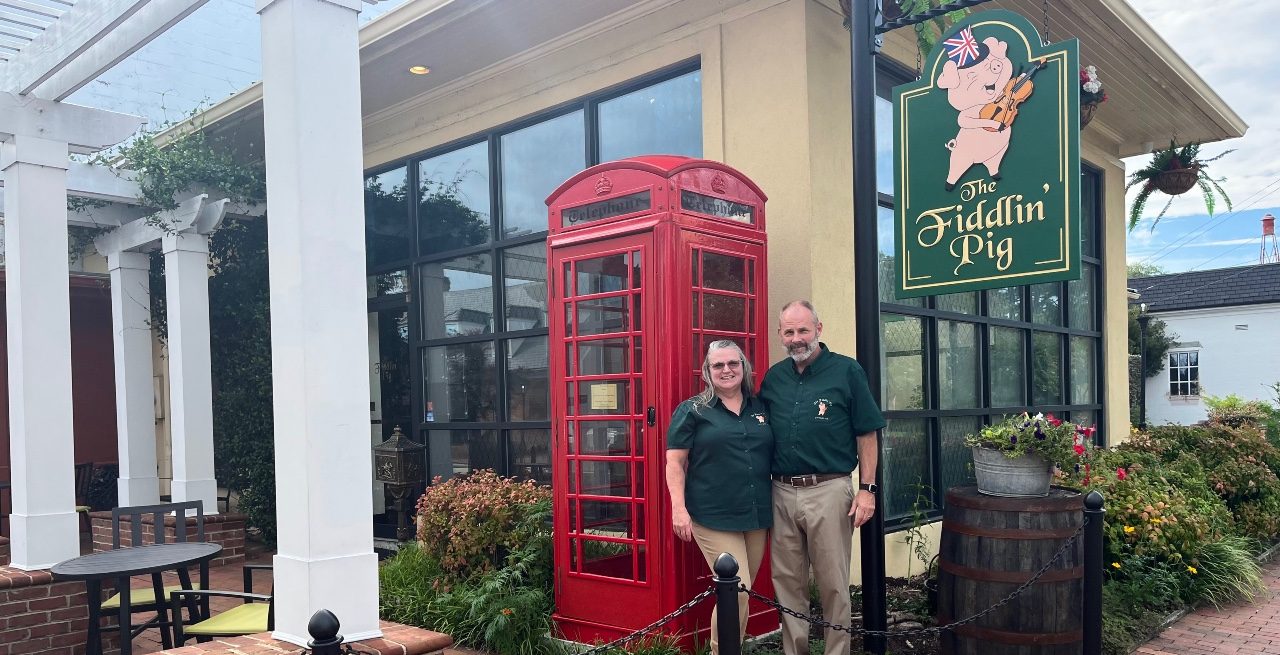
The owners of The Fiddlin' Pig want their guests to feel as if they are transported to a village in The Cotswolds.
The couple went to great lengths to make sure everything at their British pub in Smithfield, Virginia is authentic, transforming office space on the corner of Main and Church both physically and culturally.
This includes being certified by Cask Marque, an independent UK accreditation service that certifies pubs and bars serving high-quality cask ale for its cask conditioned beers. Other beer offerings are either local or imported from the UK. Gin and tonics are at the top of the drink menu, as well as Pimm's and Pusser's Rum. They serve a from-scratch menu loaded with authentic British staples and, year round, they host cultural events celebrating Scottish, Welsh, English and Irish holidays.
Another authentic touch: there has never been tipping at The Fiddlin’ Pig since it opened in 2024. In contrast to most American bars and restaurants, the financial model prices menu items to include a living wage for all employees.
“It has always been that way for us,” Mischelle Goodman explained. “Since we aspire to be an authentic British pub, we leveraged the European model early in the development concept. This model rewards employees for their ability to function in particular roles, without having to rely on customer tips or business volume , offering employees growth opportunities and skill development options across the business.”
A key part of the pricing model is based on value for money, Goodman explained. Since the branding includes a house-made menu, they can focus on plate costs with a percentage added to cover the traditional average tipping compensation for waitstaff. One example of how they get customers focused on value and not price is by offering unique versions of menu items such as Fish and Chips. Their version is an extremely large portion of cod served over hand-cut chips with a small portion of homemade minty mushy peas and homemade tartar sauce.
By standardizing no-tipping, intrinsic gains come from lower staff turnover, fewer new employee orientation costs, less administrative efforts for payroll, and avoiding daily tip-share and cash-out chaos for employees.
“The plate looks very different to the fried fish fillet and frozen french fries usually served by others called ‘Fish and Chips,’” she said. “By making the fish portion large with a real beer batter and the potatoes not uniform in shape, the value of the plate is what is noticed more than price.”
Controlling that included getting whole cod fillets and cutting to portion size as well as buying whole potatoes, peeling them, hand cutting using a custom die chipper. This lowers the cost, compared to other eateries similar menu offerings, and distinguishes the value of the dish to the customer. .
Mischelle Goodman advises other operators to consider a living-wage model and focus on the long-term benefit of staff retention and creation of an identity for superior waitstaff hospitality.
“By standardizing no-tipping, intrinsic gains come from lower staff turnover, fewer new employee orientation costs, less administrative efforts for payroll, and avoiding daily tip-share and cash-out chaos for employees.”
The biggest advantage of transitioning from tipping to livable wage compensation is the trust and flexibility each waitstaff employee would have because the operator doesn’t have to worry about over-pouring bartenders or unfair tip-pooling transactions, she said. Instead, operators can focus the staff on a superior level of hospitality aspect and operational needs every shift.
“Transitioning to a living wage for each employee enables lower price menu eateries to compete with the higher price menu eateries, since employees are not looking for a percentage of the menu as their paycheck. Once established, the living wage model becomes the attraction for job seekers, as stability and certainty of steady employment outweigh peaks and valleys of weekly compensation.”
This approach appeals to the type of employee who wants to have a livable and stable compensation wage bill, and avoids those looking to get quick money as a side job, she added. The trade off is each waitstaff employee can focus on what the operator needs for elevating service to a superior hospitality level for even the smallest of eateries.
“The education process begins at the interview. The model, how it works, and why it was chosen is communicated from the very beginning. Some applicants who have worked in the service industry choose to continue working in a traditional tipping environment,but most are eager to join a team that provides well established expectations for consistent compensation. The model also enables staff to focus on providing excellent service to all customers, without regard to which ones will offer the best personal benefit for tipping. For example, bartenders do not have to consider the tip potential before making a drink or engaging with certain customers. They can make consistent drinks and be their authentic selves for every customer.”
Scheduling preferences can reflect function rather than the ability to maximize compensation, Goodman said. For example, Sunday morning bartenders will spend more time restocking and cleaning between casual long interactions while a Saturday night bartender will likely be cranking out drinks with short, direct interactions with most customers.
Employee turnover at The Fiddlin' Pig is much lower than a traditional bar or restaurant, indicating that the model is perceived as a positive by staff, she said. Moreover, staff demonstrate the ability to fill multiple roles without wage decrement; for example, bartenders cover shifts as food runners, or food runners fill open dishwasher shifts.
When David and Mischelle discussed their plans before opening, other restaurant owners warned that payroll taxes on the living wages alone would prevent financial viability. Though the couple had no previous restaurant experience, they both have accounting, finance, and corporate business backgrounds.
A key aspect of this financial model relies on employees having a sense of ownership. Instead of working for tips individually, they work for the business as a whole, meaning they have a vested interest in achieving the financial goals – the same as the owners. Proving the model and ownership mindset works, the business recorded a net profit in its first quarter of operations and continues to exceed projected profitability, she said. This proves the model works, and those profits are shared with the employees because they are instrumental to that success.
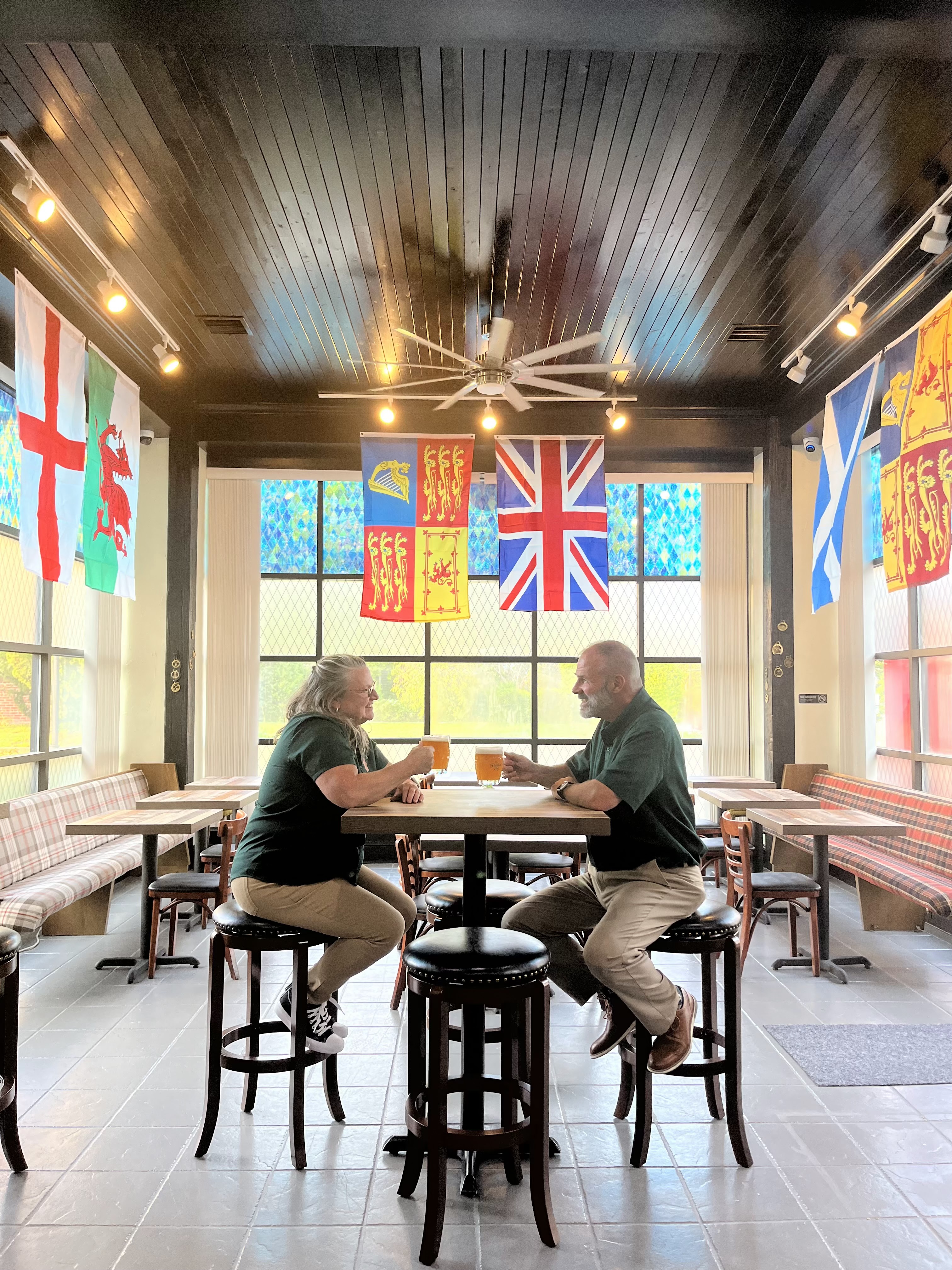
The owners and staff have found that when tips are not a consideration, customer interactions tend to be consistently more authentic, forming connections deeper than the business transaction. When bartenders make drinks based on a recipe, consistency between bartenders improves, and the cost of goods sold becomes more predictable. Heavy pours for good tippers is not something the owners have to police.
“When you hire intentionally and strip away all the superficial actions employees take to ‘solicit’ good tips, you end up with genuine hospitality and an environment that customers want to return to often,” she noted.
Although new customers show some initial confusion and hesitation, the response supports the system and, over time, word has spread. Many customer reviews includes that they are a “no-tipping required” establishment, so first-time customers who researched the pub may know before entering.
She said customers appreciate that the prices listed on the menu will be the total cost of their meal with state and local taxes added. Additionally, customers who open a tab by tapping their credit card are able to leave when finished with a simple wave or request to "Close my tab, we will be back soon!"
“This is a dynamic change for customers who often have experienced frustration with tablets being turned around for tips in environments where tips were not previously requested. An expectation is set that all customers will receive excellent service and the sometimes uncomfortable request for a tip is removed from the transaction.”
They also have a sign up at the bar where orders are placed that explains that they follow the European model of no tipping.
“When guests ask about tipping as they close their tabs our staff points to the sign and says: ‘We follow the European model, there are no tips. We are all paid a living wage and participate in profit sharing. If you would like to ‘take care of us" – stay a while, come back often and bring your friends!’’”