
How Operators Can Manage the Beverage Alcohol Reset
5 Min Read By MRM Staff
With diners becoming more intentional about alcohol consumption, new opportunities are opening for operators in ready-to-drink cocktails (RTDs), wine cocktails, non-alcoholic beverages, and more, according to Raise the Bar: H2 2026 Edition, a new series of twice-yearly reports from Southern Glazer's Wine & Spirits’ Commercial Intelligence team.
For example, RTDs remain under-penetrated in on-premise, said Zach Poelma, Senior Vice President, Commercial Intelligence, Southern Glazer's Wine & Spirits.
“When you look at the share of the category at about 25 percent in the off-premise, but still in the single digit range in the on-premise, we’re not giving the consumer what they want, particularly in more casual on-premise settings. When we look at our data, there are still a majority of accounts we survey that have no more than one spirits based RTD and many still don’t have any. The service speed with an RTD can improve profitability at a time they are facing increased costs across the board.”
Opportunities on the Radar
The report identifies five opportunities shaping beverage alcohol including:
-
Gen Z is emerging as an important growth cohort, over-indexing in spirits and RTDs while also increasing its wine spend.
-
Spirits RTDs now drive 94 percent of total spirits volume growth, while cocktails account for 92 percent of total wine growth. Smaller formats are also gaining ground.
-
Consumers are changing when and where they drink. Nearly half of consumers say bars and restaurants are the best place to try a new brand, reinforcing the on-premise as an important gateway to discovery.
-
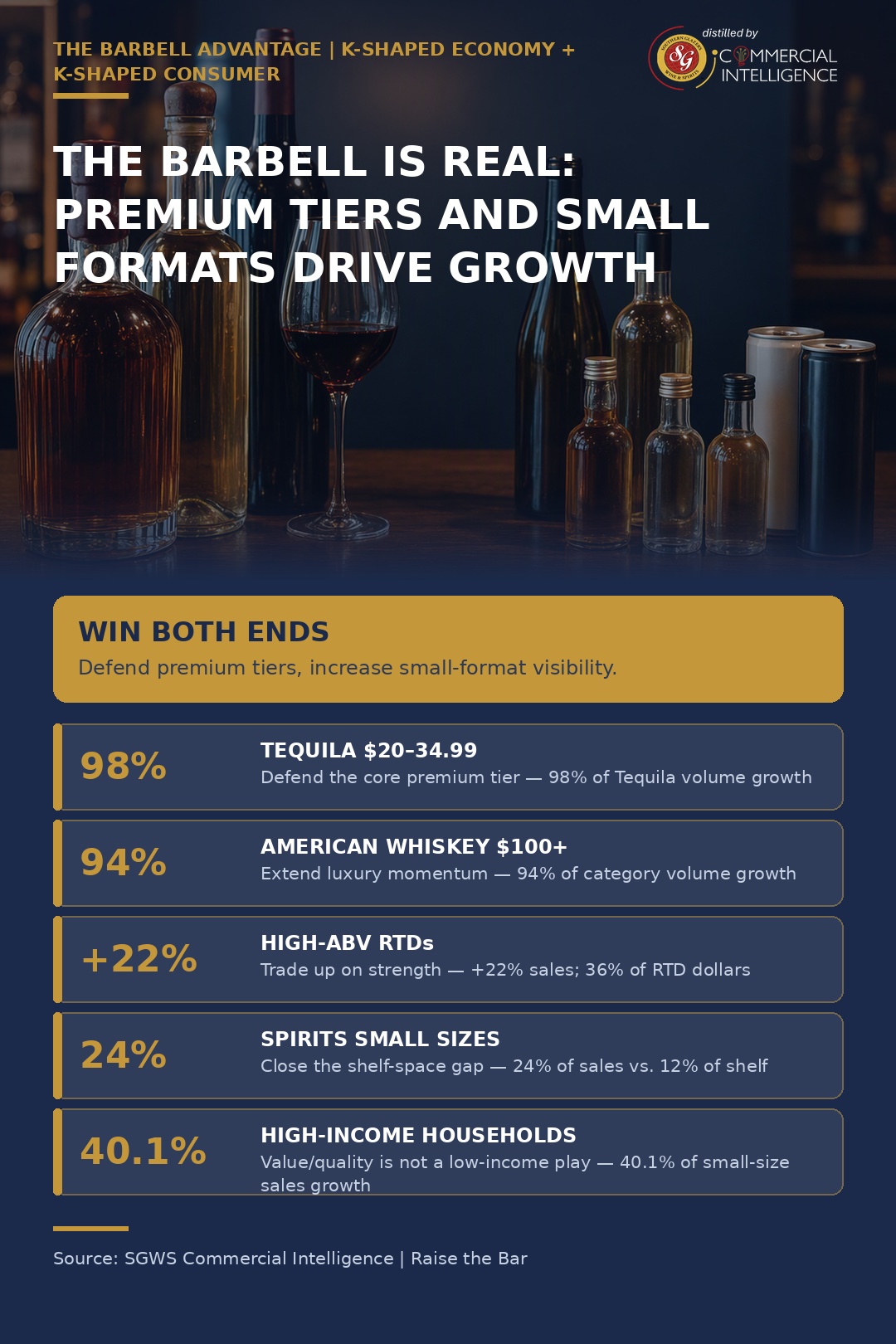
Called the Barbell Dynamic, growth opportunities are emerging at opposite ends of the category, from smaller formats and everyday value to premium products and elevated experiences.
-
No-, low- and functional beverages are increasingly complementing traditional beverage alcohol rather than replacing it.
With the younger generations, pricing is crucial, said Poelma. Wine markups coupled with higher-priced cocktails, often see a customer order a single item and then stop.
“We also think with wine there is too much complexity. Simplifying the proposition for younger consumers at an affordable price with known brands can help make wine feel like an approachable category.”
Understanding the Barbell Dynamic
There are two types of consumers the team is seeing in the market that form the Barbell dynamic, Poelma pointed out. There continues to be a consumer who tends to be a bit older with a disposable income who is willing to pay for a more tailored experience and a more premium beverage. They may be cutting back on how many cocktails they have on a night out, but it’s because they want to drink better and have a great experience. On the other end of the barbell is the consumer that is more cash constrained. They are seeking out more deal-based opportunities, and price plays a major factor in what they consume.
“Even with many of these consumers though, they still strive for some level of premiumization; it is just at a different price point than the consumer we mention above. Operators should include a selection of affordable wine and cocktail options with brands that are perceived as good value for the price. These options still need to align with ideals consumers are seeking out that could include, for example, sustainable, 100 percent agave, additive free, strong heritage or no added sugar. For the price, price drinks and wine affordably, but with products that may still be 100 percent agave, have an AVA designation, or a brand they recognize while having a quality value perception in wine are winning with these consumers.”
In on-premise, they have started to see visits in the more frequent buckets increase again after three years of declines, the report found. While the overall consumption frequency during those visits hasn’t returned to growth, they have seen that bottom out.
“We are also seeing household penetration level off after coming down from the peak a few years ago,” said Poelma. “Consumers have a number of choices on how to spend their money, and we think the last few years have been indicative of that. As we start to see socializing increase and the continued growth of occasion-based gatherings, we think all of this factors into the signs of stabilization we are starting to see in some areas.”
Experiential Demand
Food continues to be a key driver in occasion-based demand, the report revealed. Overall, on-premise businesses with food have outperformed beverage only venues for the last couple of years. Limited seating, customized multi-course menus with tailored wine and spirits pairings create unique experiences that continue to do well with small, experiential, and culturally tied micro-events also continue to see solid traffic with high consumer engagement, said Poelma.
“As we see consumption shift to earlier and occasions like brunch, it is also important to be active during these day parts with customized offerings and deals like supporting a more robust happy hour program where legal. Specifically, we’ve seen tremendous results with early and later happy hour programing to bring in customers earlier and after later seatings.”
Not specifically tied to occasion-based demand, investing in sufficient and trained bar staff ensures a more positive experience, Poelma said, adding that the last few years waiting times to receive an initial drink have been long and the time to be asked for a refill prohibits reorders which stem from staffing issues and education issues.
No-, Low- and Functional Beverages As Complementary
Internal Southern Glazer’s data along with third party sources both indicate somewhere around 20 percent of menus now have a mocktail or non-alc section.
“With these continuing to grow double-digits each year, we believe it is important that operators have wine, beer and spirits non and low-alc options available,” Poelma said. “Those that put the same level of effort into the design and creativity of the non-alc menu as they do with their core cocktail menu should see stronger growth as consumers pay for the experience and the opportunity to drink something they can’t necessarily make at home easily. Pricing is also important as we do still see that the fastest growing non-alc accounts have a gap between non-alc and alcoholic-based cocktails.”
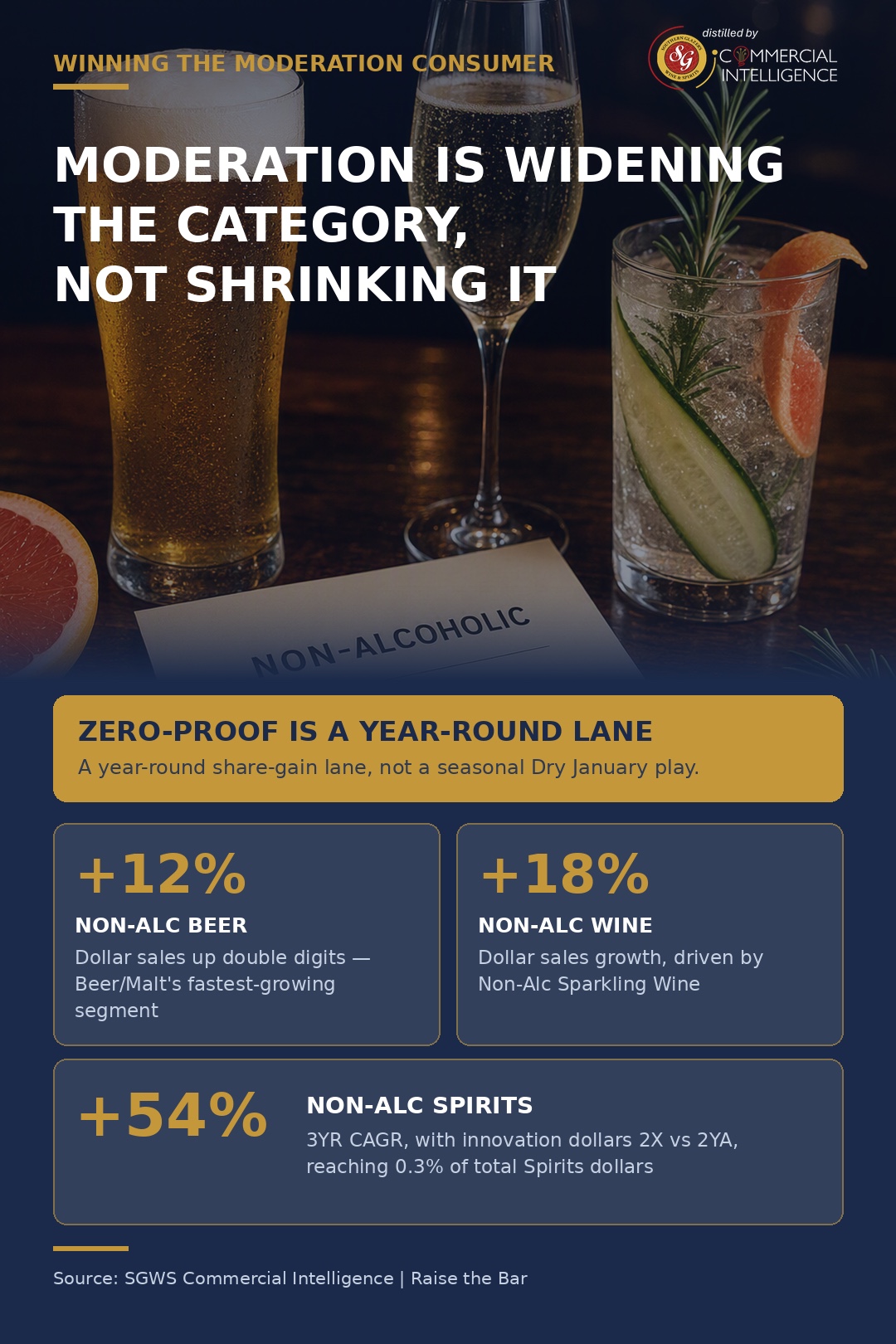
For a while, there was a belief that this consumer was abandoning alcohol all together, but current thought is that the consumer is active in both categories, Poelma said.
“There are occasions and days where they don’t want to have an alcoholic beverage but still crave the opportunity to gather with friends or go out to eat. That doesn’t mean later in the week they won’t switch back to an alcoholic beverage. Even within the same evening, we are seeing consumers that switch between both types of products.”
This also holds true during the year, according to the data. While a lot of attention is given to Dry January, they have seen more and more that consumers return to the bev-alc category during the month but then drink non-alc products throughout the year.