How a Multi-Location QSR Brand Drove Double-Digit Sales Growth with a $0 Influencer Budget Strategy
4 Min Read By Jake Schwartz
There is a persistent myth in restaurant marketing that meaningful social media results require a meaningful social media budget. That you need to pay influencers, boost every post, and outspend the competition to move the needle. For most operators running multi-unit QSR concepts, that belief has quietly become a barrier — making them feel like social media is a game they can't afford to win.
The brands we work with at BAM Media Group have proven otherwise. Over the past several years, we have built organic-first social programs for QSR and food and beverage brands that generate measurable, store-level revenue growth — not just impressions and follower counts. Two recent case studies illustrate exactly how this works, and what other operators can learn from it.
Building a Growth Engine from Zero
One of our clients, a fast-growing food and beverage brand operating across five locations in the US and over 150 globally, came to us with a clear problem: they needed to build brand awareness and drive foot traffic for their US locations, but had no established social presence, no influencer relationships, and no paid influencer budget. The goal was to generate measurable reach, engagement, and real-world conversions — entirely through organic strategy.
In four months, here is what we executed:
-
Activated 70+ influencers across 5 markets at $0 cash spend
-
Built a consistent content engine combining in-house production, influencer content, and UGC
-
Expanded beyond traditional food creators into lifestyle influencers, community groups, and local city pages
-
Identified hero influencers and hero content formats based on engagement, shares, saves, and watch time
-
Executed 18+ graphic design projects supporting social, in-store, and paid ad creative
-
Secured a university catering partnership directly through community activation
The results: an 11.3 percent year-over-year sales lift across all locations in just four months. TikTok views grew 178 percent to 1.1 million in 90 days. Instagram reached approximately 800,000 views per month, a 71.9 percent increase. A single organic post generated 373,000+ views. And perhaps most importantly, influencer content repurposed into paid ads lowered cost-per-result by approximately 78 percent compared to static promotional ads.
Reversing Declining Sales at a Scaled Restaurant Brand
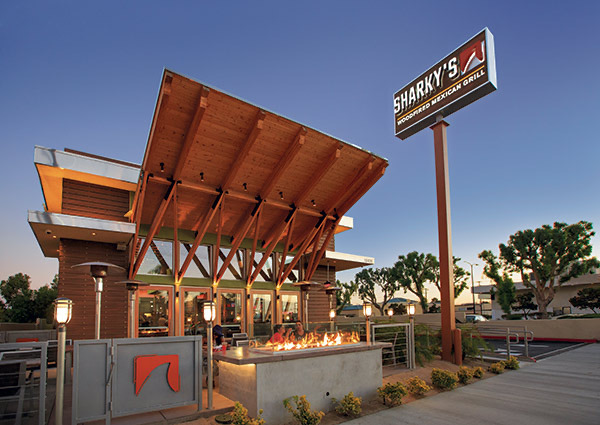
Sharky's, an established modern Mexican kitchen with locations across multiple markets, came to BAM with a different challenge. They were not starting from scratch — they had brand equity and customer loyalty, but they needed to maximize visibility and prove that social media could be a reliable driver of in-store revenue, not just brand awareness.
We executed a multi-channel campaign combining organic strategy with paid ad amplification, all built on a trade-based influencer model requiring zero cash spend:
-
Activated 60+ influencers across multiple markets — 100 percent trade-based
-
Generated 2.5M+ total video views and reached 8.5M+ combined followers organically in three months
-
Identified and scaled breakout content formats based on views, shares, saves, and watch time
-
Transitioned top-performing organic content into paid ad creative to maximize efficiency
-
Introduced a phased paid advertising strategy, tested and optimized against weekly same-store sales data
-
Developed a repeatable franchise playbook scalable across additional locations
A single influencer post generated 474,000+ views and 49+ days of cumulative watch time — at zero cash cost. At one location, year-over-year entrees went from -0.21 percent to +20.21 percent. Revenue moved from +4.25 percent to +24.05 percent. Check count shifted from +8.30 percent to +24.44 percent. In just three months.
“BAM Media has continuously delivered results we can actually see and measure,” said Steve Paperno, CEO/Founder, Sharky's. "Not many social media marketing companies or agencies can do that. Since partnering with Jake and BAM Media, we’ve experienced significant growth across many of our restaurant locations, including revenue gains of up to 120 percent in sales. Their team understands how to create impactful campaigns that drive real customer engagement, increase traffic, and ultimately grow revenue.”
What Other QSR Operators Can Learn From This
1. The $0 Influencer Model Is Real — and Scalable
Trade-based influencer programs — where creators receive product or dining experiences in exchange for content — are not a workaround. They are a legitimate and highly effective model, particularly for restaurant brands. Creators who genuinely enjoy the food make more authentic content that performs better in algorithms. And better-performing organic content becomes your cheapest and most effective paid ad creative. The key is building a system to manage volume: identifying the right creators, setting clear expectations, and tracking performance against store-level data to know what is actually working.
2. Your Best Influencers Are Probably Not Food Influencers
One of the most consistent findings across our campaigns is that non-traditional creators outperform food-specific influencers. Community pages, local lifestyle accounts, neighborhood guides, and city-focused content creators generate higher engagement and stronger conversion signals than dedicated food accounts — likely because their audiences are local, engaged, and trust them across a broader set of recommendations. Restricting your influencer search to the food creator category means leaving your highest-performing partners off the table.
3. Organic Content Is Your Most Valuable Paid Ad Asset
The brands that see the strongest results treat organic social not as a brand awareness play, but as a creative testing environment. Every piece of content that goes live is an opportunity to learn what resonates — what hooks stop the scroll, what formats drive watch time, what products generate save behavior. The top performers get amplified with paid spend. This approach consistently lowers cost-per-result significantly compared to producing traditional ad creative, because the content has already been validated by a real audience before a dollar is spent.
4. Measure What Actually Matters: Same-Store Sales
Follower counts and reach metrics are useful for tracking growth, but they do not tell an operator whether social media is earning its place in the marketing mix. The standard we hold ourselves to — and that we encourage every multi-unit operator to adopt — is same-store sales impact. Year-over-year changes in check count, entree volume, and revenue are the metrics that matter. If your social program cannot be connected to those numbers, it is time to reconsider the strategy.
The Playbook Is Repeatable
What was built for both of these brands is not a one-time campaign. It is a system: a content engine that produces a consistent volume of authentic, platform-native content; an influencer network that expands across markets without requiring cash spend; and a paid amplification layer that uses organic performance data to maximize efficiency.
For multi-location QSR and restaurant operators, the opportunity is significant. The brands winning on social right now are not necessarily the ones with the biggest budgets. They are the ones with the most disciplined content strategy, the most authentic creator relationships, and the clearest line between social activity and in-store results.