HoReCa Alert: Federal THC and Synthetic Dye Deadlines Are Here
5 Min Read By Catherine Sedgewick
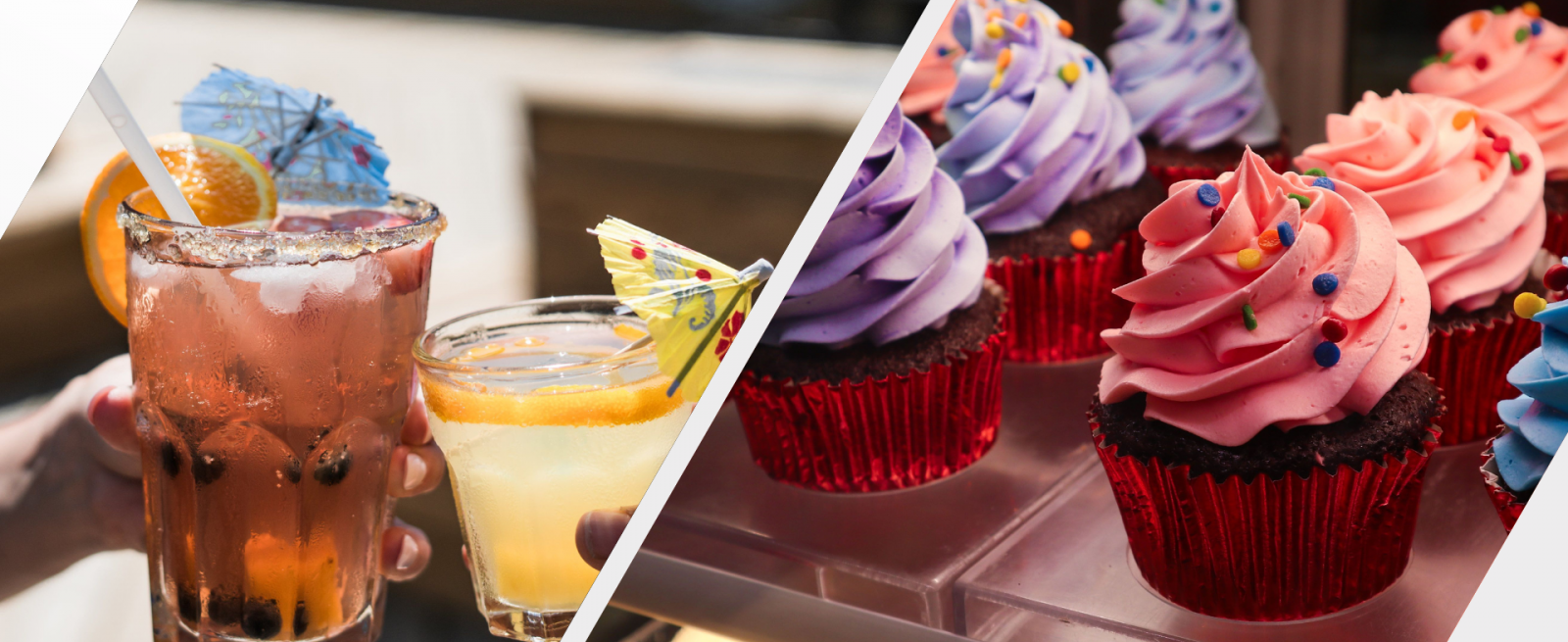
Multiple regulatory clocks are ticking simultaneously inside every restaurant kitchen, hotel bar, and catering operation in America: and for two major compliance deadlines, time is running out. The first is the push to eliminate synthetic food dyes. Then-FDA Commissioner Marty Makary and HHS Secretary Robert F. Kennedy Jr. announced a target to eliminate six petroleum-based dyes from the US food supply. Think of the dyed maraschino cherry in your cocktail, the vivid blue in a signature dessert, or the orange cupcake in a catering spread — all affected products. The second is a provision that will effectively ban hemp-derived THC beverages from the market starting November 2026. Low-dose hemp-derived THC beverages are non-alcohol drinks with specific amounts of THC derived from legal hemp as defined by the 2018 Farm Bill.
By the Numbers
- $ 1.6 Billion Potential annual restaurant market for regulated hemp THC beverages – National Restaurant Association
- 26 percent f all US restaurants would offer hemp THC beverages under a clear federal regulatory framework – National Restaurant Association
- 72 percent Of US adults are at least somewhat concerned about synthetic dyes in food – Consumer Reports National Survey, March 2026
- 1 in 5 US packaged foods and drinks contain synthetic dyes, with higher prevalence in children's products – George Institute for Global Health Study, 2026
The Hemp-Derived THC Ban
Consumers have made it clear that they want hemp-derived THC beverages. The only question is whether Washington will create a way they can enjoy them safely or if they will allow a thriving market supporting small business owners to disappear because they wouldn't create a sensible regulatory framework.
“Consumers have made it clear that they want hemp-derived THC beverages. The only question is whether Washington will create a way they can enjoy them safely or if they will allow a thriving market supporting small business owners to disappear because they wouldn't create a sensible regulatory framework.” — National Restaurant Association Chief Advocacy Officer – Sean Kennedy
The National Restaurant Association sent a formal letter to Congressional leaders, the letter urged a delay of the November ban and called on Congress to establish a federal regulatory framework for hemp THC beverages modeled on the existing framework for alcoholic beverages.
Younger diners are moving away from alcohol, and THC beverages fill that social occasion gap — particularly for high-volume venues where beverage sales drive margins as a generational shift driving the category, as pointed out by Kennedy. The financial stakes are real. With the median full-service restaurant's pre-tax margin already down to 2.8 percent in 2024 from four percent in 2019 — and 42 percent of operators reporting no profit at all last year — THC beverages have become a meaningful revenue line for those carrying them.
The call on Congress for a two-year delay, is basis the argument that operators — especially multi-unit and franchised brands managing a patchwork of state rules — need time and regulatory certainty while a national framework is developed. The National Restaurant Association’s proposed framework closely mirrors existing alcohol regulation: age verification, production and quality standards, labeling and dosing disclosure, and state-level authority to impose stricter rules. In a separate statement, the National Restaurant Association noted its nearly 16 million-member workforce already has established training and impairment management practices from alcohol service that would transfer directly to THC beverage programs.
The State Patchwork
Minnesota — Under Minnesota Statute 151.72, active since July 2022, licensed retailers may sell hemp THC beverages capped at 10mg per container to adults 21+, with mandatory age verification, registration, labeling, and third-party testing — a framework Senator Klobuchar has explicitly called a national model, co-introducing the Hemp Safety Enforcement Act in April 2026 partly on that basis.
Ohio — Governor DeWine signed Senate Bill 56, using a line-item veto to eliminate any grace period, and the ban took full effect March 20, 2026 — making Ohio one of the strictest states, with all intoxicating hemp products restricted to licensed cannabis dispensaries, with capping at 400 locations for such dispensaries and comply with the 0.4 mg threshold.
New Jersey — Governor Murphy signed S4509, reclassifying all intoxicating hemp as cannabis from April 13, 2026, with a minimum $100 fine per container for violations from April 13. A narrow carve-out allows Alcoholic Beverage Control (ABC) – licensed liquor retailers to sell hemp beverages capped at 5mg per serving / 10mg per container until November 13, 2026.
The Synthetic Dye Phase-Out — One Year In, Running Behind
The FDA, as part of the administration's broader Make America Healthy Again (MAHA) initiative, called decades of children's exposure to petroleum-based synthetic dyes in food a long-running public health failure — noting that food companies in Europe and Canada have already made the switch to natural alternatives. But acknowledgment has not translated into swift action. The agency announced plans to work with industry to eliminate six synthetic dyes from the food supply by end of 2026 yet only seven of 27 industry commitments have been completed.
What every HORECA operator needs to understand: the FDA is relying on voluntary industry cooperation — not a formal ban — while state laws are imposing hard deadlines and real enforcement consequences.
Track One: Federal Phase-Out — Voluntary, No Enforcement Mechanism
The FDA push to eliminate Red 40, Yellow 5, Yellow 6, Blue 1, Blue 2, and Green 3 is entirely voluntary. RFK Jr. publicly acknowledged that what he had with the food industry was an informal understanding, not a legally binding agreement. The Center for Science in the Public Interest confirmed to Consumer Reports in April 2026 that the FDA had not exercised its authority to cancel approval for any of the six dyes. A standard restaurant, hotel, or catering operation is under zero federal legal obligation to remove these six dyes today.
The only dye with an actual binding federal ban currently in force is Red Dye No. 3, which the FDA formally banned in 2025, giving manufacturers until January 2027 to remove it from food products.
Track Two: State Bans — Mandatory With Real Consequences
West Virginia
- West Virginia's House Bill 2354 (HB 2354) contains two separate provisions with different effective dates. The school nutrition provision took effect August 1, 2025, banning seven targeted synthetic dyes from all school nutrition programs.
- The statewide retail sales provision is scheduled to take effect January 1, 2028. It would ban those same seven dyes, plus butylated hydroxyanisole and propylparaben, from all food and drugs sold in the state, with non-compliant products legally classified as "adulterated." This provision has not yet taken effect and is currently blocked by a federal preliminary injunction pending a constitutional challenge, now on appeal to the 4th Circuit.
California
- Six dyes (Red 40, Yellow 5, Yellow 6, Blue 1, Blue 2, Green 3) banned from K-12 school food: mandatory compliance by December 31, 2027 under the California School Food Safety Act (AB 2316) — the law does not ban specific foods from menus but requires manufacturers to reformulate using natural alternatives such as carrot or beet juice
- Red 3 from all food manufactured, sold, or delivered statewide: mandatory compliance by January 1, 2027 under the California Food Safety Act.
Utah
- Seven dyes (Blue 1, Blue 2, Green 3, Red 3, Red 40, Yellow 5, Yellow 6) and certain food additives banned ffrom school food: mandatory compliance active since May 7, 2025 under HB 402 — charter school exemptions apply
Arizona
- Six dyes plus six other additives banned from school food served under federal meal programs: mandatory compliance from the 2026–2027 school year under HB 2164.
What This Means for Your Operation — Supply Chain First, Compliance Second
Unlike the legal challenges that often greet major regulatory shifts, leading industry bodies including the Food Marketing Institute and the Consumer Brands Association moved to publicly back the dye phase-out. For most restaurants and hotels, direct regulatory exposure is minimal. The real operational risk is supply chain disruption — as reformulating, relabeling products etc. is a "heavy lift” from your supplier’s perspective. Beyond bar supplies, the broader exposure for any operator is in inventory purchased and pre-made products sourced from manufacturers who have not yet reformulated.
The Bigger Picture
According to Environmental Working Group’s (EWG) Food Bill Tracker, more than 20 state food chemical bills were adopted in 2025 alone, with over 140 introduced that year across 38 states. In 2026, the wave has broadened further — moving beyond synthetic dyes into – Generally Recognized As Safe (GRAS) reform. It is the longstanding exemption that allows food additives to bypass FDA premarket approval when qualified experts broadly agree they are safe for their intended use — a framework that states are now beginning to challenge. New York, California, Pennsylvania and New Jersey all advancing bills that would require public disclosure of food additives currently introduced without FDA review.
The National Restaurant Association’s letter on hemp beverages is a sign that the HORECA industry is now engaging with this political moment in an organized way. Buoyed by the current administration's Make America Healthy Again (MAHA) momentum, legal experts say states are driving the real regulatory action — and that wave of food-focused bills, rules, and lawsuits is expected to accelerate further in 2026.