

GLP-1 Adoption Reshapes Restaurant Demand
2 Min Read By MRM Staff
As GLP-1 weight-loss medications gain traction, restaurant operators are wondering if this a seismic shift for the industry.
According to Circana, the answer is a bit more nuanced.
“GLP-1 users aren’t causing a ‘seismic shift’ in restaurant behavior – changes are more gradual and took a couple of years to come about,” said Brooks Berrodin, director of Thought Leadership, Foodservice at Circana “While it is important for restaurants to adjust to the changing reality, GLP-1s aren’t yet disrupting the industry.”
One of the most noticeable shifts is in portion sizes as consumers are no longer looking to super size their orders and instead they are looking for ways to manage the amount they eat and drink, Berrodin explained. Consumers are also more deliberate about which foods and beverages they are choosing that nutritionally meet their needs when eating away-from-home.
“Portion size management is one of the lower investment ways to innovate on the menu for operators. It often doesn’t require creating any new menu items. The easiest way to appeal to customers looking for smaller portions is to highlight existing menu options that are ‘lighter,’ or ‘lower calorie.’ Another low-investment way is to introduce new smaller size options for existing dishes at a lower price.”
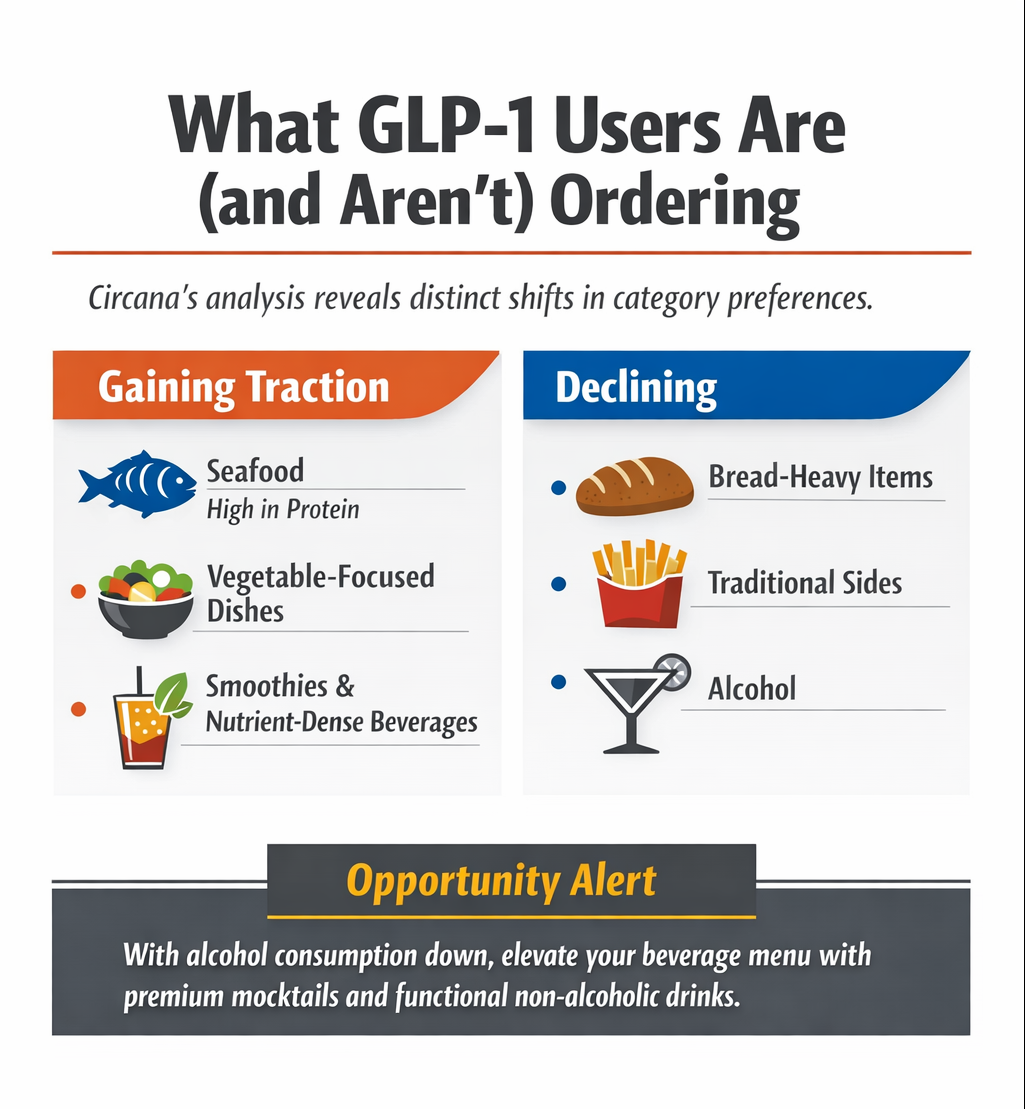
Seafood, due to its high protein content, is a category that GLP-1 users are increasingly ordering, while they are eating less bread and ordering fewer sides as they look to avoid carbohydrates and cut back portion size, Berrodin pointed out.
Among the research highlights:
-
GLP-1 users decrease the average number of items ordered per trip by one percent. This aligns with a broader trend, as 35 percent of all restaurant consumers reported ordering smaller portion sizes in October for health-related reasons.
-
GLP-1 users show a strong preference for healthier choices, with 63 percent actively seeking more vegetables and 55 percent seeking more fruit.
-
Another significant shift is a decline in alcohol consumption, presenting an opportunity for full-service restaurants to promote mocktails and functional beverages.
-
Those using the medication for weight loss are often younger, have higher incomes, and live in urban areas. This demographic profile is reflected in their dining preferences, showing a clear inclination toward fast-casual restaurant chains.
“Fast casual chains tend to be located in cities and suburbs, which is where weight-loss drug users are more heavily concentrated,” said Berrodin. “Further, fast casual chains often highlight higher-quality and healthier ingredients, which GLP-1 users are seeking. Finally, many fast casual chains allow customization which allows consumers to take more control of their healthy ordering.”
Other restaurant types can appeal to GLP-1 users by first assessing their customer base and then considering customizable ordering options, such as adding extra protein or reducing the sugar content of menu items, he added.
“Successful menus cater to not only GLP-1 users, but all health-focused consumers, which account for nearly half of the U.S. population, Berrodin suggested. “Consumers respond well to claims of ‘high protein’ and ‘low sugar.’ Restaurants can help healthy consumers make informed choices by being transparent with nutritional info and grouping together [healthy choices' together on the menu.”