Airport Dining Trends: What Hungry Travelers Want to Eat
5 Min Read By MRM Staff
Operating more than 700 stores, restaurants and bars in more than 90 airports across North America, Paradies Lagardère closely tracks traveler needs and preferences and evolving culinary trends to shape its airport dining options. The company recently received top honors at the 2026 Airport Experience® News Airport Experience Awards, earning Best Overall Restaurateur for the first time and Best Overall Retailer for the 29th consecutive year.
In an interview with Modern Restaurant Management (MRM) magazine, Alice Cheung, Senior Director of Brands & Concepts for the company’s Dining Division, reveals why airport diners value choice, flexibility, high-touch human hospitality, and a "worth it" experience, as well as unique operational challenges airport dining spots face.
What do airport diners want and how have their needs evolved? How important is value?
Airport diners want the same thing everyone wants when they eat out – good food that feels worth it. But the meaning of “worth it” is different in airports. People aren’t just paying for food, they are paying for convenience, speed, and reliability during what can be a stressful experience.
Travelers are willing to pay airport prices if they feel like they are getting something real for their money.
Value has become incredibly important in 2026, especially with the economy feeling uncertain. But the thing to remember is that value doesn’t mean cheap. Travelers are willing to pay airport prices if they feel like they are getting something real for their money. Maybe that’s an amazing sandwich that hits the spot during a tight connection, or that first vacation cocktail where they can finally relax. What people don’t want is to pay premium prices for mediocre food or an experience that feels unwelcome or rushed.
The biggest evolution we’ve seen is that travelers want choice and flexibility. Some people want to sit down and be served, while others want to grab something quickly and go. Some want to chat with a bartender; others just want to tap their phone and pay. They key is offering both without forcing people into one experience.
What are key airport dining trends you are seeing?
The biggest trend is this shift toward hyper-local partnerships with chefs who are genuinely invested. National celebrity chefs had their moment, but travelers are responding to local talent who are present and involved.
We’re also seeing protein continue to dominate menus, especially chicken. As the first concessionaire to bring Chick-fil-A to airports, we’ve always believed in chicken, but now everyone’s catching on. They key is offering it with international flavors and creative preparations, not just bland grilled chicken.
Charcuterie boards and grazing options are perfect for airports. Travelers don’t always want a full entrée. Sometimes, you just want variety without feeling stuffed before getting on a plane. We’re also seeing demand for more creative salad options beyond the predictable Caesar, and alcohol-free beverages continue to grow. People want celebratory drinks without waking up groggy at their destination.
What are top challenges for airport dining spots?
Staffing is probably our biggest operational challenge, even more so than restaurants operating on the street. Every single person who works in an airport must pass a federal background check. Depending on someone’s work history, these checks can take weeks. So, we might have a great potential hire, but they’ll have to wait weeks before they can start working for us, while that same person could start at a street restaurant the next day.
Airport restaurants are getting smaller and smaller. We’re being asked to create full-service bars in 250 square feet!
Then there’s the daily reality of working in airports. Our employees have to travel long distances to work, park in offsite parking lots, pass through TSA security that can have long lines, then walk or take a train to reach their workplace. All before they get paid to be there.
And airports are incredibly fast paced. We don’t have traditional meal periods – everything depends on flight schedules, so we’ll get massive rushes, then nothing, then another surge.
Space is another challenge. Airport restaurants are getting smaller and smaller. We’re being asked to create full-service bars in 250 square feet! While we’re creative at making things work, when flights get delayed and everyone’s hungry, those cramped spaces make it really hard to give travelers the experience they deserve.
Why does authenticity and being local matter for airport dining locations?
Local partnerships matter because they give travelers something they can’t get anywhere else. Airports used to feel the same no matter where you were, but people want that connection to a place now. When we partner with local chefs and restaurants, we’re bringing the destination to the terminal.
Take our partnership with Chef Paul Mattison at Sarasota Airport. He’s in the restaurant every week, tasting dishes and working with our team. That level of involvement creates an authenticity that travelers can feel. It’s the difference between eating barbecue that’s been cooked offsite, vacuum packed, and shipped to an airport and eating actual Texas brisket smoked in the airport terminal, like we do in Dallas-Fort Worth and San Antonio International Airport.

How can airport restaurants be more sustainable?
Sustainability must be a part of everything we do, not just a nice add-on. We’ve taken the steps to get our airport restaurants Green Restaurant Association certified because it holds us accountable to real standards around waste reduction, energy use, and responsible sourcing.
Sourcing local ingredients is a big part of our sustainability approach. When we partner with restaurants, we work with local dairies, farms, and producers whenever possible. It reduces transportation emissions, supports regional agriculture, and the food tastes better when ingredients are fresh and local. We’ve also reduced food waste wherever possible by working closely with food donation collection agencies.
In what ways are technology and automation critical to restaurant dining?
Technology is critical when it enhances the experience without replacing human connection. We’ve implemented mobile ordering, QR codes, self-ordering kiosks, and pay at the table options. These tools are great for eliminating friction points like waiting forever to pay when your flight is boarding.
What we keep finding is that in stressful environments like airports, people still really value human interaction.
But here’s what we’ve learned – the goal isn’t to replace people, it’s to free up staff to focus on actually taking care of travelers. Nobody likes standing in a long line or waiting to close out a check. But everyone appreciates a bartender who remembers that they wanted an extra lime wedge, or a server who notices when you’re stressed and brings your food out quickly.
Generally, Millennials and Gen Z are more comfortable with digital ordering, but that’s not a hard rule. What we keep finding is that in stressful environments like airports, people still really value human interaction. The same business traveler who wants quick, efficient service while finishing a presentation in the morning might want to chat with staff and get recommendations when they’re celebrating a closed deal later. The key is to give travelers choice. Technology should get out of your way and let the human parts of service shine through.
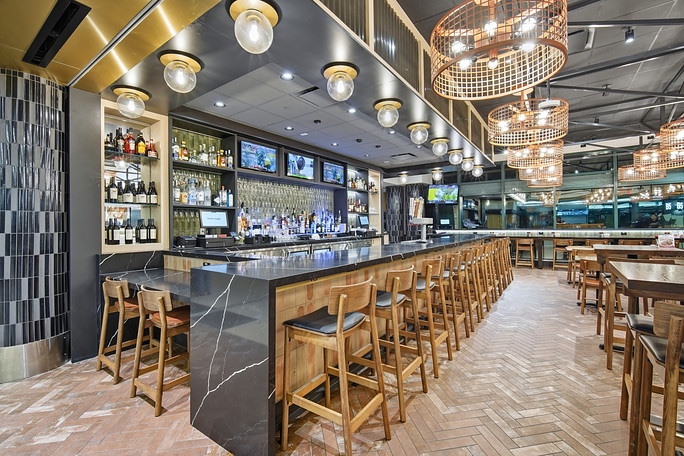
Top photo: Mattison's at Sarasota-Bradenton International Airport