
Why Restaurants Should Embrace the Inner Kidult
2 Min Read By MRM Staff
The "Kidult" trend presents a low-cost, but potentially high-impact opportunity for restaurants to drive traffic, encourage more frequent visits, and build emotional brand connection.
The industry has recognized “Kidults,” identified as adults, led by Gen Z, who enjoy products and experiences typically associated with children or kids' culture, to be a desired demographic, explained Jennifer Loper, president and chief growth officer for C3, which has been detailing the Rise of Kidults in an insight series.
Why should all restaurants be paying attention?
“Gen Z is excited about it, “ said Loper.
And they are a highly coveted demographic. Brands embracing “Newstalgia” or “Kidult” trends can win positive payback in loyalty and traffic. In fact, Placer.ai data revealed that standout promotions including McDonald’s Grinch Meal, and Starbucks’ Bearista led to the biggest traffic spikes last year.
While value remains the undisputed driver of restaurant traffic, brands that offer a differentiation, can find success, Loper noted because narrative-driven campaigns allow them to stand out from the crowd. Successful promotions offer a strategic alignment that creates genuine buzz, connection and traffic. Creating emotional touchpoints can help turn a one-time or infrequent visitor into a loyal customer.
Kidult-focused strategies work best when they add emotional value without adding friction, explained Julia Foley, C3’s Senior Insights & Strategy Supervisor. Thoughtfully executed, they can deliver measurable gains without relying on price/value promotions.
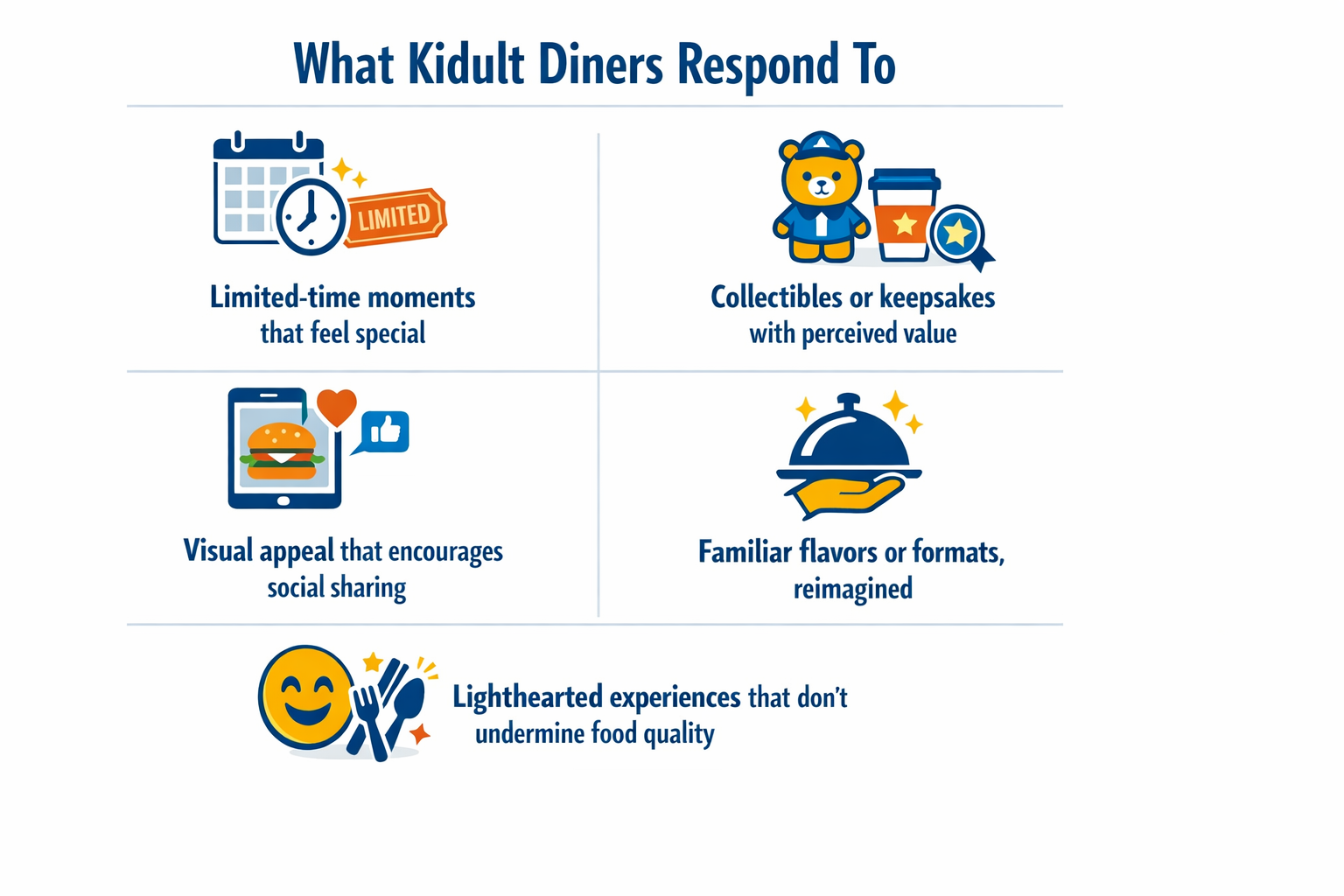
The trend is driven by a variety of emotional factors including:
- Nostalglia and comfort to help with stress of everyday life
- Fear of Missing Out (FOMO)–the thrill of chasing collectibles
- Fostering tangible connection in a digital world and across generations by sharing childhood memories.
- An extension of the little treat culture.
When asked what would motivate them to go to a restaurant or store for a collectible promotion, C3 found:
-
Free giveaways (44 percent).
-
The items being "just too cute" (39 percent).
-
Proceeds going to charity (36 percent).
One of the main reasons these promotions are effective, Loper pointed out, is a simple one: they make adults happy.
"It all has to come together, it can't be random."