
Adapting Restaurant Strategies for Evolving Daily Rhythms
3 Min Read By MRM Staff
To better respond to diner’s changing needs, operators can offer flexibility on portion sizes, portability, and price points that empower consumers to craft solutions that fit their needs in the moment including expanding the traditional notions of what types of food should be offered at specific day parts, according to Circana’s 41st annual Eating Patterns in America report.
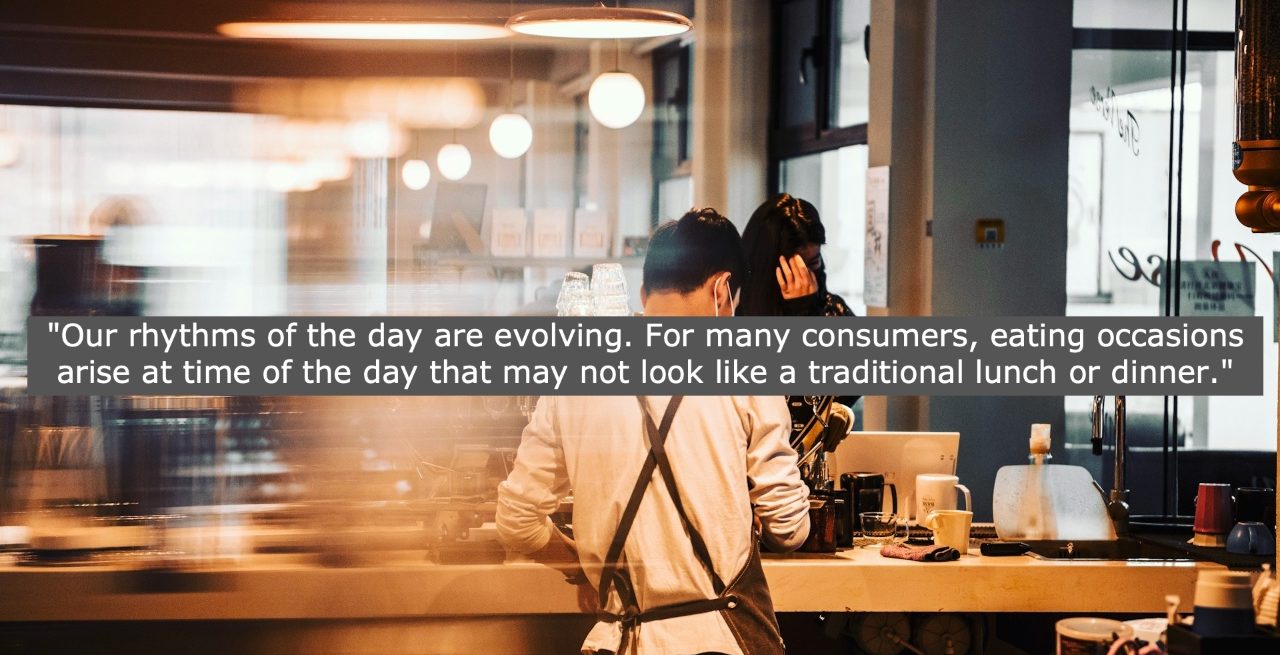
“Our rhythms of the day are evolving,” said David Portalatin, senior vice president and food and foodservice industry advisor for Circana. “For many consumers, eating occasions arise at time of the day that may not look like a traditional lunch or dinner.”
The data also revealed that while away-from-home occasions continue to rebound, home remains the foundation of America's food culture with 85 percent of food occasions still sourced from home. The report analyzes billions of eating and drinking occasions, examining the different forces shaping how and where Americans eat.
Diners Want Convenience, Value, and Protein
“Restaurant demand is resilient in the face of macro headwinds like rising energy costs, but consumers who are value-focused will always find dining at home more affordable,” Portalatin said. “Therefore, winning operators deliver on other elements in the value equations like food quality, convenience or providing a unique experience.”
Among other key findings:
-
Americans consumed 17 more meals away from home compared to 2025, yet still 77 fewer than in 2019.
-
Half of all meals take less than five minutes to prepare, including 65 percent of breakfasts and 56 percent of lunches.This includes 65 percent of breakfasts, 56 percent of lunches, and 35 percent of dinners.
-
Consumers are snacking more during or instead of meals, up 11 occasions versus last year.
-
Nearly half of adults (48 percent) are seeking more protein in their diets, up seven points from last year, placing it second only to vegetables among the items Americans want more of. Among GLP-1 users, 65 percent are seeking more protein. Foodservice is responding: 12 percent of commercial foodservice meals are now described as "high protein," with those occasions growing 11 percent year over year.
-
The data also points to a nutrition gap with adults consuming nearly double the recommended amount of protein each day, but less than half the recommended amount of fiber.
Simple and Fast Mealtime Solutions
“Simplicity” is a major theme in this year's report as consumers are looking for simple and fast solutions to their needs, Portalatin explained.
“We’ve seen this at every day-part, but we’re more motivated by convenience in the morning than at any other time of day. The ultimate convenience in meal preparation is to outsource it to a restaurant. Breakfast has out-performed other day-parts at commercial restaurants over the past five years.”
Consumers are seeking protein in all forms, the data found. Chicken is at the top of the list but all animal protein is sought after including dairy, and now they are seeing growth in protein additives in beverages like coffee. When it comes to fiber content, Portalatin said restaurants can help consumers understand fiber content and give them options, some of which already exist on the menu.
Simplicity is also driving the need for easy-to-execute solutions at home and that’s an opportunity for restaurant takeout and delivery, he said.
“We dine out for those crave-able indulgences we can’t make for ourselves, the unique experience and service that hospitality provides, and the convenience of outsourcing meal preparation altogether. Consumers are looking for these attributes at a relatively valuable price point. Finding that sweet spot is what entices us away from the foods in our pantries, refrigerators, and freezers.”