Allergen Transparency Drives Restaurant Traffic and Trust
4 Min Read By MRM Staff
Unclear allergen information can cost a restaurant before a guest ever walks through the door, according to findings in Nutritics 2026 Allergy Dining Report. However, there is an opportunity for operators as 71 percent said they’d visit a restaurant more often if its allergen information were clear and easy to find and 52 percent have recommended a restaurant specifically because they trusted its allergen information.
Most operators probably know allergen information matters, but fewer may be connecting it to customer acquisition and repeat visits, which is where the revenue case really lives, noted Stephen Nolan, CEO at Nutritics.
“Operators can see a canceled reservation or an abandoned online order. They can’t see the family that checked the menu at home, couldn’t get a clear answer and booked somewhere else.”
Hidden Revenue Risk of Unclear Menus
An estimated $78 in table spend at risk every time an allergy-affected diner chooses another restaurant, creating a $12.6 billion blind spot for restaurant owners and operators, the survey revealed.
The $78 figure came from two survey questions. Nutrics asked respondents how much they typically spend per person at the type of restaurant they visit most often, then asked how many people would have joined them on a visit they abandoned over allergen concerns. Those responses were averaged to estimate the value of a single table that never gets booked.
Then they applied that estimate to the 41 percent of respondents who said unclear allergen information causes them to avoid a restaurant more than half the time or almost every time, using food allergy prevalence data that puts the U.S. allergy population at roughly 33 million. Modeling one missed visit per month across that group produces an annual estimate of about $12.6 billion in spend at risk.
“We treat both figures as directional estimates,” said Nolan. “Some of those avoided visits go to a competitor and some end at home. Either way, the original operator loses a sale they’re unlikely to see in their data.”
Other survey highlights include:
-
Nearly all (95 percent) of allergy-affected diners have decided against a restaurant at least occasionally because they couldn’t easily find clear allergen information.
-
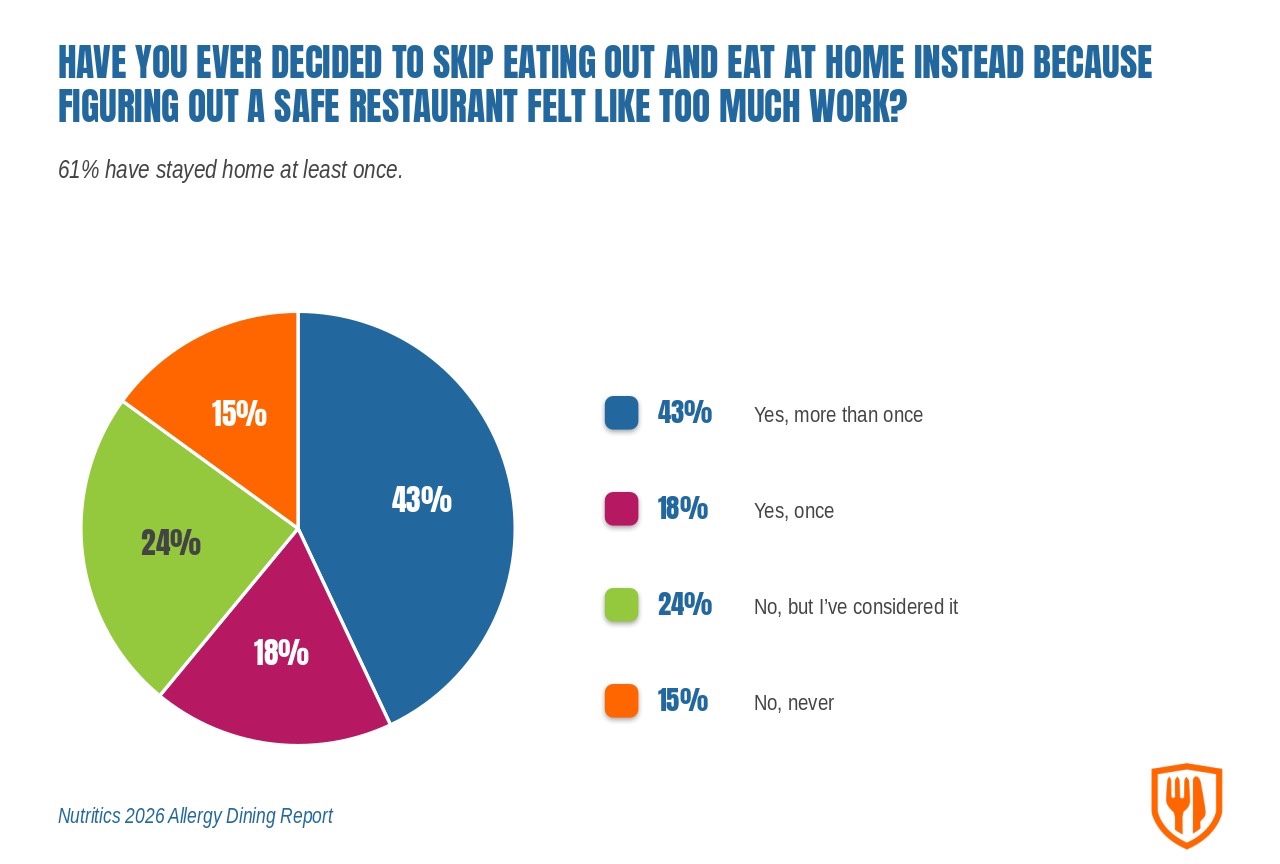
Sixty-one percent have decided to skip eating out and eat at home instead after deciding a safe restaurant felt like too much work to find.
-
More than half (51 percent) have chosen to try a new restaurant over a familiar one because the new restaurant’s allergen information was clearer or more reliable.
The scale of the behavior change surprised Nolan as close to the entire sample struggled with restaurant options and it was just as striking that 61 percent had given up on eating out and stayed home after finding the search too difficult.
Building Trust Via Server Consistency
Only one in four (24 percent) say they’re fully confident the answer is a confirmed fact when a server says they’ll check with the kitchen about an allergen. The confidence gap around servers stood out as well and that’s a finding operators should sit with, because many are relying on staff responses as the primary allergen safety net, he added.
“Trust goes up when servers don’t have to rely on memory. They need quick access to current allergen information and a clear way to involve a manager or chef when they can’t confirm an answer themselves.”
Training should cover how to record the guest’s concern, check the approved source, explain cross-contact risk and say plainly when the restaurant can’t guarantee an accommodation. The server should never feel pressured to guess. The survey found that 35 percent of respondents would trust a restaurant more if staff gave consistent answers.
“The server should never feel pressured to guess,” said Nolan. “Consistency comes from process, and a server who can point to a documented source will close more trust gaps than one working from memory.”
Strategies for Effective Allergen Communication
When updating menu descriptions, operators should use the term “allergen-transparent” rather than “allergen-friendly” because the word “friendly” can suggest a level of safety that may not apply to every diner or kitchen, Nolan suggested.
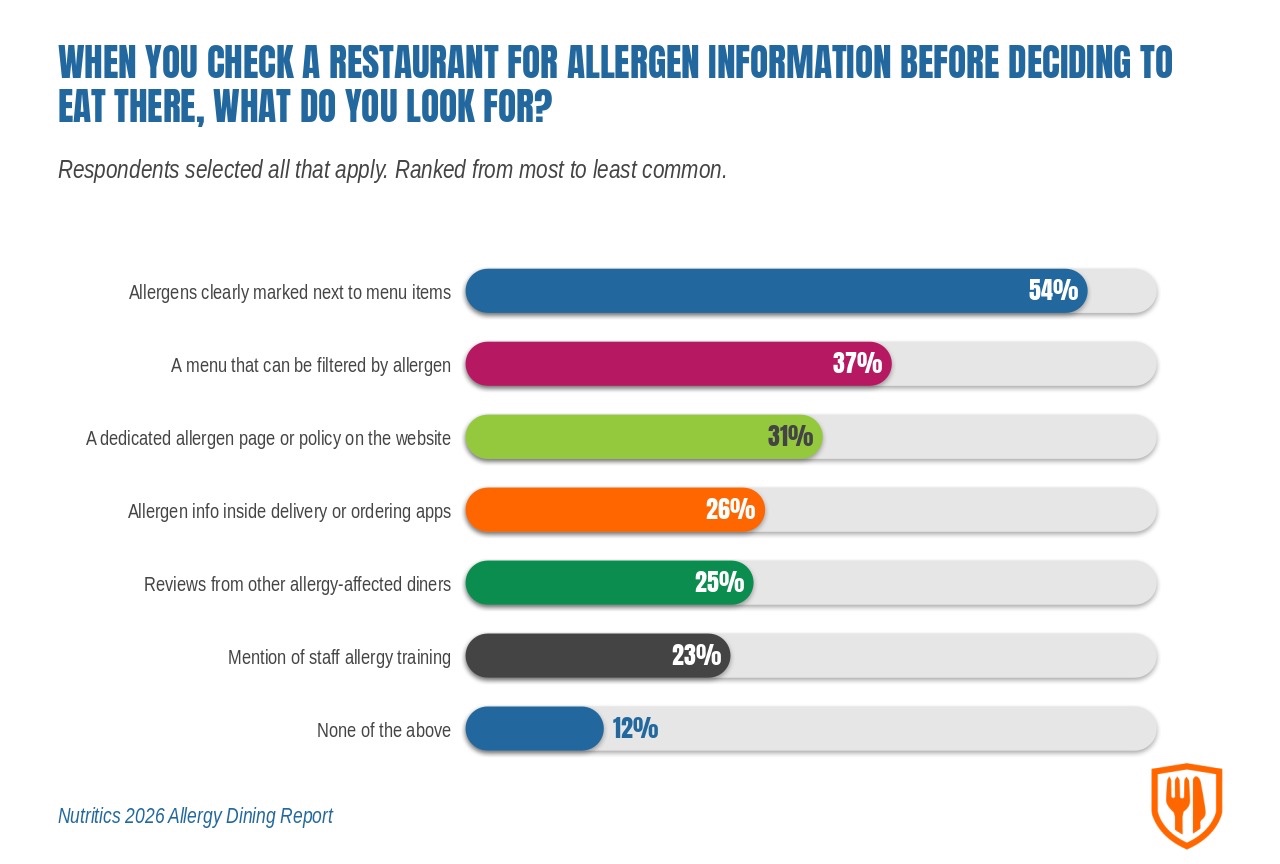
The strongest starting point is to identify allergens beside each menu item. The website should offer a mobile-friendly filter so guests can narrow the menu before they arrive. A clear policy page can explain how the restaurant handles cross-contact and where it can’t make a guarantee.
The information should match across printed menus and digital channels. Any recipe or supplier change needs to trigger an update everywhere the item appears. Guests shouldn’t have to call the restaurant or hunt through several pages to find a basic answer, he said.
For restaurants covered by California’s ADDE Act, a QR code alone doesn’t satisfy the requirement. A printed alternative must also be available, and the allergen information has to match across every channel where the menu appears, including delivery platforms. For operators working through those requirements, Nutritics created the ADDE Act Knowledge Hub, a resource designed to help restaurant teams understand the law, prepare their menus and build a more reliable allergen communication process across locations and ordering channels.
Menu accuracy starts with the restaurant’s own recipe and purchasing records. Operators need current supplier specifications and approved recipes because all allergen data should live in one controlled record that feeds the menu, kitchen materials and ordering platforms, Nolan said.
“That ownership matters. If a supplier reformulates an ingredient or the culinary team changes a recipe, the menu data needs to change with it. Relying on several manually maintained spreadsheets makes errors much more likely.”