Don’t Kill Tip Culture – Fix It
4 Min Read By Jenna Oosterholt
Every few months the conversation resurfaces: Should we eliminate tipping?
On the surface, it sounds like a simple solution. Pay everyone a higher hourly wage and remove tips altogether. But after more than 20 years in the restaurant industry, as a tipped employee, manager, owner and everything in between, eliminating tip culture would kill more than half, if not all of your favourite restaurants.
The reality is that most independent restaurants operate on profit margins of less than five percent. There isn't enough room to absorb the labour costs that would come with replacing tips with significantly higher wages. While large chains may have more flexibility, thousands of independent restaurants would be forced to raise prices dramatically to cover the labor and don’t act like you’re going to pay $18 for a latte and $30 for a sandwich, because you’re not.
And honestly, if you've never worked in a restaurant, you probably don't get a vote on this one. (yes, I said it.) You’d only need to spend a day, a few hours even, dealing with difficult guests, juggling ten tables at once, or working behind the scenes making sure the entire operation runs smoothly and to understand why. Because only if you've lived it, you understand that the people who make restaurants work absolutely deserve every tip they earn – earn being the imperative word here.
The Tipping Evolution
But that doesn't mean the current system is perfect.
The irony is that many hospitality workers don't want tip culture to disappear. On busy shifts, experienced servers, bartenders, and support staff often earn well above what a fixed hourly wage could provide and why shouldn’t they earn these high wages? Think of the special moments in life. Birthdays, anniversaries, graduations…big moments in life of all kinds are usually celebrated by a great meal at a great restaurant. The meal itself is affordable because tips help keep operation costs down. I am certainly happy to tip 20 percent or more for food and service that made my special night, well, special. Imagine all your favourite spots closing because they can’t afford to pay staff the wages they would need to match the tips staff were earning. Celebrating your 10th anniversary at McDonalds just doesn’t have the same ring to it.
For many, tipping isn't just extra income, it's what makes hospitality a viable long term career. And bless those people who become experts in their craft. You know the ones. The barista who can make a latte with her eyes closed, the server who never ceases to make you smile and knows your order off by heart, the cooks who work in hot kitchens so you can have your favourite dish you often crave each night.
I've always believed in tip pooling because restaurants succeed as teams. A memorable dining experience isn't created by a server alone. It's created by hosts, bartenders, line cooks, dishwashers, bussers, and everyone working together behind the scenes. When everyone shares in the success of the restaurant, everyone has a reason to make that success even greater.
Where we often fall short isn't about tipping itself, it's how tips are managed and split with the team.
There is another important part of the conversation that often gets lost: tips are not automatic. A tip is, and should always be, the customer's choice. Tipping exists because guests choose to recognize great service and food, not because it is an obligation added to every transaction. You always have a choice.
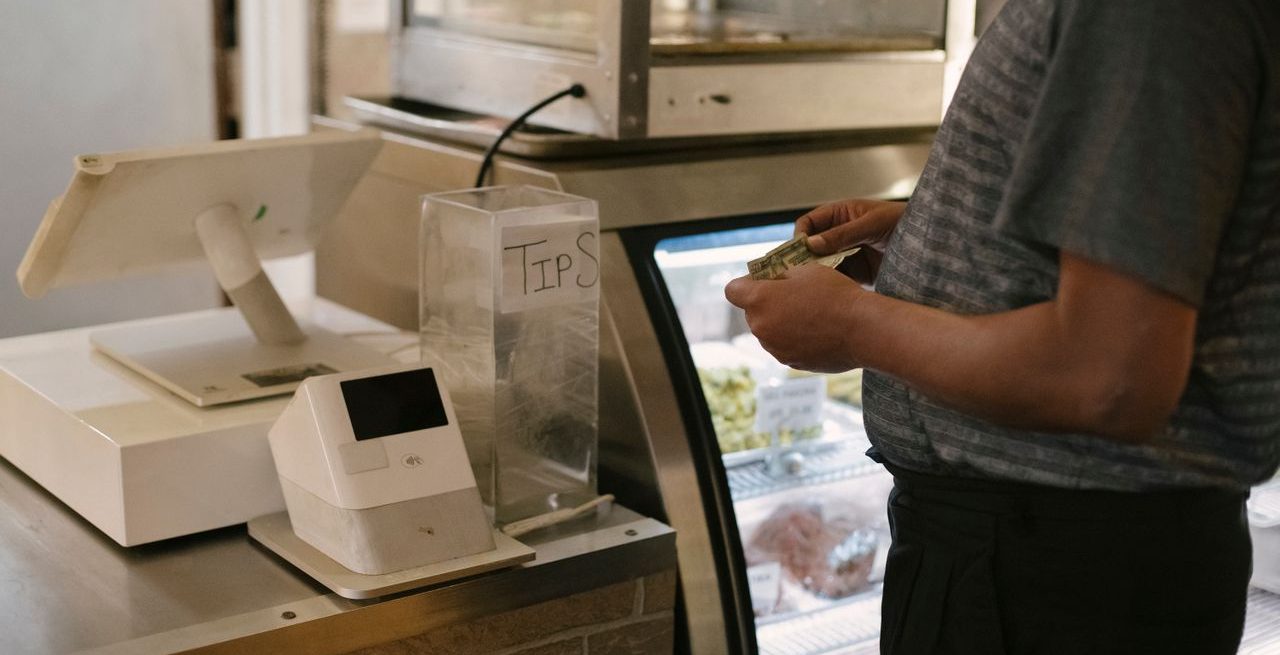
If you walk into a convenience store and the payment terminal asks you for a tip, you have every right to press skip. If your food was cold and lifeless, your service was poor, or management failed to address a bad experience, you should not feel pressured to reward that. A tip should reflect the experience you received.
Creating Systems that Work
The real conversation shouldn't be about abolishing tipping. It should be about creating systems that are fair, transparent, compliant, and easy for both restaurants and staff to understand.
The Canada Revenue Agency (CRA) has created clear rules around employer-controlled tip pools. If an employer controls the distribution of pooled tips, those tips must generally flow through payroll, creating Canada Pension Plan (CPP), Employment Insurance (EI), and tax obligations for employees while adding payroll costs for employers. Those deductions aren't inherently negative. They provide transparency, reduce the risk of unexpected tax bills for staff, and help career hospitality workers build meaningful CPP and EI benefits and the simple reality is as we move farther away from cash payments there is a cost associated with taking tips.
Alternatively, restaurants can operate under a tip committee model, where employees control the distribution of tips themselves. While this can reduce payroll obligations, it also places administrative responsibility on staff and can create inconsistencies if the process isn't well managed.
Neither system is wrong. Both can work exceptionally well, but the point is there needs to be a system and ideally the system in place rewards the entire team, not just the servers. It needs to be trusted by staff and owners, and it can’t cost an arm and a leg to use.
Tips reward great service and food, and when they are being fairly split they encourage teamwork and provide income that many hospitality professionals rely on. Rather than asking how we eliminate tipping, we should be asking how we make it fair, more transparent, and more sustainable for everyone involved – staff, owners and customers alike.
Tip culture doesn't need to disappear. It just needs to evolve.