Resilience in a Changing Restaurant Economy
3 Min Read By Michelle Korsmo
The restaurant industry reached $1.4 trillion in sales in 2025, but 42 percent percent of operators were not profitable. Our industry’s ability to navigate rising costs and workforce challenges will determine how we grow and deliver for guests for years to come.
Restaurants Navigate Economic Complexity
Restaurant operators are at the intersection of positive industry-wide growth and challenges that impact their daily business operations in tangible ways. The National Restaurant Association projects $1.55 trillion in restaurant and foodservice sales for 2026. While this reflects a 4.8 percent percent increase from 2025, real inflation-adjusted growth comes in at 1.3 percent percent.
These figures show that running a restaurant is more expensive than ever before. Food and labor costs are 38 percent percent steeper than before the pandemic. And with a cooling labor market, fewer jobs – and fewer people looking for jobs – restaurant operators are finding it increasingly difficult to fill open positions. This trend has driven up industry-wide labor costs, amplifying the need for solutions like comprehensive immigration reform, which the National Restaurant Association believes will help industry operators support their existing workforce and hire the people they need to grow and thrive.
Operators also face increased costs from credit card swipe fees. America’s swipe fees are among the highest in the world and represent the third highest operating cost for most restaurants, behind only food and labor. That is why the National Restaurant Association supports the Credit Card Competition Act (CCCA), bipartisan legislation that would lower swipe fees and save U.S. businesses and consumers $16 billion each year.
Consumers Have Changed Their Expectations
Rising costs are converging with a uniquely challenging consumer climate as restaurant guests continue to prioritize dining out within their smaller, discretionary budgets. However, this plays out differently across income levels, underscoring the impact of today’s K-shaped economy on restaurant operators.
The National Restaurant Association’s most recent consumer survey found that while respondents ate out more frequently in the second quarter, their spending was mixed, with a quarter spending more and a third spending less. Lower and middle-income households were more likely to report impacts to their spending thresholds and value expectations.
The bottom line: today’s consumers are not rejecting the restaurant experience, but they are becoming more selective about which experiences justify their spending. Value is king in today’s restaurant climate, as operators rework menu structures, pricing, and offerings.
Where Operators Are Finding Footing
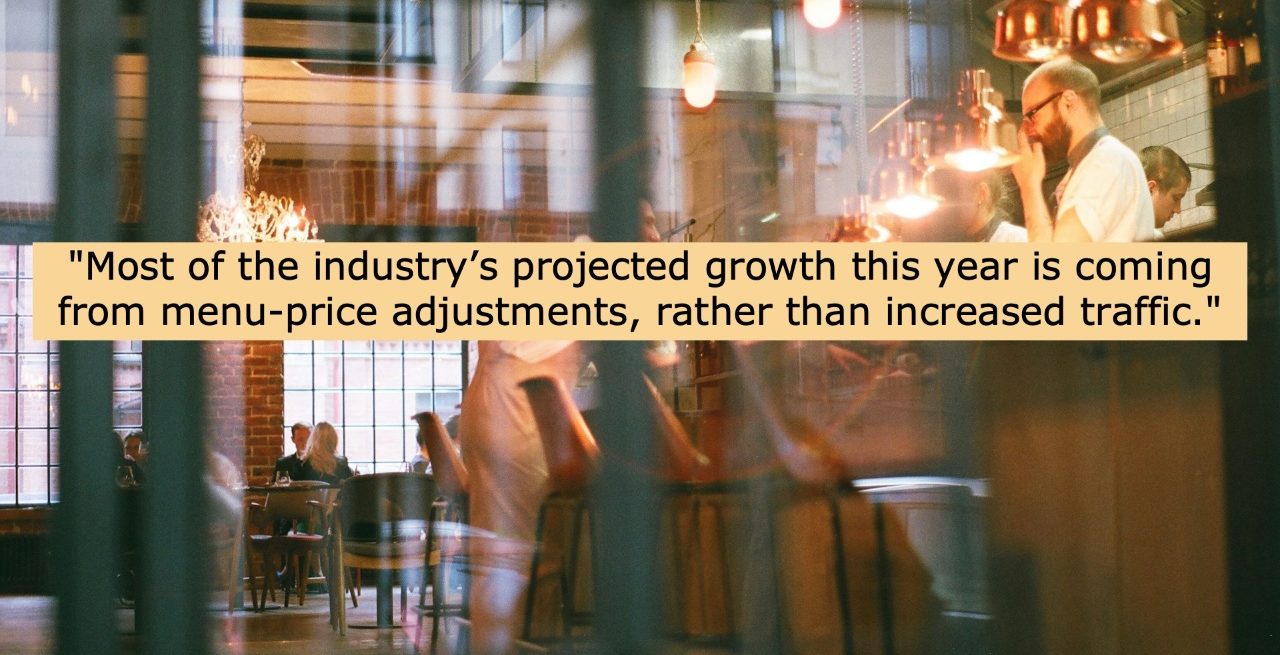
Most of the industry’s projected growth this year is coming from menu-price adjustments, rather than increased traffic. This speaks to the industry’s focus on meeting guests where they are, even when headwinds persist. And with consumers indicating a desire to dine off-premise, the operators who treat it as a core part of their business model are in a different position than those still treating it as secondary.
The most successful restaurants today excel at building breakthrough efficiency and a future-ready workforce. The National Restaurant Association is focused on equipping our industry with what it needs to achieve these goals.
Operator success in 2026 will depend on their ability to remain resilient and agile in both areas. For example, the National Restaurant Association’s Workforce Hiring & Staffing Report shows that the strongest restaurant operators are those who treat their workforce decisions as a strategic business strategy, using technology to compress and streamline their time-to-hire and post-hire processes, and investing in managers as a core component of employee growth and retention.
On June 22, I'll be joined by Alicia Kelso, Executive Editor of Nation's Restaurant News; Jonathan Maze, Editor-in-Chief of Restaurant Business; and Rich Shank, Senior Principal and Vice President of Innovation at Technomic — three of the sharpest minds covering and analyzing this industry. Together, we'll explore what these trends mean on the ground, where operators are finding footing, and what it will take to build restaurants that last. The conversation is hosted by Les Dames d'Escoffier International and open to the public — register here.