
Authenticity and Real Connection Drive Brand Success
2 Min Read By MRM Staff
AI can help restaurants operate more efficiently, especially for scheduling content, organizing campaigns, or handling repetitive tasks, but it cannot replace the personal touch, explained Gillian Christie, Founder and CEO of Christie & Co, a global branding, marketing, and public relations agency. It may generate more first time customers, however customers who are loyal and return regularly come from the care and attention they receive throughout the experience with the restaurant.
“A loyal customer( in merely cost of acquisition,) is 100X more valuable than one who comes once via AI. Restaurants can use AI to support idea generation, streamline workflows, and analyze performance. But the messaging itself should always be grounded in real guest experience—what people love, what they remember, and why they come back. Ethically, transparency and intention matter.”
Consumers are starving for authenticity in their purchasing decisions, how the brand is expressed will determine the acceptance as well as the purchase because a brand is the bridge to trust, said Christie.
“Trust cannot be marketed. It has to be earned. The brand is a culmination of values, deliverables and their quality, purpose, and experience- from how the staff are managed with respect and support to the sourcing of the food, the flavors and most of all- the story.”
The biggest risks of automated marketing come from lack of oversight, Christie said as it can unintentionally misrepresent offerings, use inaccurate claims, or create messaging that doesn’t align with regulations—especially around pricing, promotions, or health-related statements. There’s also increasing scrutiny around transparency and data use.
“If automation leads to misleading or impersonal communication at scale, it can create both reputational and legal exposure. Restaurants need to ensure that all automated outputs are reviewed and aligned with what they can actually deliver.”
One of the most common mistakes restaurants make is misunderstanding how to brand their company, what truly makes them different, what other revenue opportunities are available that are overlooked such as a branded product line of a special feature of the restaurant- that brings the restaurant brand and experience into the home and office as well as generates revenue from a CPG branded line, said Christie.
“Authenticity has to be real and comes from observation, from research, from ensuring that the restaurant has and is following their mission, vision, and value statements. The most successful restaurant brands listen closely to their guests and their own teams. What are people saying in reviews? What do staff hear every day? What dishes or moments create emotional reactions? Your authentic voice already exists—it’s in those interactions. The role of marketing is to capture it and express it clearly, not to manufacture something new.”
To stand out from the AI “slop” and content overload, Christie suggests:
-
Showing real moments from the restaurant, not just polished visuals
-
Letting the personality of the team come through
-
Sharing specific stories—about dishes, sourcing, or guests
-
Being comfortable with imperfection if it reflects reality
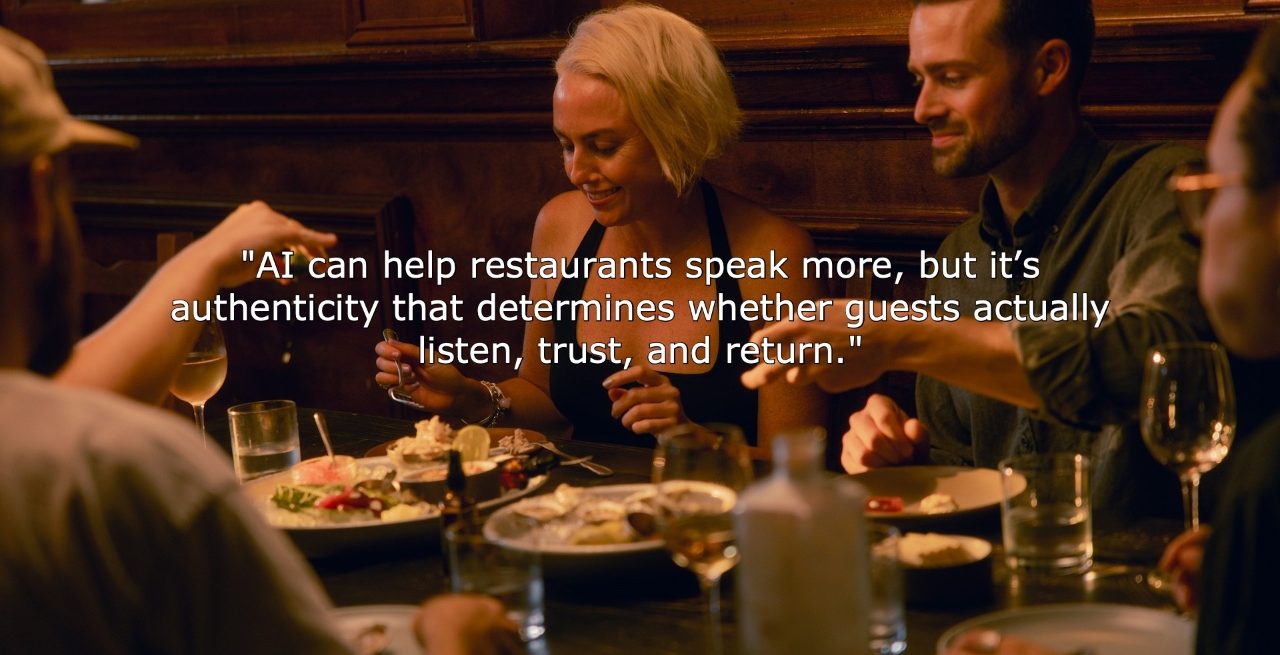
“Standing out today is less about producing more content and more about producing content that is real. AI can help restaurants speak more, but it’s authenticity that determines whether guests actually listen, trust, and return.”