MRM EXCLUSIVE: Food Quality Is the Strongest Loyalty Driver
2 Min Read By MRM Staff
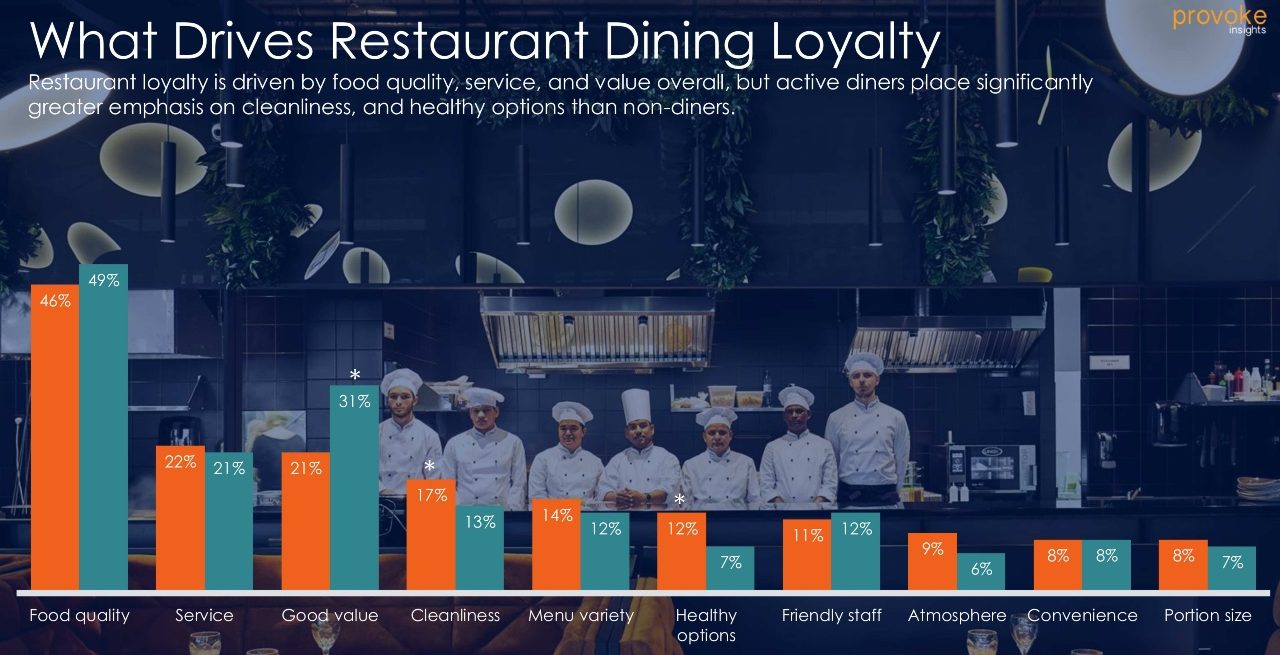
Food quality is the strongest loyalty driver at 48 percent, far ahead of discounts or promotions at just six percent, according to the Summer 2026 Consumer Trends Report from Provoke Insights in collaboration with Modern Restaurant Management (MRM) magazine. Good value (28 percent), service (21 percent), and cleanliness (15 percent) are among the secondary drivers.
“Operators should focus on delivering strong execution, simplifying the experience, and reinforcing value beyond pricing alone,” said Carly Fink, President, Head of Research & Strategy for Provoke Insights, adding that despite economic concerns, dining out continues to matter to consumers, 68 percent notice restaurant price increases but still prioritize restaurant experiences.
While restaurant inflation awareness has dropped from its peak of 81 percent in 2022/2023, restaurants maintain an elevated level of price sensitivity among consumers compared to other retail sectors that experienced sharper declines in sensitivity, the report found. Consumers are less motivated to return based on convenience (eight percent) and, while discounts have a limited effect overall, they do carry weight among parents, Millennials, and those making less than $150,000.
“Restaurants should focus messaging on consistency, craftsmanship,service, and the overall experience rather than transactional offers. Consumers want reassurance that dining out will feel worthwhile, reliable, and emotionally rewarding despite economic pressures.”
Consumers define quality primarily through food quality (48 percent), good value (28 percent), and service (21 percent), the report found.
“While traditional quality markers still matter, diners increasingly associate quality with consistency, ease, and confidence in the experience rather than just premium pricing,” said Fink.
Boomers place the greatest emphasis on food quality (63 percent) and value (39 percent), while Gen Z over-indexes on healthy options (13 percent) and portion size (13 percent).
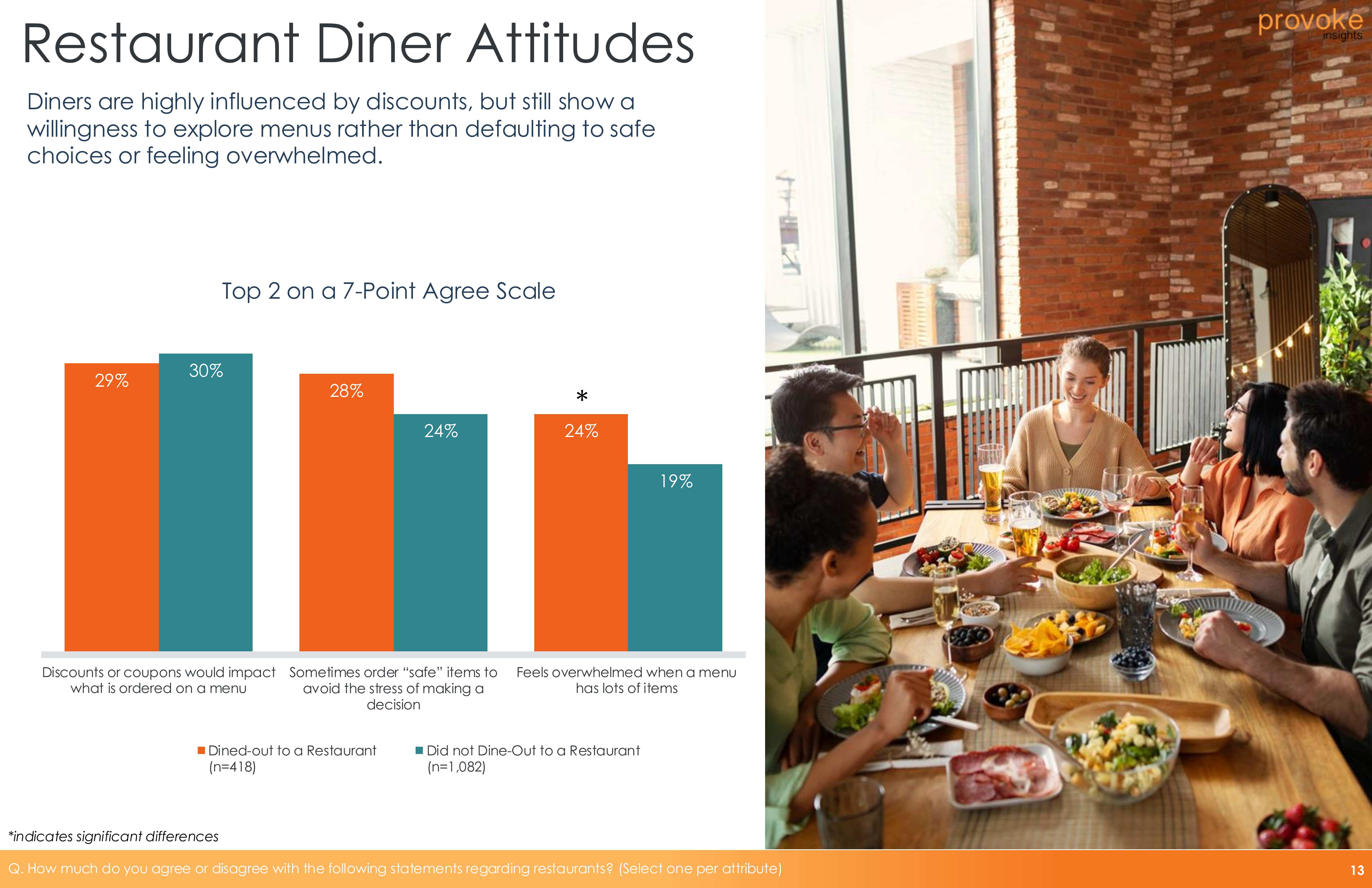
A growing issue uncovered in the findings is menu complexity with consumers experiencing choice overload and default to familiar items to avoid decision stress. A quarter of consumers (25 percent) admit they sometimes order “safe” items, while 21 percent say they feel overwhelmed by large menus. These behaviors are especially common among Gen Z, parents, and urban consumers.
“The rise in menu overwhelm and ‘safe' ordering; behavior suggests quality now also means reducing friction and making dining feel approachable,” said Fink. “Younger consumers are also more likely to feel overwhelmed by menus and order “safe” items to reduce stress.”
Operators should tailor experiences by emphasizing consistency and value for older guests while simplifying menus and providing clearer guidance for younger diners such as highlighting signature dishes, and creating more curated, guided ordering experiences that help diners feel confident in their choices, she suggested.
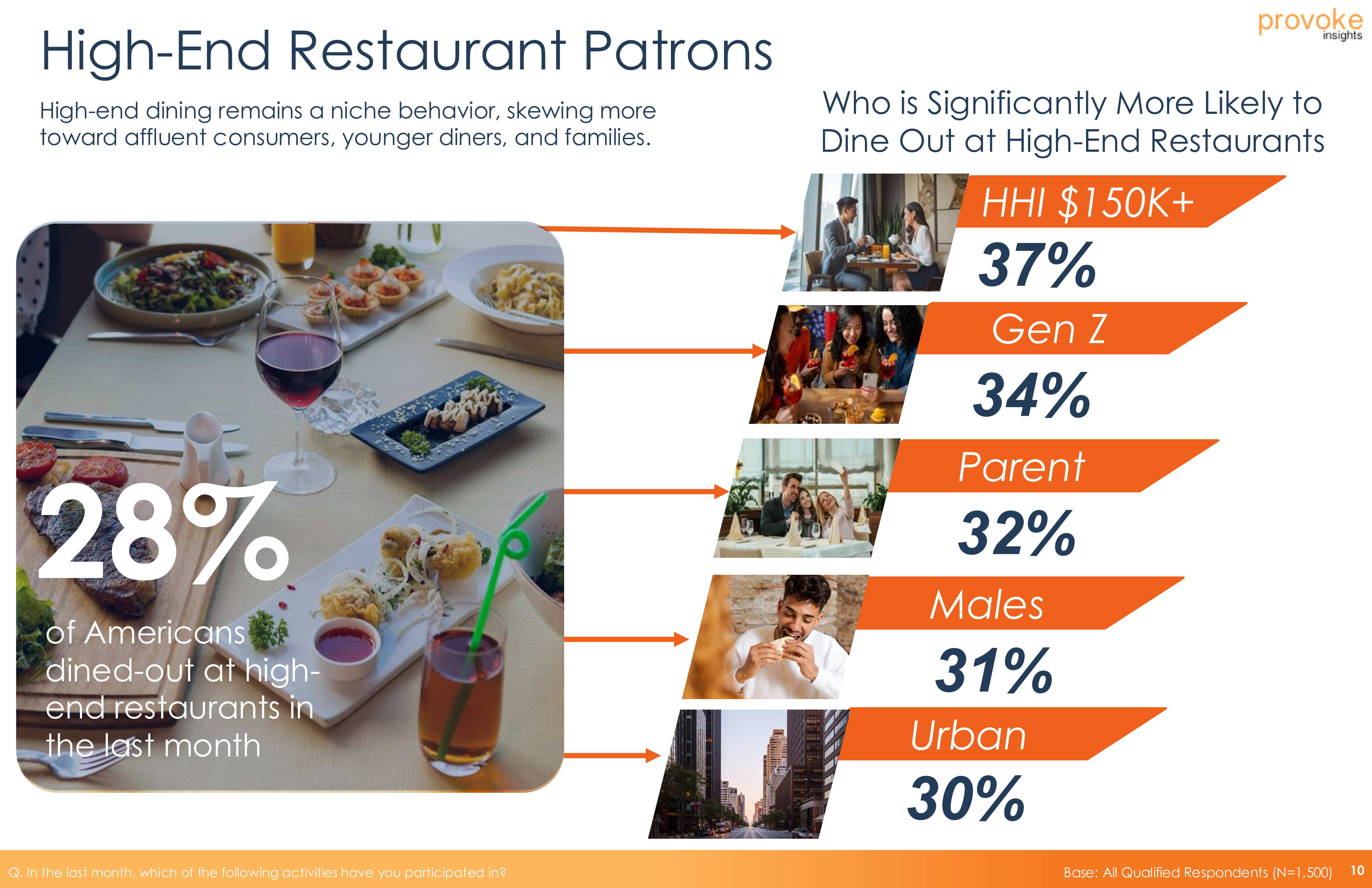
High-end dining consumers skew affluent, with 37 percent of households earning $150K+ dining at upscale restaurants in the past month, the report found. These diners over-index on food quality and service expectations, but they are also more likely to feel overwhelmed by large menus (24 percent vs. 19 percent non-high-end diners) and default to safe menu items (28 percent vs. 24 percent.)
“Fine dining operators should prioritize curated experiences, exceptional hospitality, and confidence-building simplicity that feels worth the premium price point,” said Fink.
The report is compiled from online surveys conducted in March 2026 among 1,500 Americans aged 21 to 65.