The Science Behind Gratuities
6 Min Read By MRM Staff
Like many, Wm. Michael Lynn helped pay his way through college by waiting tables and bartending. Little did he know at the time that the experience would lead to his career-long passion for studying the tipping process that’s lasted for more than 40 years.
“I saw an opportunity to be the first to devote sustained effort to understanding all aspects of this practically as well as theoretically important social and economic behavior and I took that opportunity.”
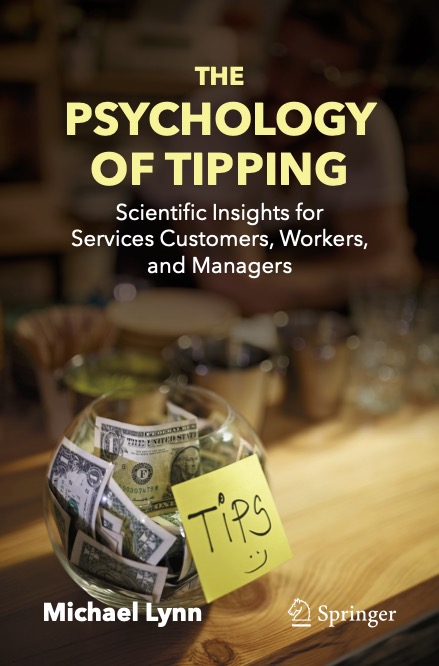
The retiring Michael Johnson and Family Chair of Services Marketing at Cornell University’s School of Hotel Administration, discussed his new book "The Psychology of Tipping: Scientific Insights for Services Customers, Workers, and Managers." with Modern Restaurant Management (MRM) magazine.
Why did you focus the narrative on the topic of the psychology of tipping?
Tipping is relevant to, and has been studied by, people in economics, hospitality management, human resources, marketing, sociology, and tourism as well as psychology. All of this research is covered in my book, but I focused the title and narrative on the psychology of tipping because all the research questions about tipping ultimately have psychological answers.
Why do people tip? Why do we tip some occupations and not others? Why does tipping vary across nations? Who are the most generous tippers? Who gets the best tips? How can servers get larger tips? Who does tipping benefit and who does it harm? How might tipping change going forward? The answers to all of these questions rest on the perceptions and motivations of tippers and tipped workers.
You dedicated the book, in part, to all past, present, and future tipped workers, but with the evolving views on tipping, do you think there might be a future without tipped workers?
No. I believe tipping is here to stay. Tipping has had opponents throughout its history and it was even outlawed briefly in Arkansas, Iowa, Mississippi, South Carolina, Tennessee and Washington in the early 1900’s, but the psychology and economics underlying tipping are too powerful to ever eliminate it entirely.
Cruise lines have successfully replaced voluntary tipping with end-of-cruise service charges and many country clubs operate tip free, but those are anomalies explained by the unique characteristics and histories of those industries. Contemporary efforts to eliminate tipping at some restaurants (as Danny Meyer tried to do) have largely failed and I do not see anything to change that outcome in the immediate future.
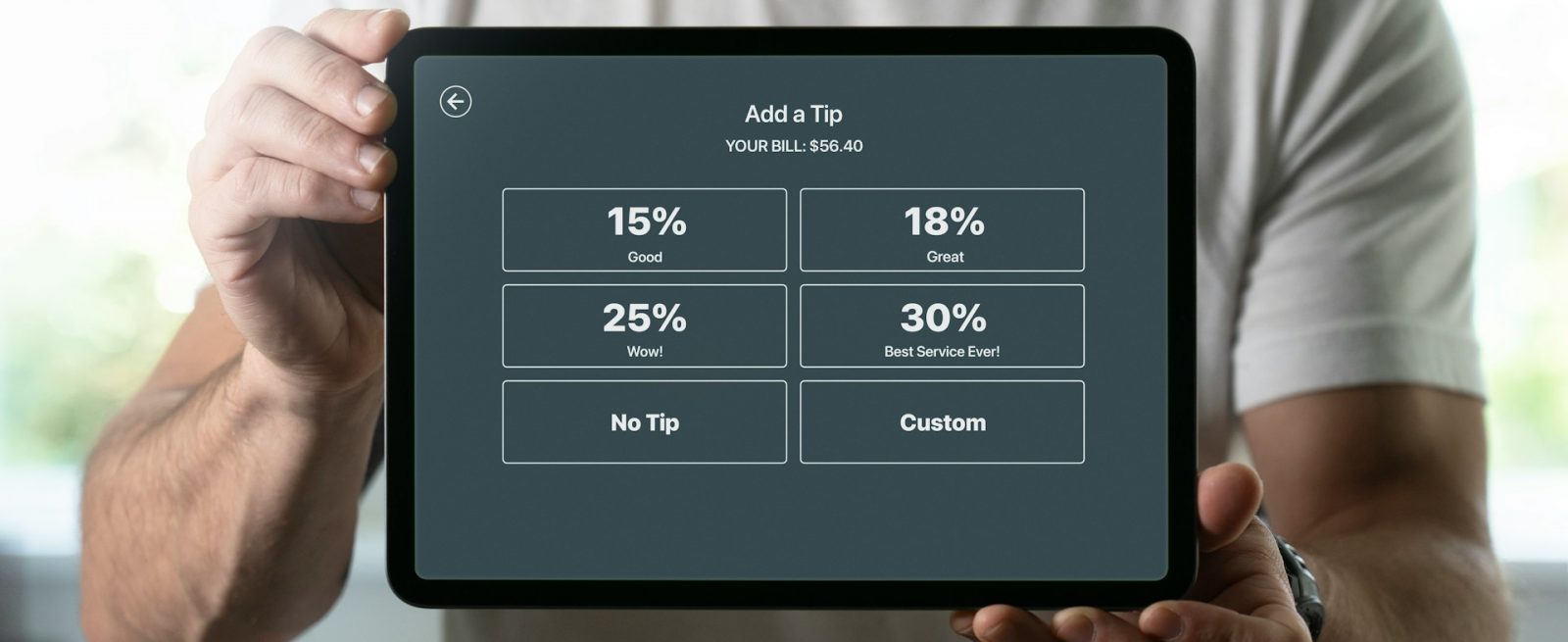
What are your views on tip screens and the impact they have had, particularly the anxiety many say they feel when they are confronted by the tip screen prompt?
It seems like digital tip screens are popping up everywhere. Certainly, they are more common today than in the past, are asking for tips in service settings that have not traditionally been tipped (tip-creep) and are suggesting tip amounts that are larger than those traditionally given (tipflation). The resulting social pressures have fueled a growing dissatisfaction with tipping in general and digital tipping in particular. A 2026 survey by WalletHub found that 81 percent of respondents think tipping has “gotten out of control.”
Research suggests that this “tip-fatigue” can undermine customer satisfaction and repeat patronage intentions, so restaurateurs should be wary of expanding their requests for tips and the amounts asked for. When used, tip suggestions should be explained as tip calculation assistance or as data entry conveniences as research suggests that such explanations reduce their negative impact on consumer sentiment.
The pandemic increased consumers’ willingness to tip new service occupations and to tip larger amounts and this, together with growing use of digital screens, has led to the tip-creep, tipflation and tip-fatigue discussed previously. However, consumer tipping behavior has fallen from pandemic highs and growing tip-fatigue may further this retrenchment. That said, I doubt that the retrenchment will bring restaurant tipping back to pre-pandemic levels because there is a long-term trend toward larger restaurant tip amounts, which have increased from about 15 percent in the 1970s to around 20 percent in the late 2010s.
Who is your audience for this book and what do you hope they take away from it?
The audience for my book is stated in its subtitle, “Scientific Insights for Services Customers, Workers, and Managers.” I really did write the book with all three audiences in mind. I hope consumers come away feeling more empowered to resist unwanted tip requests and knowing how to better achieve their goals when they do leave tips. I want tipped workers to come away with an understanding of why tip-based service discrimination is unfair and unproductive and with specific, concrete techniques they use to increase their tip income.
Finally, I want service businesses and managers to come away knowing how to train workers, set tipping policies, and communicate tipping expectations, all in a way that increases their employees’ tip incomes and incentives to do a good job as well as their customers’ satisfaction and return intentions.
What were some things about tipping that you learned that surprised you such as dueling tip jars?
Many people are surprised by the effectiveness of the specific tip enhancing techniques described in the book. For example, some servers express surprise (even doubt) that the simple, concrete, and often subtle behaviors I advocate can earn them more in tips. In addition, many restaurant managers think that touching customers is risky and are surprised to learn that it increases tips. You expressed surprise that dueling tip jars (e.g., one labeled “Dogs” and one labeled “Cats” with an invitation to vote for your favorite) increase tips. Personally, none of these findings surprised me – perhaps because I am a social psychologist by training.
One finding that did surprise me was that only about 70 percent of people in this country know that they are expected to tip 15 to 20 percent of the bill in restaurants. Given that this norm has been around since at least the 1950s and is described in numerous etiquette books and popular media outlets, I still have a hard time believing that nearly one in three people do not know it. One obvious implication is that restaurateurs should at least consider posting the words “It is customary to tip 15 to 20 percent of the bill in US restaurants.” on their menus or at the bottom of their checks. In addition to informing unaware consumers, this might also help slow or stop the increase in tip amounts that will harm business if allowed to continue unchecked.
[Note: I did this survey of a nationally representative sample around 2004 before the recent increase in tip options on digital screens may have increased uncertainty about tipping norms.]
What are some misunderstood things about tipping as part of an economy/culture?
There is so much I could say here. Let me list just four common misunderstandings.
First, people think they tip to reward good service even though service explains only about 5 percent of the variance (or differences) in tips left by different dining parties in the same restaurant.
Second, people think they resist social pressures to tip even though research tells us that social approval is the biggest motivator of tipping.
Third, people think tipping is a scam that allows restaurants to foist their labor costs onto the consumer, even though consumers must ultimately cover all the costs of a business or it will not last and even though economic competition means that most labor savings from tipping are passed on to the consumer in the form of lower menu prices.
Fourth, people think that international tipping guides are trustworthy even though they are often inconsistent with one another.
What recommendations would you give restaurant operators about how to train staff so they are authentic in their approach with guests and do get good tips, but are not seen as being manipulative?
People are generally happy to do things they find rewarding, so don’t just tell servers what you want them to do. Suggest the specific behaviors advocated in my book and share the research behind those tip enhancing techniques.
Some of the behaviors may seem obvious to you (others will be surprising), but even obvious behaviors such as introducing yourself by name to the table are done infrequently (if at all) by nearly one in three restaurant servers. So servers need to be introduced to these behaviors and taught that they actually increase tips.
When you go out to eat, what are some aspects of service that you look for that make a difference between an ok, good and, great experience?
Personally, I look for a server who is knowledgeable, attentive and courteous without being obtrusive. I do not look for a social connection with my servers, but those who manage to create one provide the best service experiences.
Why write this book now?
I’d like to say that I wrote the book now because recent changes in the tipping landscape called for a greater public understanding of the psychology of tipping. While the later part of that sentence is true, that is not why the book came out now. I did not write the book earlier because I was still learning and writing it seemed premature.
There is still much about tipping that I do not know, but I have learned a lot over the past 40 years, am retiring this June, and wanted to share what I have learned with a broader audience before that retirement. The book is my swan song.