The Delivery Divide: How Restaurants Are Rethinking Third-Party Apps vs. In-House Systems
4 Min Read By James Cannon
There is no denying the transformative impact of third-party delivery services. Platforms like Uber Eats and DoorDash have redefined accessibility, allowing restaurants to reach customers far beyond their physical footprint.
But behind the seamless tap of a mobile app lies a critical strategic question:
Who truly owns the customer experience and the profit that comes with it?
For restaurant owners and hospitality leaders, the answer often comes down to a choice between third-party delivery platforms or investing in an in-house delivery infrastructure. Each offers compelling advantages and comes with trade-offs. Increasingly, brands are learning that the real opportunity lies not in choosing one over the other but in mastering both.
The Rise of Third-Party Platforms: Speed, Scale, and Discovery
Since teaming up in 2017, McDonald’s and Uber have delivered hundreds of millions of orders to consumers across six continents. For emerging brands, these platforms function as powerful discovery engines. A new restaurant can appear alongside established names, instantly gaining exposure to thousands of potential customers within its delivery radius. For multi-unit operators, they offer a frictionless way to scale into new markets without the operational burden of building a delivery fleet.
Equally valuable is the infrastructure these platforms provide. Logistics, driver management, routing, and even customer service is largely handled externally, allowing operators to focus on food quality and kitchen execution.
But this convenience comes at a cost with fees often ranging from five to 30 percent. In essence, businesses gain reach, but relinquish control and data.
Additionally, the Federal Trade Commission (FTC) is examining third‑party delivery practices and currently asking for public input. They cited evidence including a Lending Tree study that found consumers can spend almost 80 percent more on delivery than if they picked up their order.
To prepare a response, the National Restaurant Association is asking for operators to share their experiences collaborating with the platforms in a survey.
“Delivery is a permanent part of how many restaurants reach their customers, but it needs to be done in a way that's fair, transparent, and sustainable,” said Sean Kennedy, chief advocacy officer for the National Restaurant Association.
In-House Delivery: Control, Loyalty, and Long-Term Value
For operators willing to invest in infrastructure, in-house delivery offers a compelling alternative.
By managing delivery internally, restaurants retain full ownership of the customer journey. Every order becomes an opportunity to build loyalty, capture data, and create a branded experience that extends beyond the dining room.
Financially, the benefits are clear. Without third-party commissions, margins can improve, allowing businesses to reinvest in quality, staff, and growth initiatives. Direct ordering platforms also enable personalized marketing loyalty programs, targeted promotions, and upselling strategies that are difficult to execute within the constraints of third-party apps.
However, this level of control requires operational discipline.
Running an in-house delivery system introduces complexity: hiring and training drivers, managing insurance and liability, optimizing delivery routes, and maintaining consistent service standards. Without well-designed systems, the model can quickly become inefficient and costly.
The Hybrid Model: A Strategic Advantage
As the industry matures, a clear pattern is emerging among high-performing restaurant groups: they are no longer viewing delivery as a binary choice.
Instead, they are adopting a hybrid approach that leverages the strengths of both models.
Third-party platforms are used as customer acquisition tools and top-of-funnel channels that introduce new guests to the brand. Once that initial transaction occurs, the focus can shift to converting those customers into direct, repeat buyers through in-house ordering systems.
This strategy allows businesses to benefit from the visibility and scale of third-party apps while gradually migrating their most valuable customers into a more profitable, controlled ecosystem.
Dominos Pizza entered the third-party app realm back in 2023, partnering exclusively with Uber Eats before joining the DoorDash platform as well last year.
"As brands that are both dedicated to digital ordering excellence, our new partnership with DoorDash brings together the scale of our two industry-leading companies, as we continue to build towards the $1 billion opportunity that we believe the aggregator marketplace represents for us," said Joe Jordan, Domino's chief operating officer and president – U.S. "The ability to connect seamlessly with DoorDash customers means more sales for Domino's stores, while efficiently leveraging our brand's robust delivery network. Tapping into incremental customers, particularly in suburban and rural markets, is a meaningful opportunity for Domino's, as our brand continues to open stores nationwide."
Designing for Delivery: The Operational Imperative
Regardless of the model, success in delivery ultimately comes down to execution. Kitchens are designed with dedicated workflows for off-premise orders, packaging is selected to preserve quality during transit and pickup areas are optimized to reduce congestion and wait times.
Even staff training evolves. Teams are taught to think beyond the plate anticipating how food will travel, how timing impacts quality, and how each step contributes to the overall guest experience.
A New Definition of Hospitality
At its core, delivery challenges traditional notions of hospitality. Without face-to-face interaction, the experience must be communicated through different touchpoints: packaging, accuracy, timing, and reliability. For operators who embrace this shift, delivery represents more than an additional revenue stream: it becomes a channel for brand extension, customer engagement, and long-term growth.
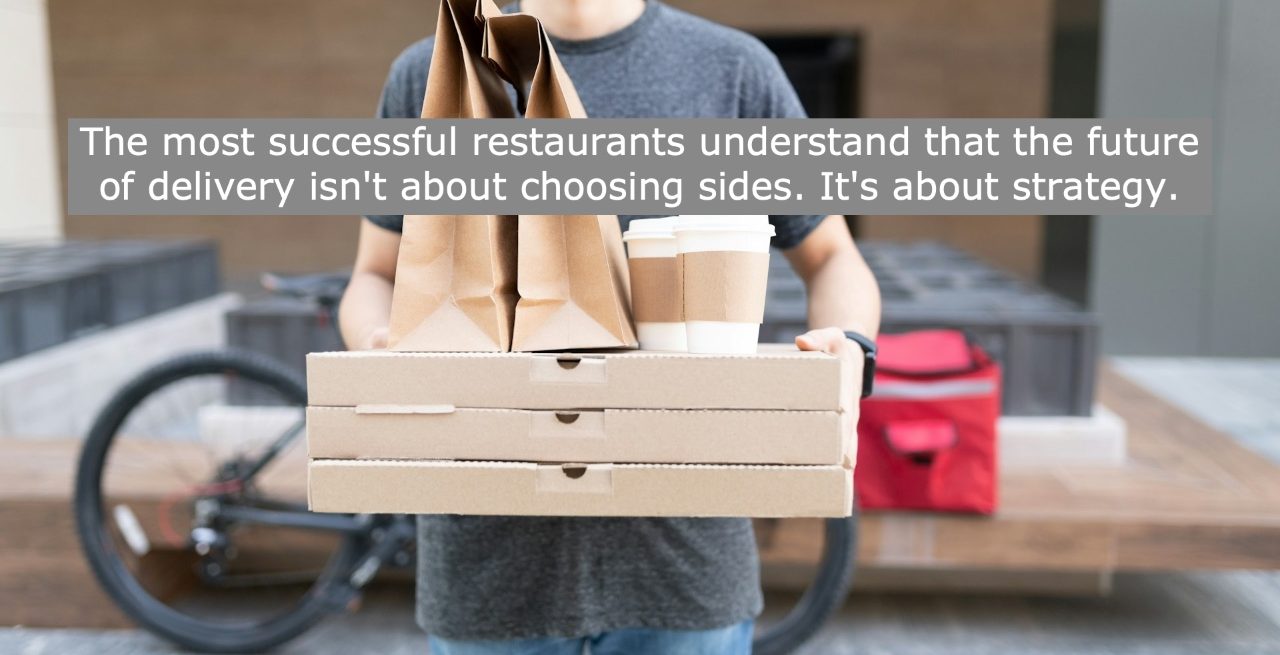
Third-party platforms offer speed, scale, and access. In-house systems provide control, margin, and loyalty. But the most successful restaurants understand that the future of delivery is not about choosing sides. It’s about strategy because in an industry defined by thin margins and high expectations, the brands that win will not be the ones who simply participate in delivery but the ones who design it with intention.