Activate the ‘Halo Effect’
3 Min Read By MRM Staff
Food has become a central part of return-to-office strategies, presenting an opportunity for restaurants to capitalize on catering events to build brand awareness and loyalty, according to ezCater’s 2026 Workplace Catering Insights Bundle.
The data suggests this can create a Halo Effect for newer restaurants because a workplace order can introduce a restaurant to dozens of employees at once, creating exposure that can lead to future individual orders. In fact, ezCater found that 62 percent of employees who first try a restaurant at work later order from that restaurant personally, and 67 percent recommend it to friends and family. Additionally, 96 percent of workplaces tried a new restaurant last year, suggesting a real openness to discovery.
“Food is no longer just a perk,” said Cindy Klein Roche, Chief Growth Officer, ezCater. “It is a critical tool for productivity and engagement. The impact of these orders is massive for restaurants, as catering is a powerful channel for customer acquisition. When branding is visible on packaging and labels, each workplace order becomes an opportunity to build loyalty beyond the workplace.”
Among the highlights of the research:
-
Employers are investing more in daily and weekly meal programs and paying for them. Approximately, 81 percent of workplace meals are now employer-funded.
-
In 2026, 91 percent of workplaces plan to spend the same or more on food, up from 82 percent in 2024, and one in five plans to increase spending by more than 25 percent.
-
Seventy-nine percent of hybrid employees say employer-provided food would make them more likely to stay with a company with an on-site mandate. Consequently, daily or weekly meal programs have spiked 26 percent year-over-year. Employers frequently cover the cost, with 81 percent of meals free to employees.
Menus Make the Difference
More robust, descriptive menus see twice as many bookings on ezcater.com, making menu design a critical factor in restaurant selection. Menus with clear descriptions, accurate photos, and plenty of dietary options perform best.
“Your menu design is what wins the order,” said Klein Roche. “Workplace customers need to understand exactly what you offer and whether it will work for their group.”
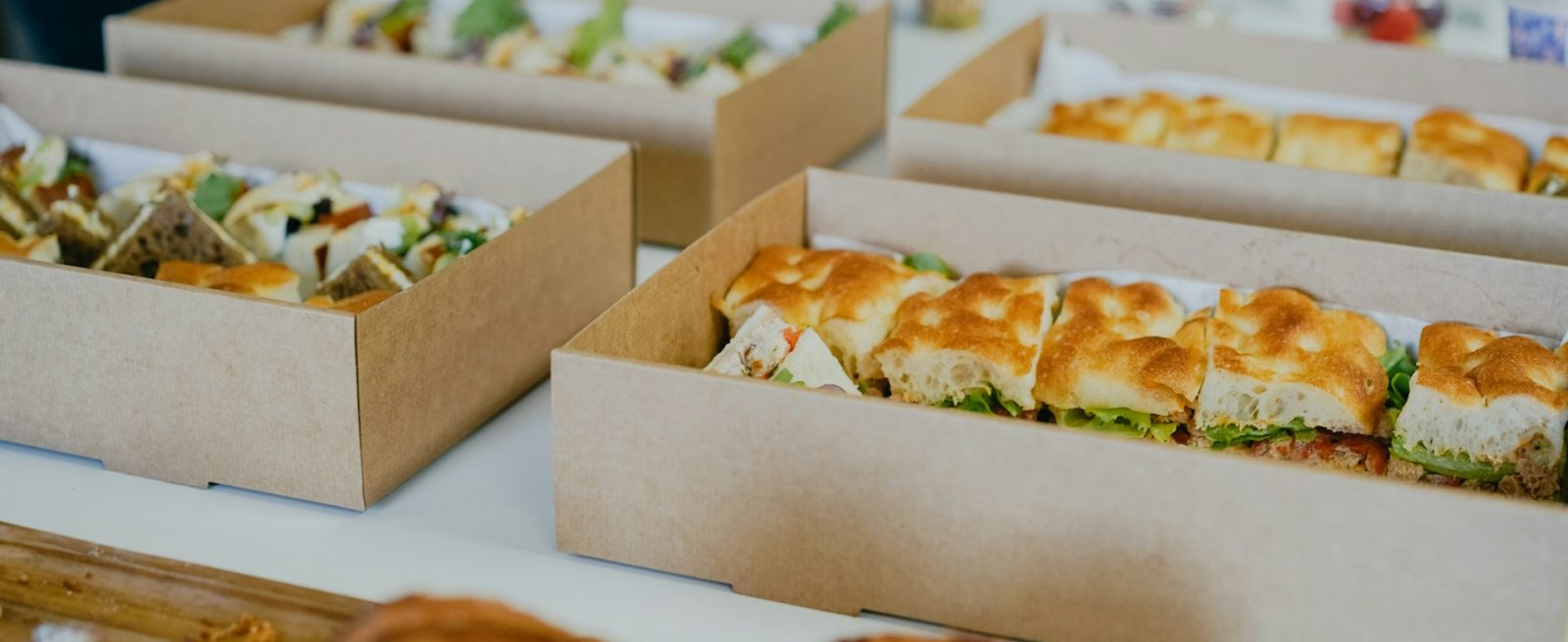
Format matters as well. ezCater data shows 75 percent of orders include trays or packages, while 85 percent include individually packaged items.
“A team gathering for a working lunch may want shared trays. A hybrid team coming in on different days may need individual meals. If you offer only one format, you limit your opportunity.”
The data points to eleven menu attributes that can help drive conversion: add-ons, beverages, and utensils; vegan, vegetarian, and gluten-free options; clear item descriptions and photos; both catering packages and individual items; and menus updated within the past 365 days. The performance impact is meaningful. Menus that include nine attributes see double the bookings compared to menus with six, Klein Roche noted.
“For busy workplace customers, many of whom are placing larger orders for groups with different needs. If they can’t quickly tell what fits within their budget, feeds 20 people, or accommodates dietary restrictions, they may choose another restaurant. When you are feeding the same team regularly, variety matters. Companies like a healthy mix of local restaurants and national chains.”
Price, Reliability and Quality Matter
While price is important when deciding what restaurant to order from, it isn’t the only factor as 65 percent said they choose a restaurant because of a high reliability rating, and 74 percent report it’s because people crave the cuisine or brand, Klein Roche added. On ezCater, the average catering order is $430 for 26 people, or about $16.50 per person.
“What keeps customers coming back is reliability and quality. When someone is responsible for feeding thirty people at noon, they choose the restaurant they trust to deliver, not simply the one with the lowest price.”
ezCater’s insights are based on surveys conducted in Q4 2025 with more than 2,300 participants, including 714 workplace catering orderers, 616 restaurant operators, and 1,002 employees. Proprietary data gathered from millions of transactions across 125,000 restaurant partners was also analyzed.