10,000 Touches, 800 Guests, Four Hours: What a Tea Sandwich Service Teaches About Restaurant Operations
4 Min Read By Ankish Shetty
When people think of a tea sandwich, they think “simple.” Dainty, classic, straightforward. When I looked at a tea sandwich order for 800 guests, I saw something else entirely: a high-stakes logistics and labor problem with no margin for error.
If each guest consumes an average of three to four sandwiches, you are looking at over 3,000 individual units. With multiple components per sandwich — bread selection, spread application, filling, precision cut, plating — my team and I managed nearly 10,000 individual “touches” to ensure every bite met the same standard from the first plate to the last. We had four hours to do it with a team of five.
What that service taught me applies far beyond catering. It surfaces the operational truths that every restaurant manager deals with daily: how do you maintain quality and consistency when volume is the variable you cannot control? Here is exactly how we did it — and what the lessons mean for your operation.
The Menu Is an Operational Decision, Not Just a Culinary One
Before a single ingredient was ordered, the most important decision had already been made: menu selection. At scale, every dish you put on a menu is a commitment to a production workflow. Choose wrong, and no amount of skilled execution saves you.
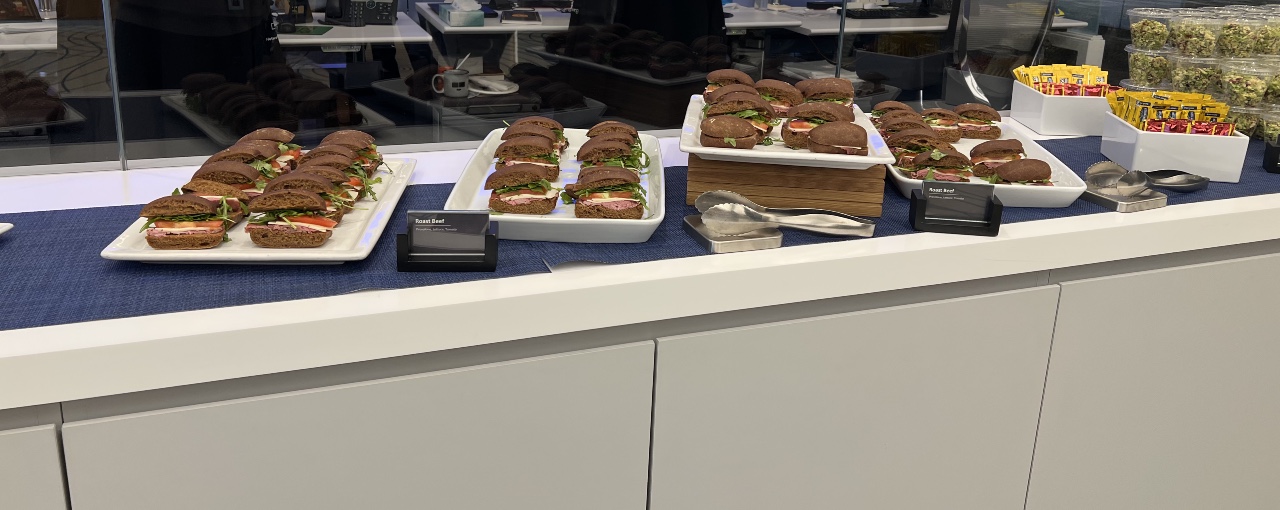
For this service, we chose three sandwich profiles specifically engineered for structural performance over a three-hour service window, not just for flavor:
- Roast Beef and Provolone on Pumpernickel. Dense pumpernickel acts as a structural base for the protein, preventing the sandwich from becoming flimsy during service. It holds under weight and humidity without deteriorating.
- Tuna Salad on Multigrain Toast. Toasting the multigrain was a deliberate moisture-barrier decision. A moisture-compromised tea sandwich is unsalvageable mid-service. The toasted crust bought us the full three-hour window without quality degradation.
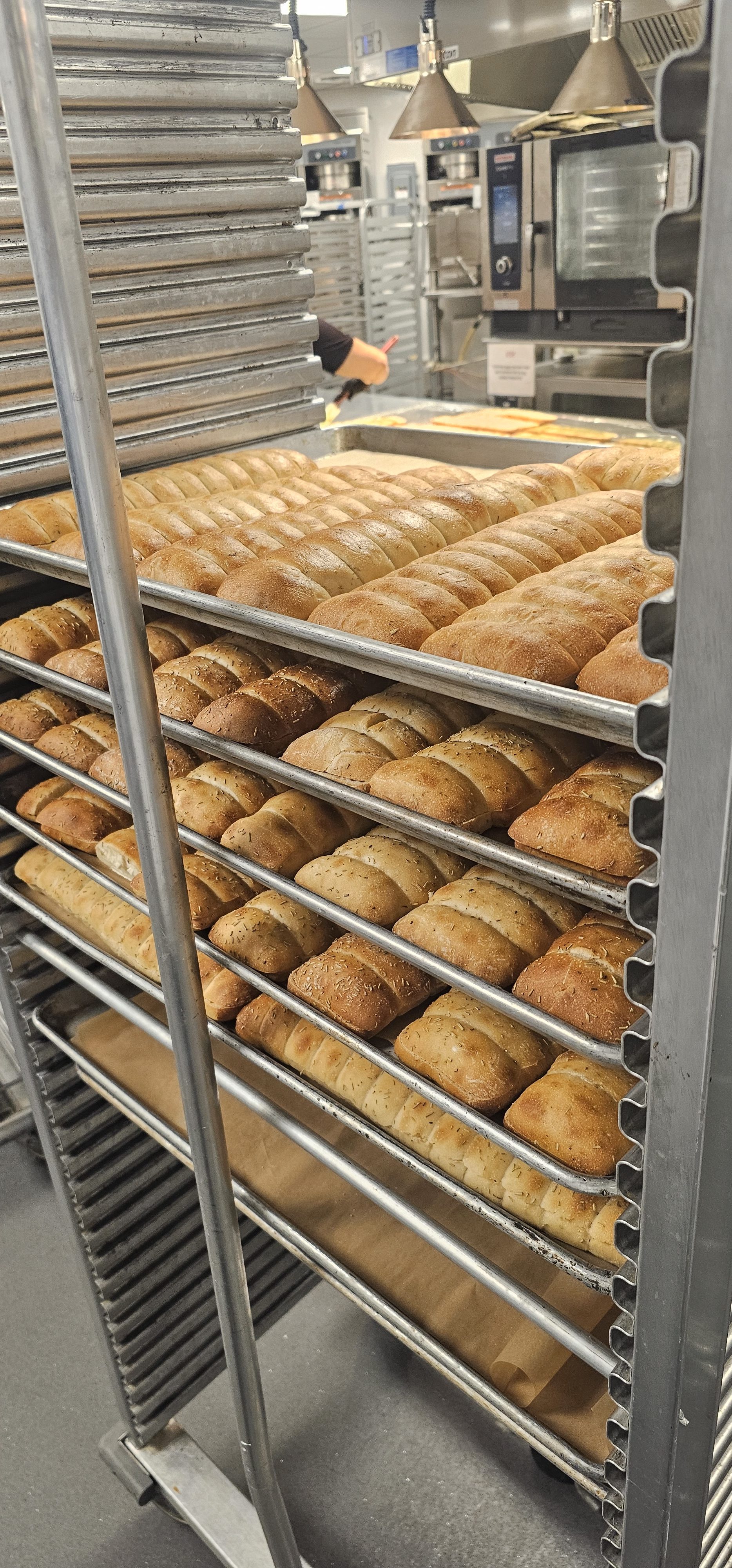
- Pesto Mozzarella on Rosemary Focaccia. Focaccia’s airy but resilient structure holds fat-based spreads like pesto without absorbing them into the bread. It also adds a high-end aromatic element with minimal additional labor, which matters when you are counting every minute of a four-hour window.
The lesson for restaurant operators: before finalizing any high-volume menu — whether for a banquet, a daily special, or a catering order — ask not just “what does this taste like?” but “how does this behave after 45 minutes on a pass?” Menu items that cannot answer that question reliably are a service liability.
Labor Math Is Kitchen Strategy
With three cooks and two prep staff, we had exactly 20 man-hours to produce over 3,000 units before service began. That is not a comfortable margin. It requires treating labor not as a headcount problem but as a resource to be engineered.
The instinctive response to a tight production window is to add staff. In reality, adding staff without adding structure almost always makes the situation worse. More people in an unstructured kitchen creates congestion at stations, duplicated effort, and slower decision-making under pressure. A five-person team with defined roles consistently outperforms an eight-person team without them.
Our solution was parallel processing with complete role separation. While prep staff handled high-volume bread layout and spread portioning — tasks that require precision but not culinary judgment — the cooks managed assembly sequencing and precision cutting. No one crossed into another’s station. No one waited for direction. We treated the kitchen like an engineering floor: every movement was predetermined, every handoff was defined, and every station was set up before production began.
The result was a sustained production rate of 24 seconds per unit across the entire four-hour window. That rhythm did not happen because the team was exceptionally skilled. It happened because the system was designed before anyone picked up a knife.
Consistency at Scale
When you line up 100 sandwiches on a platter, any inconsistency in size, cut, or presentation is immediately visible. At 3,000 units, inconsistency is not just an aesthetic problem — it is a food cost problem and a guest trust problem.
We used physical cutting templates to ensure every sandwich was identical. This is not a reflection of distrust in the team’s skill. It is an acknowledgment that at volume, consistency cannot depend on individual judgment applied thousands of times under time pressure. Templates remove that variable entirely.
The same principle applies to every standardized recipe, every portioning tool, and every pre-measured spice packet in a high-volume kitchen. These are not shortcuts. They are the mechanisms by which a well-designed operation protects quality from the inevitable variability of human execution under pressure.
The practical test for any high-volume item: does the last unit produced meet the same standard as the first? For our tea sandwich service, the answer was yes at hour four as it had been at hour one. That is not luck. It is system design.
What This Means for Your Operation
A tea sandwich service for 800 guests is an extreme example of operational pressure. But the same mechanics apply at every volume level and every service format. Whether you are running a 60-cover lunch service or a 300-person event, the principles are identical:
- Engineer your menu for production behavior, not just plate appeal. Ask how every item holds, how it portions, and how it performs at the end of service, not just at the beginning.
- Define roles before service begins, not during. Every team member should know their station, their output, and their handoff point before the first order arrives. Ambiguity during service is a direct cost in speed and quality.
- Remove consistency from the category of talent. Templates, standardized recipes, portioning tools, and pre-measured components are not signs of a weak team. They are the infrastructure of a reliable one.
- Stage before you serve. In our operations, service begins with units staged and ready before the first guest arrives. The buffer this creates absorbs the inevitable minor disruptions of service opening without breaking the production rhythm.
The most valuable insight from executing 10,000 touches in four hours is this: consistency is not a talent. It is a system. And a well-designed system will outperform individual brilliance at scale, every time.
That last sandwich served at hour three should be indistinguishable from the first. When it is, you have not just executed a service. You have proven that your operation is built to last under pressure.