
Creating a True Coastal Experience in a Landlocked State
3 Min Read By MRM Staff
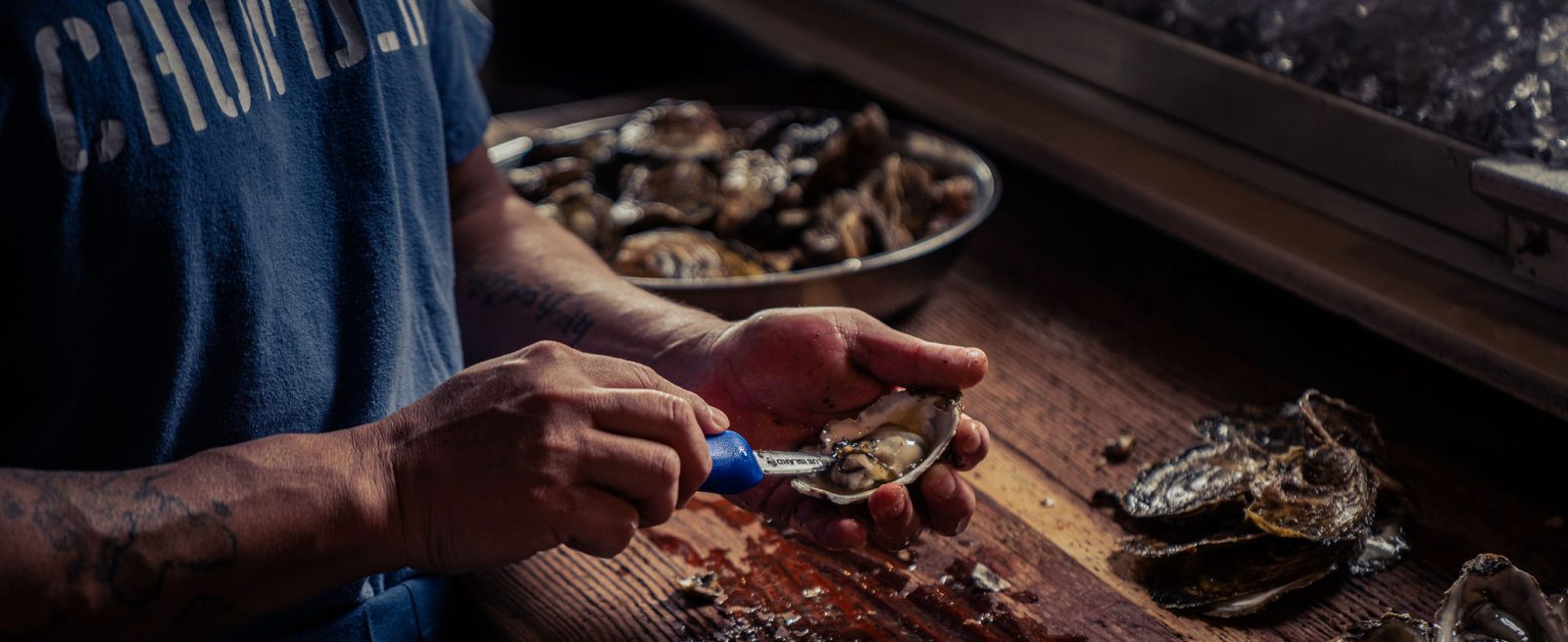
Guests can hear the story of each oyster from seed to shuck at Blue Island Oyster Bar & Seafood in Denver.
That’s because Sean Huggard, Founder and President of Shucking Good Hospitality, always wanted to bring an authentic oyster bar to the area. And, he was able to realize that dream after having a beer with longtime friend Chris Quartuccio, founder of Long-Island-based Blue Island Oyster Farm, at a seafood conference in Boston.
Huggard shared his desire to open a seafood-focused restaurant that partnered with an oyster farm and Quartuccio responded that he had been thinking about opening a restaurant, too, but didn’t want to manage the day-to-day. This serendipitous exchange led to the pair teaming and the group now owning its seafood supply chain.
“That quick conversation became the foundation for what Blue Island Oyster Bar and Shucking Good Hospitality eventually became, said Huggard. “Owning the farm allows us to control quality from what we like to call ‘dock to dish.’ That level of transparency and control sets us apart and is something few restaurants can offer, creating a true coastal experience in a landlocked state.”
Owning more of the supply chain adds layers of responsibility, but managing it themselves guarantees consistency, the freshest product possible, and the ability to tell a true story about where the food comes from, Huggard pointed out.
“We manage logistics and inventory with very short shelf life, and the complex sourcing process for oysters from Long Island and other premium growers coast to coast. Timing, supply management, and team training have to be flawless so that every oyster, lobster, or crab leg arrives at peak freshness.”
He noted that while there is a common assumption that fresh seafood cannot exist so far from the coast, their biggest challenge also happens to be their biggest reward, which is proving that wrong every day.
“It is a daily operational challenge that is made a lot easier through owning our own oyster farm. We look forward to the chance to show that our landlocked location does not change the fact that this is some of the best and freshest seafood in the country.”
Oysters are no longer just a coastal luxury and diners care more than ever about sustainability, traceability, and seasonality, Huggard said, adding that people want to know where their food comes from and how it is treated.
“By delivering exceptional products, sharing the story behind each oyster, and showing care for the environment and the farmers, we create a meaningful connection with guests that enhances the overall experience.”
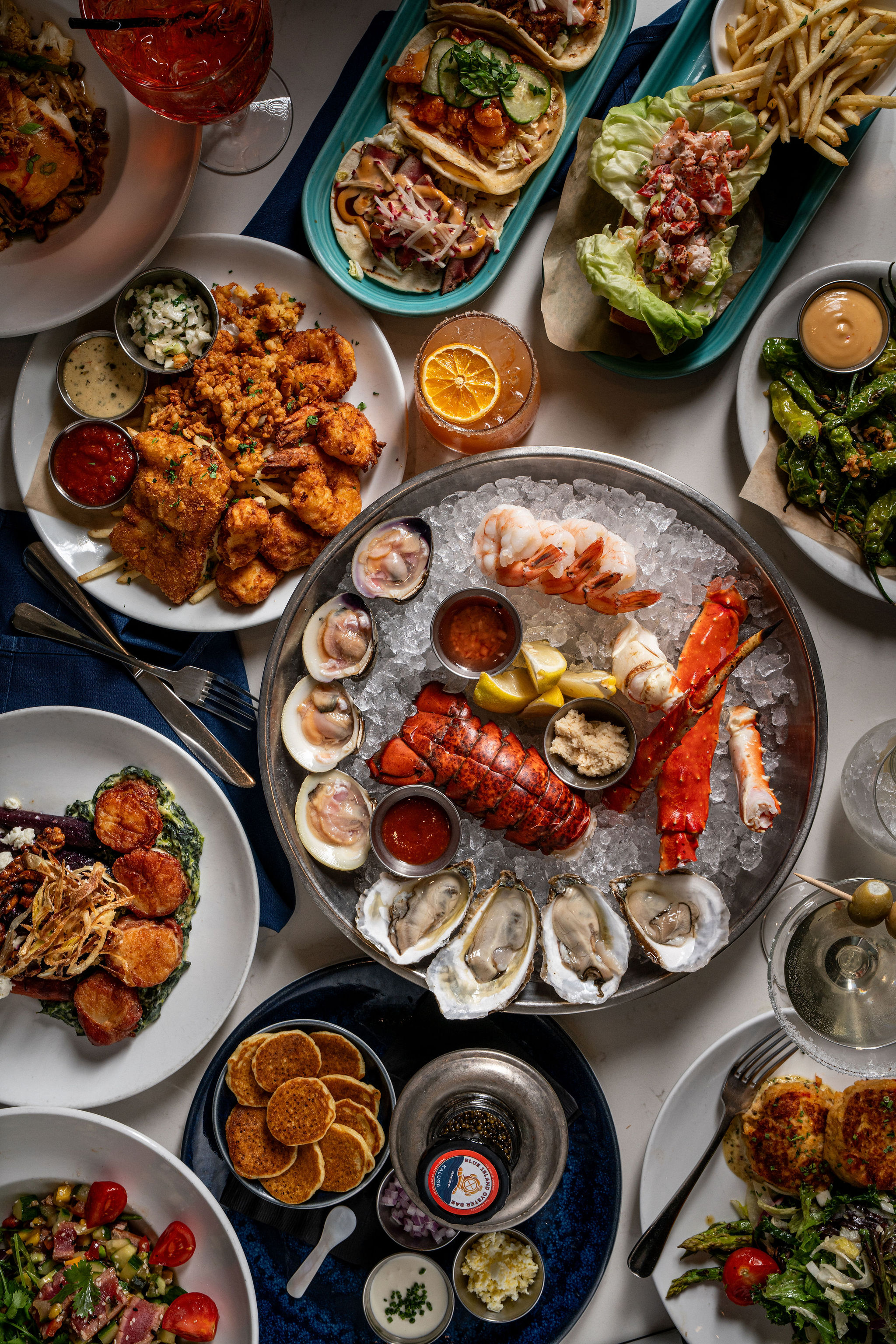
The group has been impacted by rising fuel costs and has weathered what has been a bad winter for Long Island’s oysters supply.
“Whether oysters are flown or trucked, fuel fluctuations impact delivery costs,” Huggard said. “:We work hard to absorb those costs without passing unreasonable increases onto our guests.”
While they were very lucky to see almost no die-off at Blue Island Oyster Farm, he said it was still a real reminder of how much respect this kind of work demands.
“This past winter was incredibly hard on a lot of Long Island oyster farmers, and my heart really goes out to the people who took those losses. Oyster farming is tough work to begin with, and when the weather hits like that, it affects livelihoods, families, and years of effort. Owning the farm keeps us closely connected to that reality every day, and it makes us even more intentional about the care, responsibility, and long-term commitment behind every oyster we serve.”
Shucking Good also includes Oliver’s Italian, and the recently opened Ash and Agave, which was designed to evoke the feeling of the Mexican Riviera the moment guests arrive, using lighting, music, design, food, and cocktails to make diners feel as if they have stepped into a coastal escape, Huggard explained.
“For us, it all begins with exceptional product quality, but it grows into something larger. Every detail of the environment, hospitality, and storytelling contributes to a guest’s experience. It should feel as if they are stepping into another place or moment in time. Every ingredient, story, and interaction is crafted to create that transportive sense of place and discovery that keeps people coming back.”
Top photo by Joni Schrantz