
Perplexing Pricing Perceptions
3 Min Read By MRM Staff
Restaurant operators should focus on value, convenience, and experience to deal with a perception shift where, for the first time in four quarters, more consumers believe restaurant prices are higher than grocery ones, according to Revenue Management Solutions' Q1 2026 Consumer Insights Report.
“Ultimately, respondents are not feeling more pain at restaurants,” said Richard Delvallée, Revenue Management Solutions Senior Vice President, Consulting Services. “They are feeling less pain at the grocery store.”
Seventy-two percent believe restaurant prices are higher than the grocery checkout. Since January 2025, restaurant price perception remained steady while grocery price perception dropped 14 ppt, from 82 percent believing prices were higher than the previous month to just 68 percent.
Consumers perceive restaurant prices as higher for a reason, he added. According to February 2026 data from the Bureau of Labor Statistics and USDA Economic Research Service, grocery inflation was up 2.4 percent YOY, while restaurant inflation was 3.9 percent.
“Commodity prices for staples like eggs and produce have moderated from recent peaks. At the same time, grocers have aggressively leaned into private-label, loyalty pricing and promotional events to recapture value-oriented shoppers who traded down during the inflationary surge.”
A Warning for Restaurant Operators
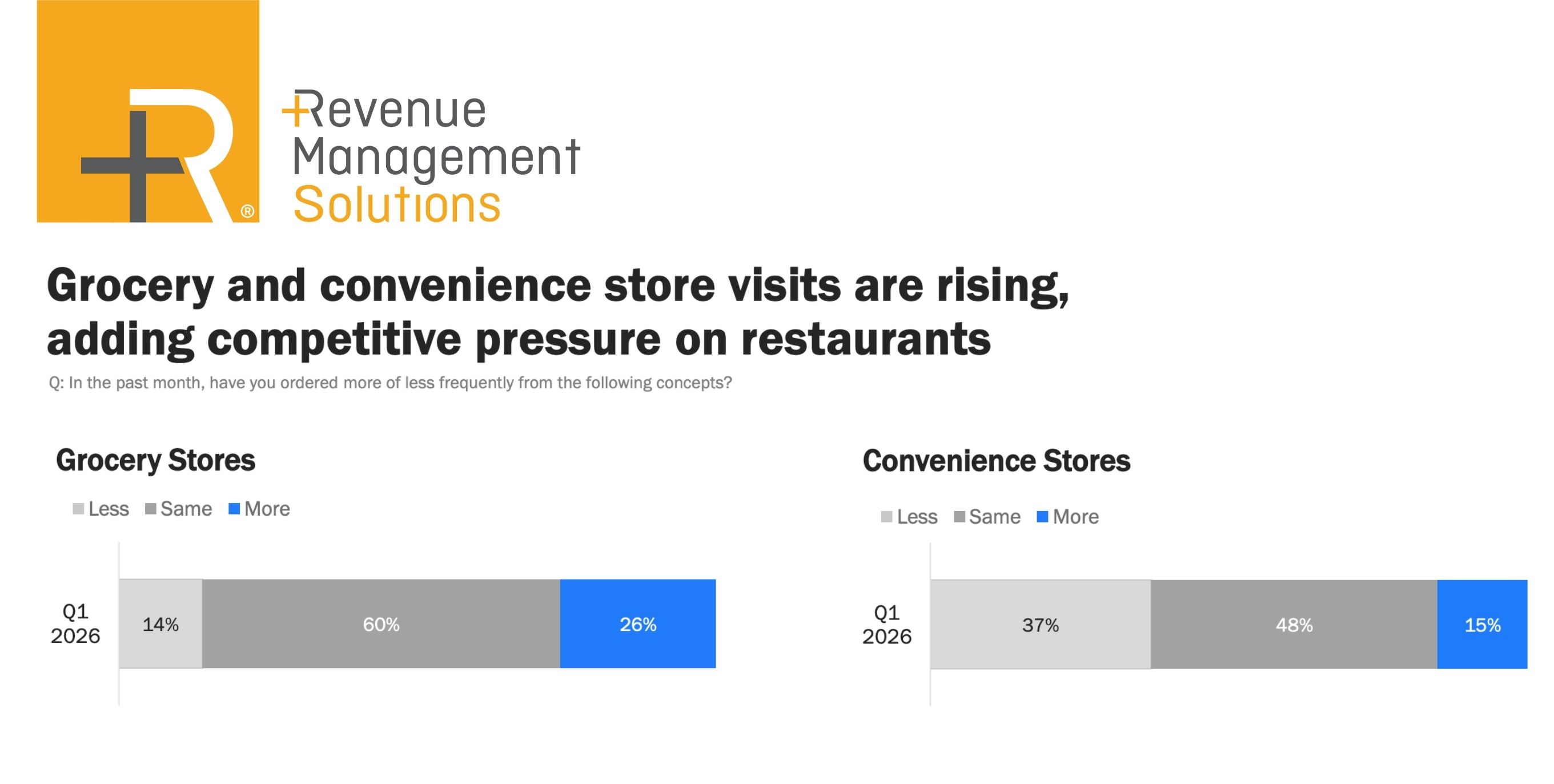
The shift in perception should function as a warning, not a verdict for restaurant operators, Delvallée said. Despite price pressures, one in four respondents are still spending more at restaurants, though most say it's because prices are higher, not because they're visiting more often. At the same time, one in four are going to grocery stores more frequently.
Restaurants still have an opportunity as QSRs remain resilient, and notably, 44 percent of respondents report trading down to cheaper restaurants rather than abandoning them altogether, he added.
“Convenience stores have not seen the same gains as grocery, which means restaurants can win on convenience by removing friction from takeout, drive-thru and mobile orders. Restaurants will always have something grocery stores cannot offer: experience.”
Focus on Value and Experience
In this current environment, restaurants should not try to out-price grocery, but instead focus on the value equation, which includes convenience where restaurants still win over C-stores at QSR, while full-service and casual dining can focus on their dine-in experience, with quality service and unique offerings, he suggested.
“We also see an opportunity for brands on both ends of the day-part spectrum. Breakfast and late night are dayparts where grocery meals do not compete.”
Millennials are the most financially pressured cohort in the data. They're simultaneously the generation most likely to cut back at QSR (36 percent) and most likely to increase grocery visits (41 percent, up six percent year-over-year). In total, 26 percent of all respondents increased their grocery visits and across all dining segments, more than half of customers plan to keep their current habits, according to the report.
“Millennials are also the top restaurant spenders, with 35 percent saying they're spending more at restaurants than a year ago, the highest of any generation,” Delvallée said. “They are not abandoning restaurants. They are managing both channels more strategically and stretching their dollars across both. Value messaging has a role, but the framing matters. You don't need to attract them with discounts."
Use Strategic Pricing Structure
Instead of leading with price cuts, RMS recommends bundling, strategic menu design and loyalty offers that make guests feel like they are winning without requiring a markdown. Their joint eye-tracking research with Cornell's Sherri Kimes showed that calling attention to cost changes nudges customers to recategorize their visit from a pleasure, treat or convenience to a budgeting exercise.
“Well-placed offers, such as high-frequency moments like lunch and post-work, can win back lost customers, without reminding your loyal customer base about price.”
The current grocery advantage may not hold, Delvallée predicts, if food-at-home inflation ticks back up due to tariff pressures or commodity volatility, the perception gap will start to close, and grocery converts may drift back. The cost environment adds pressure, too. Beef remains structurally expensive with no near-term relief, and there's a six-to-nine-month lag before today's wholesale costs show up on menus.
“Brands that scenario-model now will be better positioned than those that react quarter to quarter. Finally, Gen Z has consistent upward momentum across all segments. Brands that earn their loyalty now will build a durable base for the back half of 2026. Attract this cohort through speed, digital experience and occasions worth leaving home for.”