
Why the ‘$28 Burger’ Is a Warning Sign
4 Min Read By MRM Staff
Menu prices can only rise so far before there is pushback from diners — a “$28 burger” today might be the first sign that restaurant pricing models are about to begin evolving. Many restaurant operators are resorting to reactive price hikes just to keep the doors open in the short term, but that approach risks alienating customers for the long term and doesn’t even solve margin pressure.
“A ‘$28 burger’ is usually a sign that something upstream isn’t working the way it should,” said Bob Vergidis, Founder and Chief Visionary at pointofsale.cloud, “Restaurants don’t jump to pricing like that unless they feel pressure somewhere else, whether it’s food costs, labor or inefficiencies in the operation.”
The challenge is that price is the easiest lever to pull, so it often gets overused, he noted.
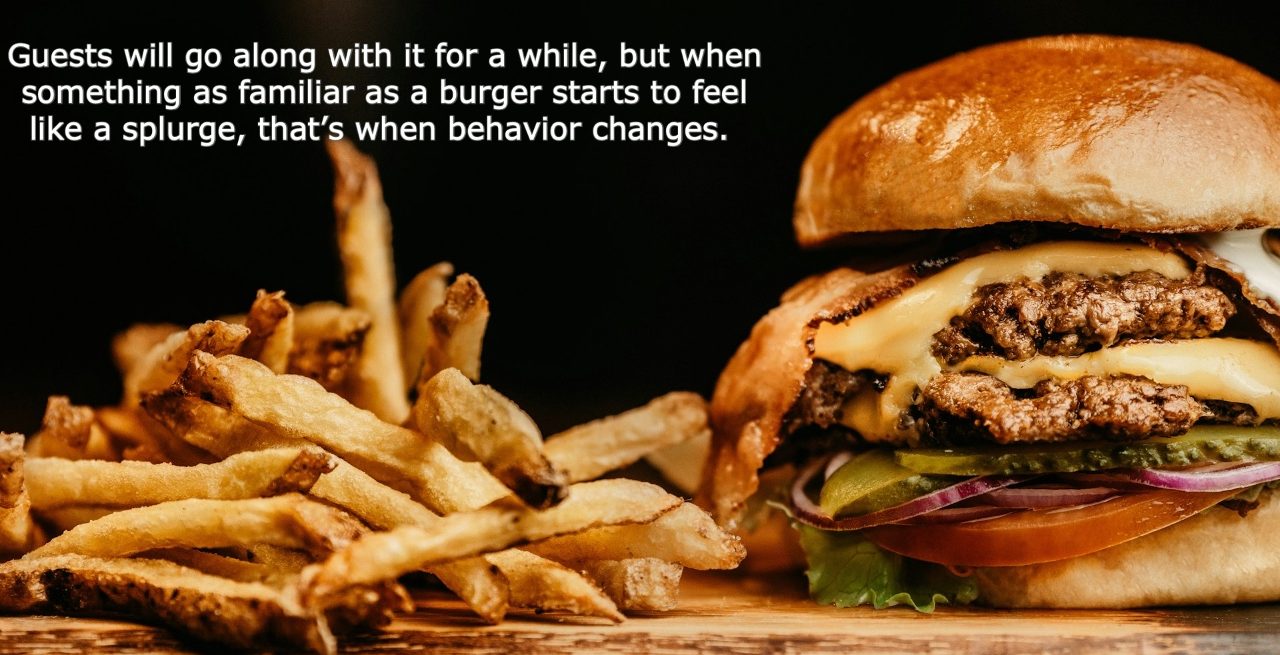
“Guests will go along with it for a while, but when something as familiar as a burger starts to feel like a splurge, that’s when behavior changes. They may come less often, skip add-ons or trade down. At a certain point, it becomes less about the burger and more about the value equation no longer making sense to the guest.”
Data and Metrics Matter
Restaurant operators need to be aware of all their numbers to stay competitive in the current economic landscape, Vergidis noted.
“It starts with visibility. If a restaurants’ sales, labor and food costs are all sitting in different systems, it’s really hard to understand what’s actually driving the business. They end up reacting instead of making informed decisions.”
From there, it’s about being honest with the menu and knowing what’s actually performing well, what’s profitable, what slows the kitchen down, what guests consistently come back for. And then the conversation turns to execution.
People are reevaluating what they’re willing to pay for and what feels justified. Restaurants have to be thoughtful about how they introduce these changes.
“Right now, small inefficiencies matter more than ever. A few extra minutes on tickets, a handful of incorrect orders or slightly overstaffed shifts may not seem like much individually, but together that’s where margin starts to erode.”
Prime cost remains the starting point so If that’s out of line, everything else becomes harder to manage, Vergidis said, adding that revenue alone doesn’t tell the full story.
“I’d pay close attention to the sales mix. It’s important to pay attention to whether guests are skipping add-ons, choosing lower-priced items or avoiding specific dayparts. Those shifts give a much clearer picture of what is really happening.”
Speed is another big metric for operators to pay attention to because ticket times and throughput aren’t just operational metrics, they directly impact labor efficiency and how often guests come back, Vergidis said.
Technology gives operators a clearer, more immediate picture of what’s actually happening in their business and helps create much-needed consistency, he noted.
“Without that, restaurants make changes like adjusting prices or staffing levels, but they don’t really know what worked until much later. When systems are connected, orders are more accurate, kitchens run more smoothly and the overall experience feels more reliable to the guest. That consistency becomes even more important when people are spending more, because expectations go up along with price.”
Dynamic Pricing Reenters the Conversation
One option that could be up for discussion is the dynamic pricing model as there’s an opportunity to use pricing more thoughtfully to reflect that demand and costs are not consistent, Vergidis said.
“Most restaurants still price as if every hour of the day behaves the same way, but in reality, a slow Tuesday afternoon and a packed Friday night operate very differently. It can help shift demand into quieter periods and protect margins when the business is under more pressure. It’s not about constantly changing prices, it’s about aligning them more closely with how the business runs.”
The biggest misconception about dynamic pricing is that it means surge pricing, and that’s usually what turns people off right away, but, in practice, it’s much more familiar than that, he stressed.
“Restaurants have always done this in some form, they just didn’t call it dynamic pricing. Happy hour is a good example. So are lunch specials or bundled meals. The difference now is that operators can be more precise. Instead of broad discounts, they can apply the right incentive at the right time, whether that’s encouraging off-peak traffic or increasing check size in a way that still feels like value to the guest.”
Guests are generally open to the dynamic pricing concept as long as it feels fair and transparent, Vergidis said.
“Where it breaks down is when pricing feels unpredictable or hidden. If someone feels like they’re being charged more just because they showed up at the wrong time, that creates friction.”
There’s definitely some overlap with conversations we are currently seeing around tipping in the sense that both come down to trust, he noted.
“People are reevaluating what they’re willing to pay for and what feels justified. Restaurants have to be thoughtful about how they introduce these changes. If it’s clear, consistent and framed as value, guests will accept it. If it feels arbitrary, they won’t.”