Understanding the Hidden Anxiety Behind Group Ordering
4 Min Read By MRM Staff
Sharaya Jones became interested in why, when one person is responsible for a choice that affects multiple people, it can create anxiety.
“Choosing a restaurant, picking a bottle of wine, ordering for the table—these are incredibly common situations, yet most research focuses on individual decision-making.”
The assistant professor of marketing at George Mason University's Costello College of Business, recently published a five-year study in the Journal of Marketing Research on the psychology of choosing for a group. Co-author Margaret Campbell, marketing professor at University of California Riverside, was her dissertation advisor.
The research grew out of that dissertation and a simple observation: a huge portion of everyday decisions aren’t made for ourselves—they’re made for shared experiences. Her research of 2,000+ participants shows that group decisions trigger real anxiety, which shapes behavior in predictable ways.
Jones outlines practical strategies for both restaurant operators and consumers to reduce this stress, reveals the seven experiments she used with participants, and views on the potential of AI to alleviate stress in this interview with Modern Restaurant Management (MRM) magazine.
What should restaurant operators take away from this research to better understand and meet the needs of their guests?
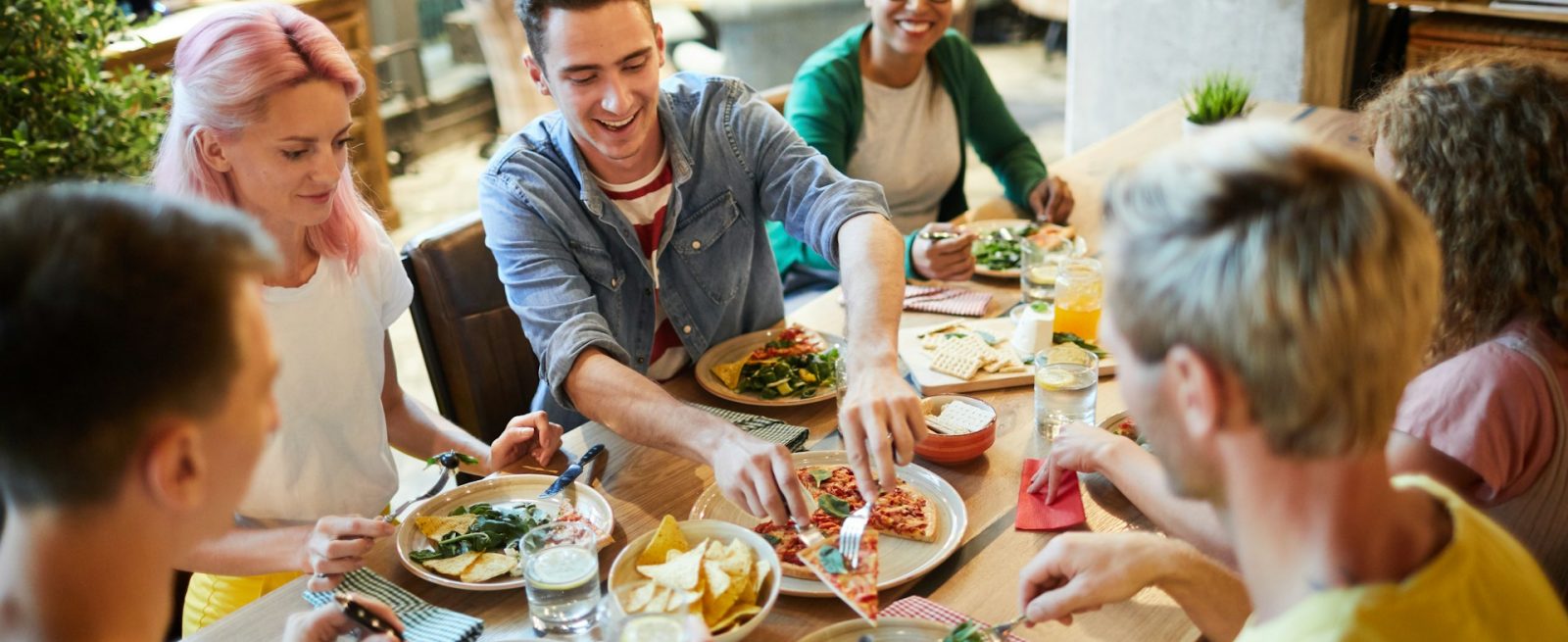
The key takeaway is that ordering for or choosing a restaurant for a group is psychologically different and more stressful than ordering or choosing a restaurant for yourself. Customers aren’t just choosing food—they’re trying to avoid disappointing others.
Customers aren’t just choosing food—they’re trying to avoid disappointing others.
Restaurants that recognize this can:
-
Reduce friction in the ordering process (e.g., offering assortments, clear recommendations, labeling popular items)
-
Increase customer satisfaction by reducing the stress of choosing
-
Potentially increase order size when anxiety is reduced (people tend to opt out altogether when anxiety is present)
What are some things operators can do to lessen guest anxiety about joint consumption decisions and provide a welcoming experience?
A few practical strategies:
-
Normalize the decision: Servers can say, “This is what groups usually love.”
-
Offer defaults or curated bundles: This reduces the burden of building the “perfect” order
-
Make variety easy: Samplers, flights, and mixed platters reduce the risk of a single “wrong” choice
Are there ways menus can be revised to help the decision making process?
Customers don’t just want good options on the menu; they want reassurance they’re making the right choice for everyone. Menus can be designed to actively reduce decision anxiety:
-
Highlight “crowd favorites” or “most popular” items
-
Offer bundles or shareable combinations
-
Use “something for everyone” framing
-
Provide clear guidance or recommendations
What are a few examples of the seven experiments?
We tested this across a range of realistic contexts—many involving food and drink choices (e.g., healthy drinks, wine, popcorn). Some examples include:
-
Choosing for a friend (lab study): Participants who chose a drink for both themselves and a friend felt more responsible, less confident, and more anxious than those choosing just for themselves.
-
Knowing others’ preferences: When people didn’t know what others wanted—or knew preferences differed from their own—they felt less confident and more anxious.
-
Assortments vs. single items: When choosing for groups, people were more likely to select variety packs to satisfy everyone.
-
Popular choice cues: People choosing for a group were more likely to select items labeled as “most popular.”
Across all seven experiments, the pattern is consistent: joint consumption decisions increase anxiety because people feel more responsible for the outcome and less confident that they can make everyone happy.
Shareables have been a big category for many restaurants, but are they too anxiety-producing for many guests?
They can be. Shareables are appealing—they’re social and experiential—but they can also make it harder to “get it right” for the group. That pressure can make what should be a fun moment feel stressful, especially when group preferences aren’t clearly known.
That said, their popularity may actually reflect how consumers cope with this anxiety. Shareables can feel like a safer choice because they are perceived as broadly appealing or “crowd-friendly,” just in a larger format. If a shareable has built-in variety, they reduce risk even further by offering something for everyone.
What results surprised you?
One of the most surprising findings was that these decisions aren’t more difficult — they’re more anxiety-inducing. Even when the choice itself is the exact same, people feel more anxious when choosing for a group because they feel more responsible for the outcome and less confident they can satisfy everyone.
What should restaurant guests who recognize their own anxiety over making decisions do to have more enjoyable dining experiences?
A few simple strategies can help:
-
Ask for input early (“What are you in the mood for?”)
-
Default to variety (shareables, samplers)
-
Use popularity cues (popular items are popular for a reason)
-
Share the decision rather than taking full responsibility
-
Ask the server for recommendations on what is most popular or what combination of starters provide 'something for everyone.'
Even small shifts can significantly reduce the pressure.
In what ways do you envision AI and automation will help alleviate this anxiety?
AI has strong potential to reduce uncertainty and personalize recommendations in real time for both consumers and restaurant operators.
For consumers, AI can:
-
Recommend items based on group preferences (e.g., dietary needs, past orders)
-
Suggest balanced bundles for groups
-
Highlight low-risk, high-agreement options
For restaurant operators, AI and digital signals can help identify when a customer is ordering for a group versus themselves (e.g., based on search language, order size, or context) and tailor recommendations accordingly.
For both, AI can act as a “decision partner” by helping customers feel more confident and restaurants to better match their offerings to the decision context.