
Lean Operations Expand Real Estate Opportunities
4 Min Read By MRM Staff
Discipline and data are two of the key words involved in Pokeworks' executives approach to brand expansion. The brand has applied both, prioritizing site quality rather than the speed of expansion to realize an 18-percent systemwide growth last year.
In this Q&A with Modern Restaurant Management (MRM) magazine, Pokeworks' Co-Founder and Head of Development Peter Yang reveals how the company defines an "ideal" location, why site quality is prioritized over speed, advantages of smaller footprints and a hoodless kitchen model, franchisee relationships, and the brand’s expansion targets.
Why do you feel site quality matters more than speed for franchise growth?
Growth for the sake of growth is a trap. In the franchise world, a "speed-first" mentality often leads to "C" sites that require twice the effort for half the return.
We view every new location as a 10-year commitment. By prioritizing site quality, we ensure our franchisees enter the market with a competitive advantage from day one. A high-quality site offers built-in visibility and organic traffic, demographics and psychographics which protects the unit’s unit-level economics. We’d rather open five "A" sites that thrive than ten "C" sites that struggle.
What data points and metrics do you look to most when making site selection and why?
We lean heavily into a mix of demographics, psychographics and mobility data. Through correlation analysis, we’ve identified variables that contribute towards the brand’s success, so naturally we put a lot of weight on those in grading out sites.
We don’t just look at maps; we drive the trade area and put ourselves in the guest’s perspective.
While data provides the foundation, it rarely tells the complete story. I’m a firm believer in the 'boots-on-the-ground' approach. I personally walk every site before a lease is executed.
We don’t just look at maps; we drive the trade area and put ourselves in the guest’s perspective. This allows us to identify the nuances, for example, the ease of a turn, the feel of the neighborhood, the visibility from the street, factors that a spreadsheet simply cannot quantify.
What qualities make a good location for the brand and what do you avoid?
In the fast-casual sector, convenience is our north star. A premier Pokeworks location must offer high visibility and seamless accessibility to capture the traffic. We prioritize trade areas with a robust daytime population, and we are highly intentional about our neighbors. We seek out centers that offer lifestyle synergy, strategically situating ourselves alongside co-tenants that reflect the healthy, active, and modern profile of our brand.
What we avoid: locations that are difficult to access during peak hours and sites with poor visibility where we have to overspend on marketing just to tell people we exist.
How important is being flexible about sites that could work well?
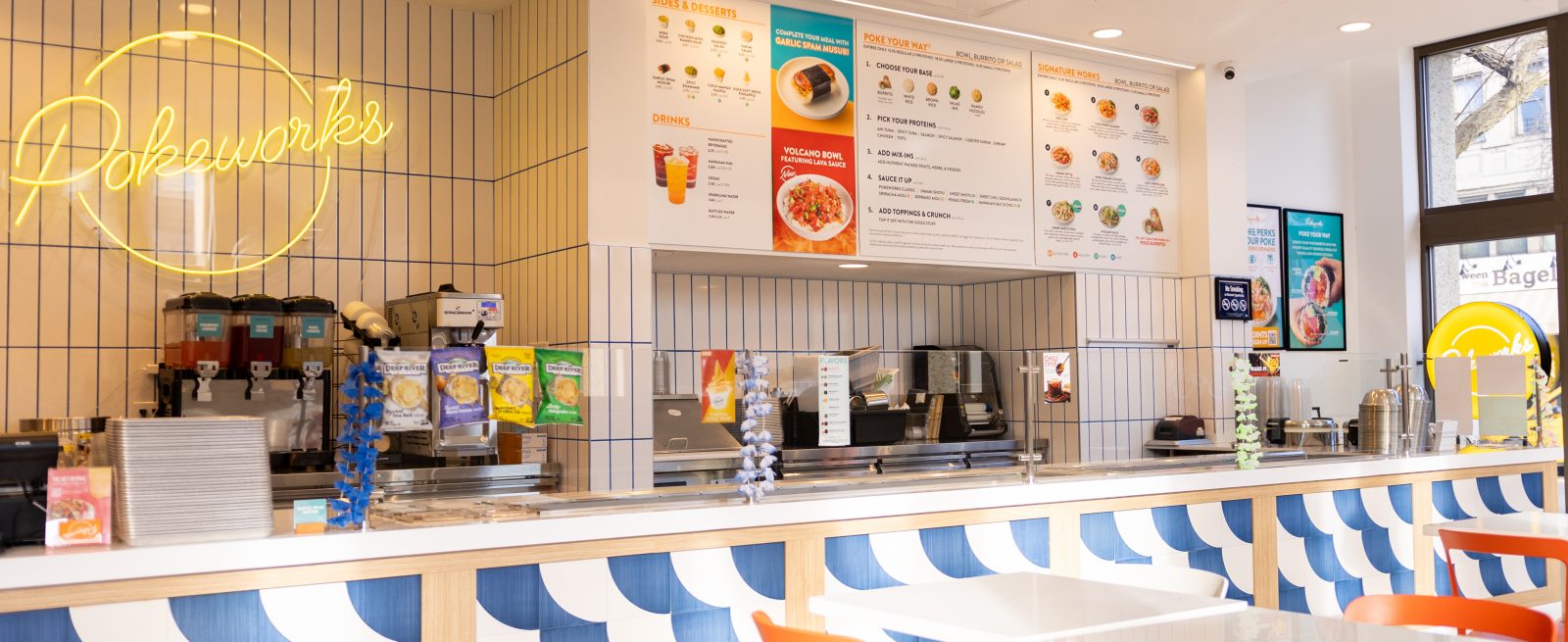
Flexibility is our secret weapon. The modern real estate landscape is tight, so we’ve engineered our model to be "format agnostic." Whether it’s a 350 square-foot traditional footprint, or 1500 square-foot space, a non-traditional airport site, or a digital-forward pickup window, we adapt the layout to the site’s strengths rather than forcing a square peg into a round hole.
Flexibility is our secret weapon.
More importantly, our operational footprint is exceptionally lean. Because our concept is hoodless, and in many municipalities does not require a grease trap, we possess a level of agility that most competitors lack. The advantages here are twofold. Primarily, we see a massive impact on speed to market and capital efficiency, as build-out costs are dramatically reduced and the construction timeline is significantly compressed.
Furthermore, our hoodless model opens doors to unconventional real estate that our competitors simply cannot access. Because our operations consist primarily of cold prep with no grease or open flames, we can enter premium, high-barrier sites such as historic buildings or luxury mixed-use developments, where scent or environmental restrictions would typically prohibit standard restaurant use.
What kind of complementary co-tenants do you look for and what types would you prefer not to see?
We love being near "lifestyle" neighbors such as gyms or boutique wellness concepts. These co-tenants attract a health-conscious consumer that aligns perfectly with our DNA.
Beyond fitness, we strategically position ourselves alongside other premium, trendy fast-casual brands that share our obsession with quality. We thrive when surrounded by popular, high-volume lunch spots and clean-label offerings.
What are the advantages/challenges of operating hoodless kitchen models?
The advantage is a massive reduction in CAPEX and a significantly wider pool of real estate. Without the need for expensive venting and rooftop HVAC modifications, we can move into premium spaces such as the bottom of historic office towers or luxury condos.
While hoodless models typically limit hot food options, we’ve turned this into a success story of innovation. By being creative with our equipment package, we successfully launched our Hawaiian Hot Plates last year, proving we can deliver a diverse, high-quality menu within a lean, ventless footprint.
How do you ensure the full guest experience is achieved no matter the location size?
It comes down to customer journey consistency. Whether a guest is in a 500-square-foot kiosk or a flagship restaurant, they should experience the same Poke Your Way ® customer journey. We achieve this through smart design, standardizing our prep lines, using consistent lighting and finishes and textures, and ensuring our digital integration is seamless so that "convenience" doesn't come at the cost of "hospitality."
Data provides the 'what,' but the franchisee provides the 'why.'
Why do you view site selection as a partnership with your franchisees, not a checkbox?
A franchisee is investing their hard-earned capital and their valuable time into our concept; the least we can do is treat their site selection with the same gravity they do. If we just "checked a box," we’d be failing them.
We view it as a partnership because our success is structurally tied to theirs. We provide the macro-data, but we respect that they are the ones who will be living and breathing that location every day.
How does the company balance its data-driven approach with a franchisee's local market expertise?
Data provides the "what," but the franchisee provides the "why." Our analytics might show that a specific corner has the right traffic counts, but a local franchisee might know that the particular intersection is a nightmare during school hours or that a new development is planned nearby.
We use a "Trust but Verify"approach. We start with the data to narrow the field, then lean on the franchisee’s and brokers’ local knowledge and network to make the final call. It’s a collaborative filter that catches risks data might miss.