Burn Awareness Week + the Most Common Fire Hazards In Your Kitchen
2 Min Read By Society Insurance
In 2021, over 398,000 people in the U.S. needed medical care for burns, according to the CDC, and a claims-based analysis from 2020 reported 698,555 burn-related insurance claims. Meanwhile, the latest data shows that 8,000 fires break out at restaurants every year.
National Burn Awareness Week is a campaign since the 1980s sponsored by the American Burn Association. Every year, it takes place the first full week in February, this year falling on February 1–7, 2026. The week is designated to provide an opportunity for fire educators “to unite in sharing a common burn awareness and prevention message in our communities.”
Society Insurance has put together top fire hazards in a restaurant and commercial kitchen and how to mitigate the risks they pose.
Most Common Fire Hazards in Your Commercial Kitchen
Greasy rags: Rags and towels are handy for cleaning up cooking oil and grease residue at restaurants and bars. However, their usefulness can also make them a severe fire hazard. As grease and oil become trapped within the fabric fibers of kitchen rags and linens, the chance of spontaneous combustion builds. Even “clean” linens and rags have some amount of grease and oil residue that could cause spontaneous combustion, and just three percent of grease residue can lead to ignition.
Use only commercial-grade appliances and water detergents approved to launder grease-contaminated linens and rags. Store dirty rags in listed or approved oily waste containers with self-closing lids, and store separately from clean cloths.
Poorly maintained kitchen equipment: Your cooking equipment is one of the most important things inside a restaurant and/or bar – and it’s also a leading cause of fires. These fires are often due to failed, aging equipment; improper installation and maintenance; poor cleaning practices; and inattentive or careless use. If you have solid fuel cooking operations, this presents an additional hazard because of the potential build up of creosote in your vent hoods. A kitchen fire could put you out of business for days, or even longer. Restaurant owners can mitigate these risks by hiring qualified professionals for installation, maintenance, and cleaning service.
Additionally, they can train employees on proper cleaning, frequency intervals and safety procedures. It’s important to note that vent hood and duct cleanings should be performed by a certified hood cleaning service at required service intervals.
Poor Housekeeping: Cardboard boxes and food packaging must be regularly removed and disposed of. Not only do these items present housekeeping hazards, they also can add literal fuel to a fire.
Liquids: Grease, cooking oil and alcohol are some of the most flammable and combustible items in your restaurant kitchen. Fire involving liquids can be harder to contain, because of their ability to spread rapidly. Be sure to store these liquids properly.
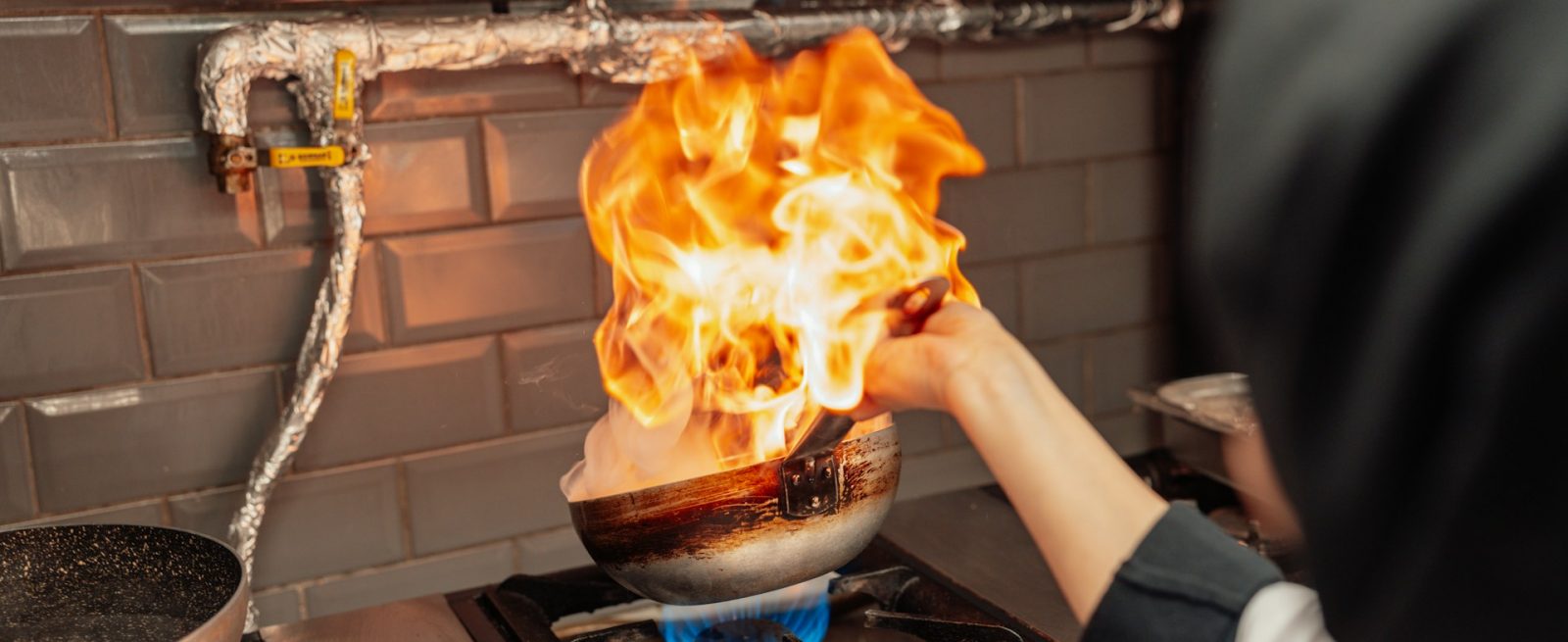
“FIRE!” is one word no one wants to hear in a hospitality business, and it is the call in the night that owners and managers never want to receive. Reduce the risk and mitigate damage by ensuring you’re updating and cleaning your kitchen equipment, 86ing flaming shots, investing in Class K extinguishers, and handling greasy rags appropriately.
This information is provided as a convenience, and it must not be assumed that it has detected all unsafe acts or conditions. This information is not professional advice; it is designed to assist you in recognizing potential safe work problems and not to establish compliance with any law, rule or regulation.