The Fourth Place in Action
6 Min Read By MRM Staff
In the first article of our Modern Restaurant Management (MRM) magazine series on The Fourth Place, industry experts defined the concept and how restaurants are engaging with it, but understanding is only the first step.
In this second article, we focus on execution. How can restaurant operators best leverage The Fourth Place in practical, profitable ways?
The smartest brands will design for both experience and content at the same time: dishes and interiors that photograph well, storytelling menus tied to a community’s values, and programming that turns regulars into co-creators rather than just customers, explained David Helbraun, founder and managing partner of Helbraun Levey, a hospitality firm with offices in New York and Florida.
“Operators who understand that they are building a stage for online communities to gather in real life will win on engagement, loyalty, and ultimately unit economics."
Operators need to rethink the in-store experience as an extension of their digital presence as Fourth Places give restaurants a way to monetize community and engagement simultaneously, said Kevin Jones, VP of QSR and Hospitality at Mood Media. In practice, this can take many forms, he added, including interactive digital screens showcasing influencer content or user-generated posts, music playlists curated from the tastes of the brand’s online community, or event programming designed to mirror trending online experiences. For younger generations, these experiences might mimic a social media ‘FYP,’ while older guests may engage through storytelling, local culture, or curated atmospheres.
"Exclusive tastings, pop-up events at live shows, limited-edition menu items, and branded merchandise create excitement while fostering meaningful relationships with guests. These experiences encourage repeat visits, social sharing, and long-term loyalty, turning the restaurant into a hub for both commerce and community."
Brands that establish social belonging will experience increased customer loyalty and retention, agreed Karina Tymchenko, Founder of Brandualist.
Her suggestions include: hosting niche events, meetups for creators, workshops or themed nights to support emerging trends and the people who follow them online.
“Once users feel they are part of a group, they will engage for longer periods of time, spend more and visit more frequently.”
On the design side, she advised investing in modular seating, influencer collaborations, content friendly areas, mini stages and interactive experiences that allow for users to interact and capture/share moments related to the fourth-place model.
Peter Newlin, CEO of Gastamo Group, said the biggest mistake operators can make right now is designing restaurants for themselves instead of for people who live in the neighborhood.
Operators who stay close to their guests, rather than to their own preferences, will be able to keep evolving their spaces in ways that matter.
“For years, much of the industry chased efficiency, minimalism, and clean, industrial design. At the same time, guests have been carrying more financial stress, burnout, and digital fatigue. That means talking to guests, paying attention to how they use the space, and being willing to adapt instead of just following a design trend. Trends will continue to change, but the constant is this: guests want to be seen, known, and cared for. Operators who stay close to their guests, rather than to their own preferences, will be able to keep evolving their spaces in ways that matter.”
Newlin noted that in a fourth place, everything is part of the story: the sound level, the lighting temperature, the way the door feels when you walk in, the smell when you step inside, the way a check is dropped, the tone of a follow-up email. All of those details either reinforce or erode trust.
“For brands, the opportunity is to move from being ‘the restaurant on the corner’ to being part of the neighborhood’s identity. When you get that right, you’re not just competing with other restaurants on price or menu; you’re offering something much harder to replace, a consistent, human, value-aligned experience that people build their lives around.”
Fourth places are built to be used all day and all year, not just for Friday night dinner, opening the door to new ways of serving the neighborhood and creating incremental revenue, Newlin added.
On the space side, that might look like designing private and semi-private areas that can flex from small celebrations to team dinners, book clubs, or micro-events. On the programming side, it could mean calendars of trivia nights, live art, chef pop-ins, tastings, kids’ workshops, or community forums, always filtered through what fits the brand and the neighborhood.
He suggested partnerships with local makers, schools, and organizations. Daytime uses such as informal coworking or community meetups can turn typically slow dayparts into meaningful, repeatable business.
“The formats that work best are the ones that feel true to both the brand and the neighborhood. There is no one-size-fits-all fourth place,” he said. ”The more authentic reasons you create for people to show up beyond just eating, the more often they return and the more likely they are to see your restaurant as ‘their place.’”
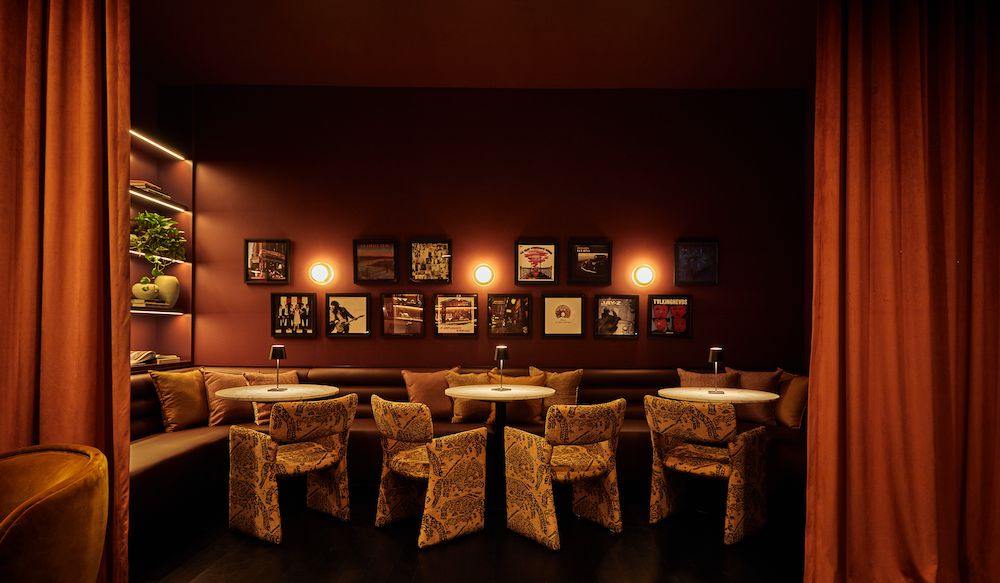
Several parts of the model for The Maze, top photo, New York City’s first alcohol-free members club and restaurant, were built around fourth-place thinking from day one, said Founder Justin Gurland.
Nothing is transactional. Everything is designed to make people feel comfortable and included.
“Our design creates multiple modes of use, with spaces that support quiet work in the morning, meetings and meals throughout the day, and social programming at night. It is intentionally flexible so people can use the club in the way that best supports them.”
Programming is centered on meaningful connection including conversation-driven events, communal dinners and wellness experiences, Gurland said, adding that offering an alcohol free environment removes a major barrier to connection and allows guests to stay present and engaged.
“Nothing is transactional. Everything is designed to make people feel comfortable and included. Our food and beverage approach, created with Tom Colicchio and Crafted Hospitality, is built around quality, clarity, and intention. Finally, the member culture is rooted in shared values. People join The Maze because they want community, inspiration, and a place that supports their wellbeing. That alignment creates trust, which is at the heart of any true fourth place.”
Restaurants are evolving from service providers to hosts, conveners and community hubs, said Jennifer Brisman, CEO of VOW, adding that experiences matter as much as the menu.
“It’s a deeper, more emotional relationship with guests – and it’s incredibly powerful. Restaurants can become cultural infrastructure. The restaurant becomes the physical extension of a community’s identity, and that’s where long-term value is created on the regular.
Brisman said The Fourth Place can turn a restaurant into a space for:
- Ticketed events
- Modest-sized creator or fan-driven experiential moments
- Paid meetups
- Co-branded menu drops
- Community-specific subscriptions or perks
Creator-driven meetups, fandom nights, community dinners, watch parties, and drop days are some of the most accessible formats, she added.
When a restaurant hosts recurring gatherings tied to specific online groups, you unlock one of the most efficient, recurring forms of revenue.
“Influencer-led menus are everywhere now. Pop-ups with digital-first brands across multiple cities work beautifully. And an artist or creator takeover is always cool and highly content-friendly. When a restaurant hosts recurring gatherings tied to specific online groups, you unlock one of the most efficient, recurring forms of revenue. And the restaurant gets a front row seat to watching these communities grow – and can even show up on their native livestreams, virtual meetups, and content ecosystems.”
By executing cuisine from culturally-rich menus, restaurants can design unique experiences, setting them apart from the competition and making them more desirable and sought-after, said Chef Carlos Brown, who created Pandora On The Square in McDonough, GA.
“A more effective approach on how best to activate this concept would be a combination of technology, community-building and engagement and other innovative ways for that enrichment. Restaurant guests want to feel a connection and technology integration will be a beneficial factor in deepening that impact whether that be through Member or Dining Clubs, VIP or loyalty programs, how guests can interact with your restaurant via ordering, etc.”
Nicole van Zanten, Co-President & Chief Growth Officer for ICUC.social, recommends that restaurant operators start with what their community is already talking about.
"We have seen restaurant clients build programming around themes like friend travel, celebration culture, and niche interests uncovered in social conversations. If you can create experiences that align with those kinds of themes, you’ll be able to attract larger groups of customers and, in turn, they’ll share those experiences online and attract more community members in their space. We see restaurant brands succeed with programming that mirrors online behavior, like themed nights, hobby-driven meetups, or limited-time offerings inspired by guest conversations."
These diners will be prioritizing their enjoyment around their community, and may be less price sensitive.
Overall, the rise of the fourth place can only bring positives for restaurant operators and brands, said Mario Gomez-Hall's, founder and CEO of Zest Maps, an AI-driven dining app that blends personalized food recommendations with real-world meetups.
"In addition to their existing diner pool, this opens up an all-new, higher-value stream of customers, especially those with high ticket sizes. These diners will be prioritizing their enjoyment around their community, and may be less price sensitive. Multiple drinks and appetizers/shareables will be more commonly ordered than a typical diner, given these events will last longer than the average sit-down meal. Outside of sit-down restaurants, QSRs could benefit from these diners, as individuals within the larger group can order, reorder, and cater to their own needs throughout the night, with the restaurant simply providing the space."
He said capturing repeat business will be critical to turning a one-off event into an ongoing revenue stream, noting that the best formats will be those in which guests have space to be themselves and truly dive into their chosen interests while connecting with fellow community members.
"Many of these communities will be engaging with each other daily, often for multiple hours per day, so having a weekly or monthly IRL meetup at a fourth place will be likely. Restaurants that can guarantee these communities a regular home for meetups will stand to benefit greatly, and will convert both the communities and their members themselves into engaged, loyal customers."
Top photo courtesy of The Maze