

A Theatrical Approach to Restaurant Design
4 Min Read By MRM Staff
There’s not a bad seat in the house at The Hell's Kitchen restaurant at Foxwoods and that proved to be a key design challenge for ZDS Architecture and Samuelson Furniture.
As the ZDS team put it, “no matter where you sit in the restaurant, you have a direct view of the Fire versus Ice kitchen and bar.”
The two firms collaborated on the transformation of a 70,000-square-foot ballroom into an immersive, theatrical dining experience with a strategically raised and zoned seating to ensure unobstructed view of the Fire versus Ice kitchen as well as custom features including a chain-linked drapery over the bar forming Gordon Ramsay's image.
The brand did not want a single obstruction in view of the celebrity kitchen. In the prefunction space, there was a lower-ceiling column grid that we had to work around. ZDS strategically designed the restaurant layout and fit over 200 seats so that not a single column is visible.
Eric Schall, Associate Principal and Project Manager and Robert Macaruso, Interior Design Director and Associate with ZDS told Modern Restaurant Management (MRM) magazine that the project was a learning curve and a big part of the design was figuring out how to marry both Foxwoods’ vision and Hell’s Kitchen’s brand standards into a cohesive and balanced design. They had to address the concerns of how Foxwoods operates a restaurant versus the requirements of the Hell's Kitchen brand and select the details of materials, furniture, fixtures, and equipment.
From a site logistics standpoint, they had to deal with the existing infrastructure as well as tackling changes in an active resort. It wasn’t easy, they said, because they also had to work on three different schedules – Foxwoods, Gordon Ramsay’s team, and the contracting schedule.
Working closely with the project manager, they were able to overlap phases of work to meet deadlines. For example, while demolition was underway, ZDS submitted framing plans; as design approvals came through, they simultaneously managed permitting and cost reviews. At the same time, furniture was ordered in time to ensure delivery and installation aligned with the operational turnover.
While no filming actually happens at the restaurant, this project was inspired by the show, so they took the theatrical aspect of the experience seriously. With this being a theater kitchen, more thought was put into the experience than a typical kitchen floor plan.
The kitchen is split 50/50 between blue and red with the blue flame and red flame team logos. A key element we loved is the counter-height bar where a large party can sit, and a dedicated group of chefs will be allocated to serving the guests in that area.
Hanging over the guests at this table is a 10 to 12-foot-long chain-linked drapery that wraps around the shape of the bar. Each chain is in different colors that together form Gordon Ramsay’s full face and body.
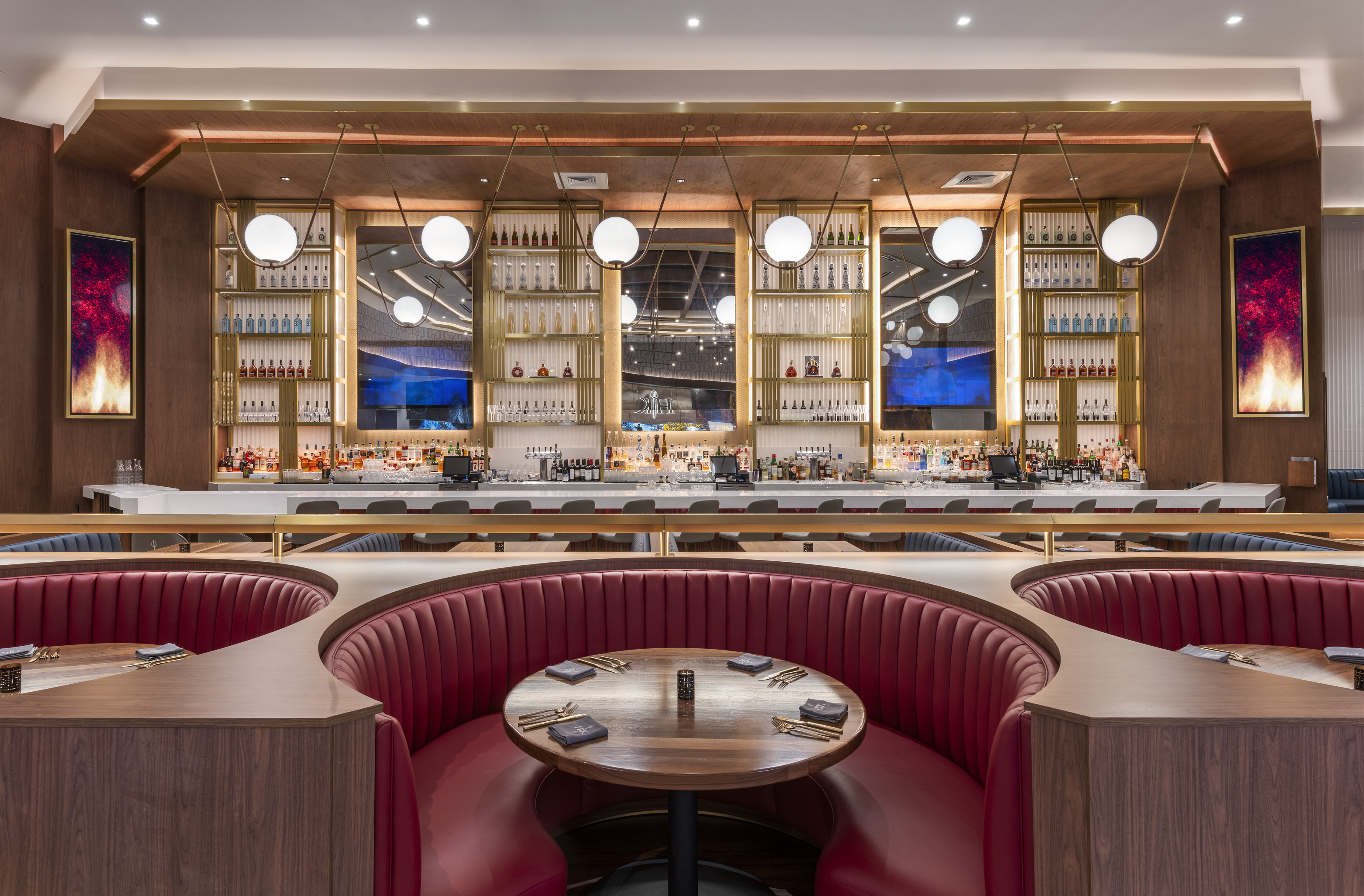
Furniture was a key element of making the project come together. Samuelson provided different custom-designed style seating that zoned out the various seating options.
“It’s a large restaurant, so we were intentional about ensuring it felt high-end rather than resembling a cafeteria. The seating configuration almost gave the illusion of a box theater,” the ZDS team pointed out.
Ruth Chalfin Chasolen of Samuelson Furniture said they worked closely to bring the theatrical dining experience to reality.
“These pieces needed to be crafted with both detail and comfort, and to provide the intimacy that the design team envisioned. We produced meticulous upholstery detail with channel tufting to enhance the warm, intimate spaces on various seating levels.”
The banquette seating and arrangement at various levels and configurations throughout the venue are essential to the overall dining experience, and as a result, even the slightest detail is apparent. These distinctive details help maximize the experience of Hell’s Kitchen's theatrical dining demonstrations and events.
To lean into the theater experience, the seats that are further away from the “action” are raised, allowing patrons to see the kitchen. Samuelson created square banquettes for casual dining at the center, positioned one riser higher than the circular banquettes in front. One riser below the circular banquettes are loose tables and chairs that go right up to the display kitchen.
“The banquette seating and arrangement at various levels and configurations throughout the venue are essential to the overall dining experience, and as a result, even the slightest detail is apparent,” Chasolen said. “These distinctive details help maximize the experience of Hell’s Kitchen's theatrical dining demonstrations and events.”

In the private dining room, the team created two 15-foot-tall custom mirrors, adorned with a picture of the slash of a knife along with the symbolic pitchfork in metalwork. In addition to the custom mirrors, they created custom wallcoverings as an acoustic treatment to help control sound throughout the restaurant.
“These custom pieces are an example of the Foxwoods and Hell’s Kitchen team allowing us to use elements relative to the brands while creating new design features that were appropriate for the specialty dining room,” the ZDS team added.
In the bar area farthest from the kitchen, they placed high-top tables, and even at the bar—where patrons sit with their backs to the kitchen—they integrated glass walls to ensure clear views into the display kitchen
The difference between this restaurant and a regular one is that you’re taken on a journey from beginning to end—from the moment you enter, it should feel like an experience, according to ZDS.
“A special part of the design is a giant pitchfork lit on fire that sits at the entry of the building. When you enter the restaurant, you’re greeted by Gordon Ramsay’s hologram, and as you continue towards the host station, there is a dedicated gallery of the show’s past winners. Once you turn, that’s when you get a full view of the restaurant, so the progression to the main dining room almost feels like an ‘AHA’ moment when guests can finally take it all in.”